Women’s gymnastics is one of the most exciting and widely followed forms of competitive gymnastics. It combines strength, flexibility, balance, coordination, speed, and artistic expression. Athletes train for years to perform difficult skills with precision while making their routines look controlled and graceful.
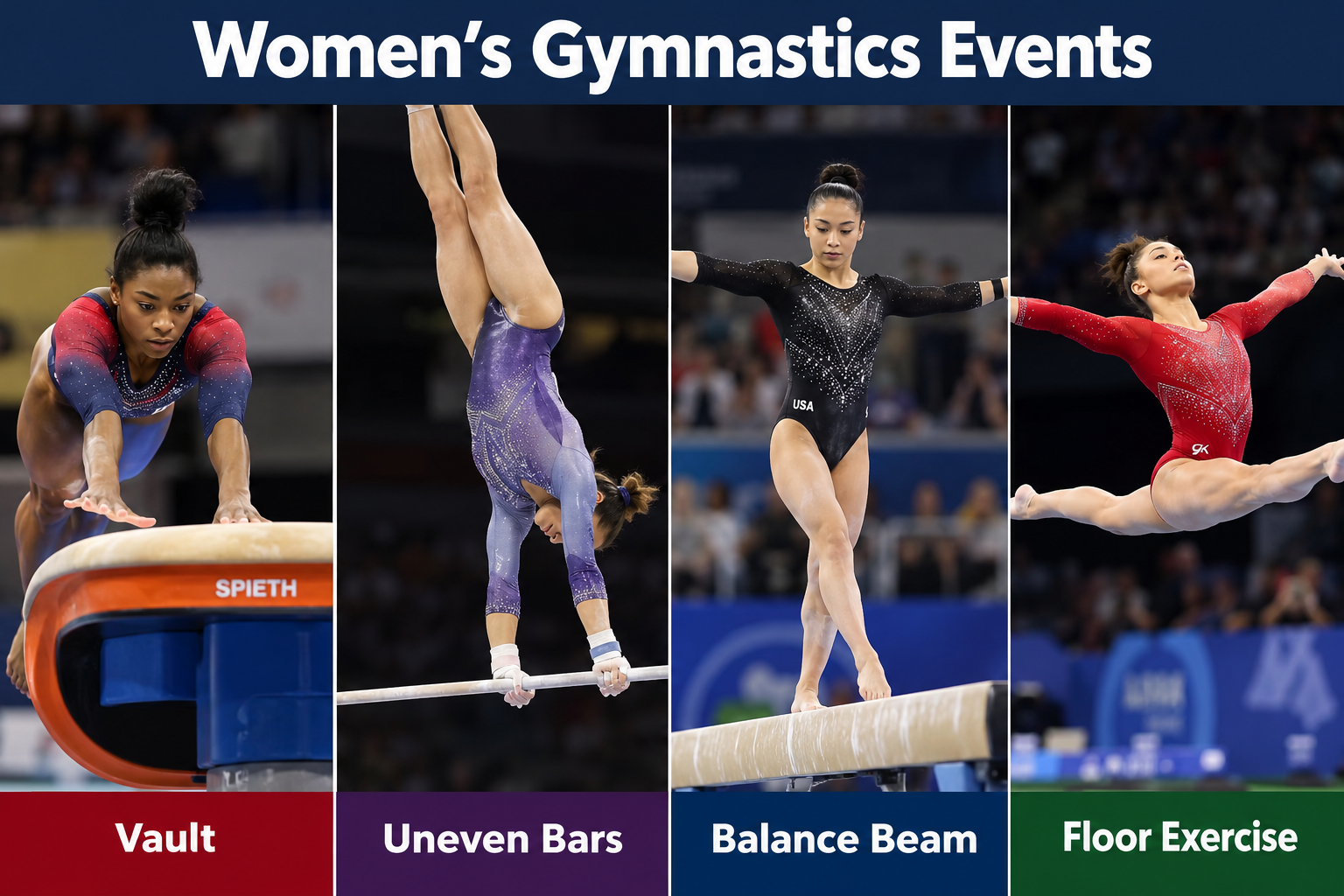
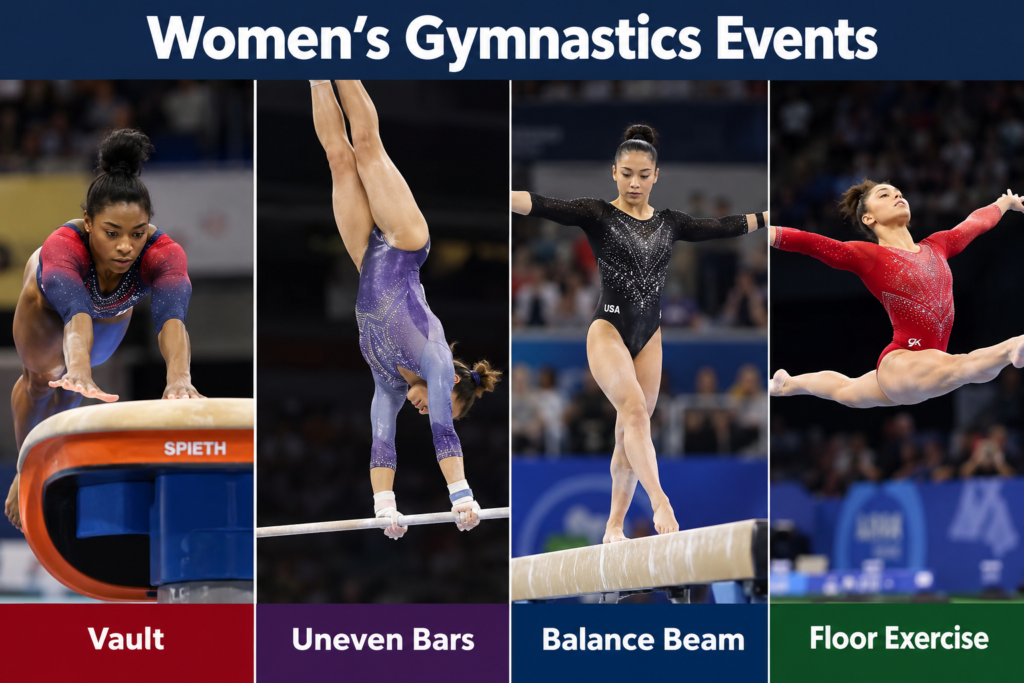
In women’s artistic gymnastics, athletes compete on four main events: vault, uneven bars, balance beam, and floor exercise. Each event requires a different set of physical and mental skills. A gymnast who performs well across all four events may compete in the all around competition, while others may specialize in one or two apparatus.
Understanding the different women’s gymnastics events can make competitions much easier to follow. It also helps beginners appreciate how much skill is required in each routine.
The Four Main Women’s Gymnastics Events
Women’s artistic gymnastics includes four official apparatus events:
- Vault
- Uneven Bars
- Balance Beam
- Floor Exercise
Each event is judged separately, and gymnasts receive scores based on the difficulty and execution of their routines.
At major competitions, athletes may also compete for team medals, individual all around medals, and individual event medals.
1. Vault
Vault is usually the shortest women’s gymnastics event, but it is also one of the most powerful.
The gymnast begins by running quickly down a runway toward the vaulting table. She then jumps onto a springboard, places her hands on the vaulting table, and performs a skill in the air before landing on the mat.
Although a vault may only last a few seconds, a great deal happens during that time.
Important Parts of a Vault
A successful vault usually includes several stages.
The first stage is the run. The gymnast needs enough speed to generate power without losing control.
Next comes the hurdle and springboard contact. The athlete jumps onto the springboard and transfers that energy toward the vaulting table.
The gymnast then makes contact with the table using her hands. This part is known as the block. A powerful block helps the gymnast gain height and distance.
During the flight phase, the gymnast may perform twists, flips, or other movements.
Finally, she must land with control.
What Judges Look For
Judges consider many details during a vault, including:
• Body position
• Height
• Distance
• Technique
• Direction
• Landing control
Large steps, falls, bent knees, poor body position, or an uncontrolled landing may result in deductions.
Some gymnasts perform two different vaults in event finals, depending on competition rules.
2. Uneven Bars
The uneven bars event is known for continuous movement and spectacular release skills.
The apparatus consists of two horizontal bars positioned at different heights. The gymnast moves between the bars using swings, turns, releases, handstands, and transitions.
A strong uneven bars routine often appears smooth and effortless, even though it requires tremendous upper body strength and coordination.
Skills Used on Uneven Bars
Gymnasts may perform a variety of movements during a routine.
These can include:
• Giant swings
• Handstands
• Pirouettes
• Release skills
• Bar transitions
• Flight elements
• Dismounts
Release skills are among the most exciting parts of an uneven bars routine. During these movements, the gymnast lets go of the bar, performs a skill in the air, and catches the bar again.
Transitions are also important. The gymnast may move from the high bar to the low bar or from the low bar to the high bar.
Importance of Rhythm
A good uneven bars routine should flow continuously.
Unnecessary pauses can interrupt the rhythm of the routine. Gymnasts therefore train to connect skills smoothly and maintain momentum.
Handstand positions are especially important. Athletes are expected to reach accurate vertical positions during many elements.
The routine ends with a dismount, which often includes flips or twists before the gymnast lands on the mat.
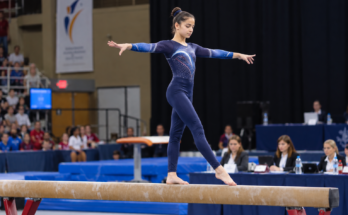
3. Balance Beam
The balance beam is one of the most technically demanding events in women’s gymnastics.
The beam is narrow, yet gymnasts perform skills that would be challenging even on a large floor.
A balance beam routine can include jumps, leaps, turns, acrobatic skills, dance movements, and combinations.
The gymnast must maintain balance throughout the routine while showing confidence and control.
Skills Performed on Balance Beam
Common types of beam skills include:
• Backward acrobatic movements
• Forward acrobatic movements
• Leaps
• Jumps
• Turns
• Handstands
• Balance positions
• Dismounts
Gymnasts often connect several movements together to increase the difficulty of their routines.
For example, an athlete might perform an acrobatic skill immediately followed by another skill without pausing.
Why Balance Beam Is Difficult
The narrow surface leaves very little room for error.
A small mistake in foot placement can cause a gymnast to wobble or fall.
Athletes also need strong concentration. Unlike some events that rely heavily on continuous speed, balance beam requires careful control combined with explosive movements.
Judges may deduct points for noticeable balance checks, bent legs, poor body alignment, falls, or incomplete skills.
The Dismount
The routine ends when the gymnast leaves the beam and performs a dismount.
Dismounts may include twisting or flipping movements.
A controlled landing can create a strong final impression.
4. Floor Exercise
Floor exercise combines gymnastics, dance, music, strength, and creativity.
Women perform routines on a large spring floor while music plays in the background.
The routine includes tumbling passes, leaps, turns, jumps, dance combinations, and expressive movements.
Unlike some other gymnastics events, floor exercise allows athletes to show their individual performance style.
Tumbling Passes
Tumbling is one of the major elements of a floor routine.
Gymnasts may perform combinations involving flips, twists, and other acrobatic movements.
The spring floor helps athletes generate the height required for difficult tumbling skills.
A gymnast must control her landing while staying within the marked floor boundaries.
Stepping outside the competition area may result in a penalty.
Dance and Artistry
Women’s floor exercise is not only about difficult tumbling.
Dance elements are also important.
Gymnasts connect their acrobatic skills using choreography that matches the music.
Body movement, rhythm, expression, and creativity all contribute to the overall presentation.
A strong floor routine combines athletic power with artistic performance.
Women’s All Around Competition
The all around competition includes all four women’s gymnastics events.
A gymnast competes on vault, uneven bars, balance beam, and floor exercise. The scores from all four events are combined.
This competition requires versatility.
An athlete may be especially strong on one apparatus, but she must still perform consistently across every event.
Winning an all around competition is therefore considered a major achievement in artistic gymnastics.
Team Competition
Women’s gymnastics also includes team competitions.
Teams consist of several athletes representing a club, school, university, or country.
During a team competition, selected gymnasts perform routines on each apparatus. Their scores contribute to the team total.
Team strategy can be important because some athletes may be stronger on particular events.
One gymnast might be excellent on uneven bars, while another performs especially well on vault or floor exercise.
Successful teams often combine gymnasts with different strengths.
Individual Event Finals
In addition to team and all around competitions, gymnasts can compete in individual event finals.
These finals focus on one specific apparatus.
There may be separate finals for:
• Vault
• Uneven bars
• Balance beam
• Floor exercise
This allows specialists to compete for medals even if they are not competing in the all around competition.
An athlete who is exceptionally skilled on one apparatus may become known as an event specialist.
How Women’s Gymnastics Is Scored
Gymnastics scoring considers both difficulty and execution.
The difficulty score reflects the value of the skills included in the routine.
More challenging elements and difficult skill connections can increase this score.
The execution score considers how well the routine is performed.
Judges look for technical problems such as:
• Bent knees
• Flexed feet
• Poor body position
• Balance errors
• Extra steps on landings
• Falls
• Incomplete rotations
The final result generally combines the difficulty and execution components, along with any applicable penalties.
Because gymnastics rules develop over time, exact scoring requirements can vary depending on the competition level and governing organization.
Skills Needed for Women’s Gymnastics
Each women’s gymnastics event requires different abilities, but successful gymnasts usually develop several important qualities.
Strength
Strength is essential for supporting body weight, producing explosive power, and performing difficult skills.
Upper body strength is particularly important on uneven bars, while leg strength helps with tumbling and vault.
Flexibility
Flexibility allows gymnasts to perform leaps, splits, jumps, and body positions correctly.
It can also help athletes move more efficiently through certain skills.
Balance
Balance is especially important on the beam, but it is useful in every gymnastics event.
Controlled landings also depend on good balance.
Coordination
Gymnasts must coordinate their arms, legs, head, and body during complex movements.
Even small timing errors can affect an entire skill.
Speed
Speed is extremely important during vault and can also contribute to powerful tumbling passes.
Mental Focus
Gymnastics requires concentration as well as physical ability.
Athletes need to remember routines, respond quickly, and perform under pressure.
Confidence is particularly important when attempting difficult skills.
Training for Different Gymnastics Events
Gymnasts normally divide their training time among several activities.
These may include strength exercises, flexibility work, skill practice, dance training, conditioning, and routine preparation.
Beginners usually learn basic positions and movements before progressing to harder skills.
For example, a gymnast learning floor exercise may first practice basic rolls, handstands, cartwheels, and jumps before attempting more advanced tumbling.
On uneven bars, beginners often start with basic swings and support positions.
Balance beam training may begin with simple walking, jumps, and balance exercises.
Vault training normally develops gradually through running drills, jumping exercises, and safe progressions.
Proper coaching and suitable gymnastics equipment are important because advanced skills can involve significant risk when attempted incorrectly.
Why the Four Events Are So Different
One of the most interesting features of women’s gymnastics is the variety between events.
Vault emphasizes speed, explosive strength, and aerial awareness.
Uneven bars requires upper body strength, rhythm, and precise timing.
Balance beam demands concentration, control, confidence, and balance.
Floor exercise combines power, flexibility, dance, music, and artistic expression.
Because the events are so different, training for women’s gymnastics develops a wide range of athletic abilities.
Women’s Gymnastics at Major Competitions
Women’s artistic gymnastics is featured at many levels of competition.
Young gymnasts may begin competing at local clubs before advancing to regional and national events.
Elite athletes may participate in international championships and the Olympic Games.
Competition formats can vary, but the four main apparatus events remain central to women’s artistic gymnastics.
Many spectators enjoy following individual apparatus because each event provides a different type of performance.
Someone who enjoys powerful acrobatics may prefer vault or floor exercise, while another viewer may enjoy the precision of balance beam or the swinging movements of uneven bars.
Safety in Women’s Gymnastics
Safety is an important part of gymnastics training.
Complex skills should be learned gradually and under qualified supervision.
Coaches may use mats, spotting techniques, training equipment, and skill progressions to help athletes develop safely.
Gymnasts should also warm up properly and practice physical conditioning suitable for their ability level.
Trying advanced skills without the necessary preparation can increase the risk of injury.
Beginners should focus on correct technique before attempting greater difficulty.
Conclusion
Women’s gymnastics events offer an impressive combination of athletic skill and artistic performance. The four major events are vault, uneven bars, balance beam, and floor exercise, and each one tests athletes in a different way.
Vault focuses on speed and explosive power. Uneven bars requires strength, rhythm, and precise transitions. Balance beam challenges a gymnast’s control and concentration, while floor exercise combines tumbling, dance, music, and personal expression.
Gymnasts who compete across all four events can enter the all around competition, while specialists may focus on individual apparatus finals.
Understanding these events helps spectators appreciate the work behind every routine. What may appear to be a few seconds of effortless movement often represents years of strength training, flexibility work, technical practice, discipline, and careful preparation.
Whether someone is a beginner learning about the sport or a fan watching a major competition, the four women’s gymnastics events provide very different but equally fascinating examples of what trained athletes can achieve.