Gymnastics is one of the most exciting sports in the world. It combines strength, flexibility, balance, coordination, speed, and body control. Many people think gymnastics is only about doing flips and handstands, but the sport has many different forms. Each type of gymnastics has its own rules, skills, equipment, and style.
Understanding the different types of gymnastics can help beginners choose the right activity for their interests and abilities. Some forms focus on powerful movements, while others are based on dance, flexibility, or strength. In this article, we will explain the main types of gymnastics and what makes each one special.
What Is Gymnastics?
Gymnastics is a sport that involves controlled body movements performed on different surfaces and equipment. Gymnasts practice skills such as jumps, turns, balances, rolls, flips, and holds. The sport can be performed individually or as part of a team.
Gymnastics is suitable for children, teenagers, and adults. Beginners can start with basic movements before learning more advanced skills. Regular gymnastics training can improve body strength, flexibility, balance, coordination, and confidence.
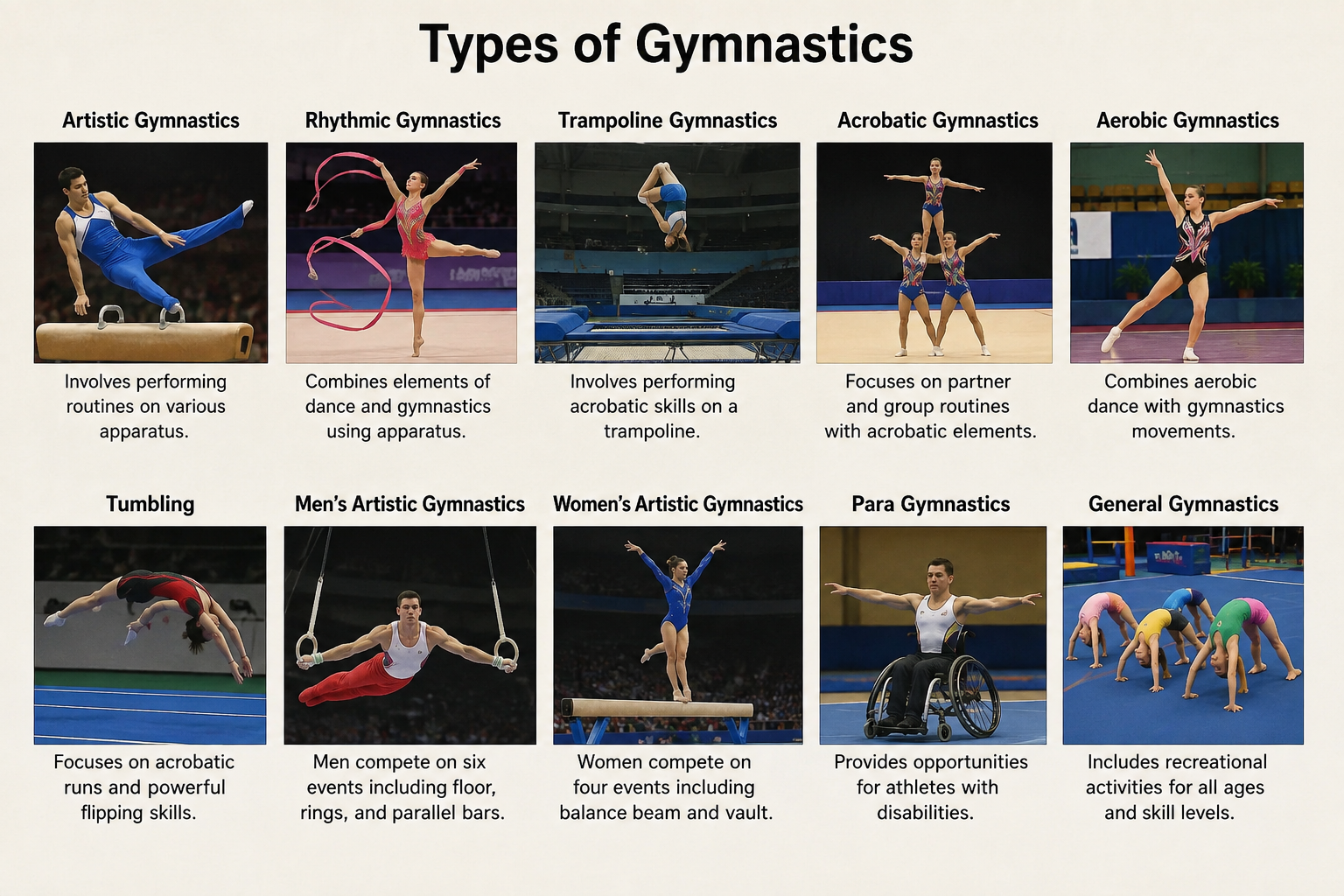
There are several major types of gymnastics, and each one offers a different experience.
1. Artistic Gymnastics
Artistic gymnastics is probably the most well known type of gymnastics. It is commonly seen during major international competitions and the Olympic Games. Gymnasts perform routines on different equipment and are judged on difficulty, technique, execution, and overall performance.
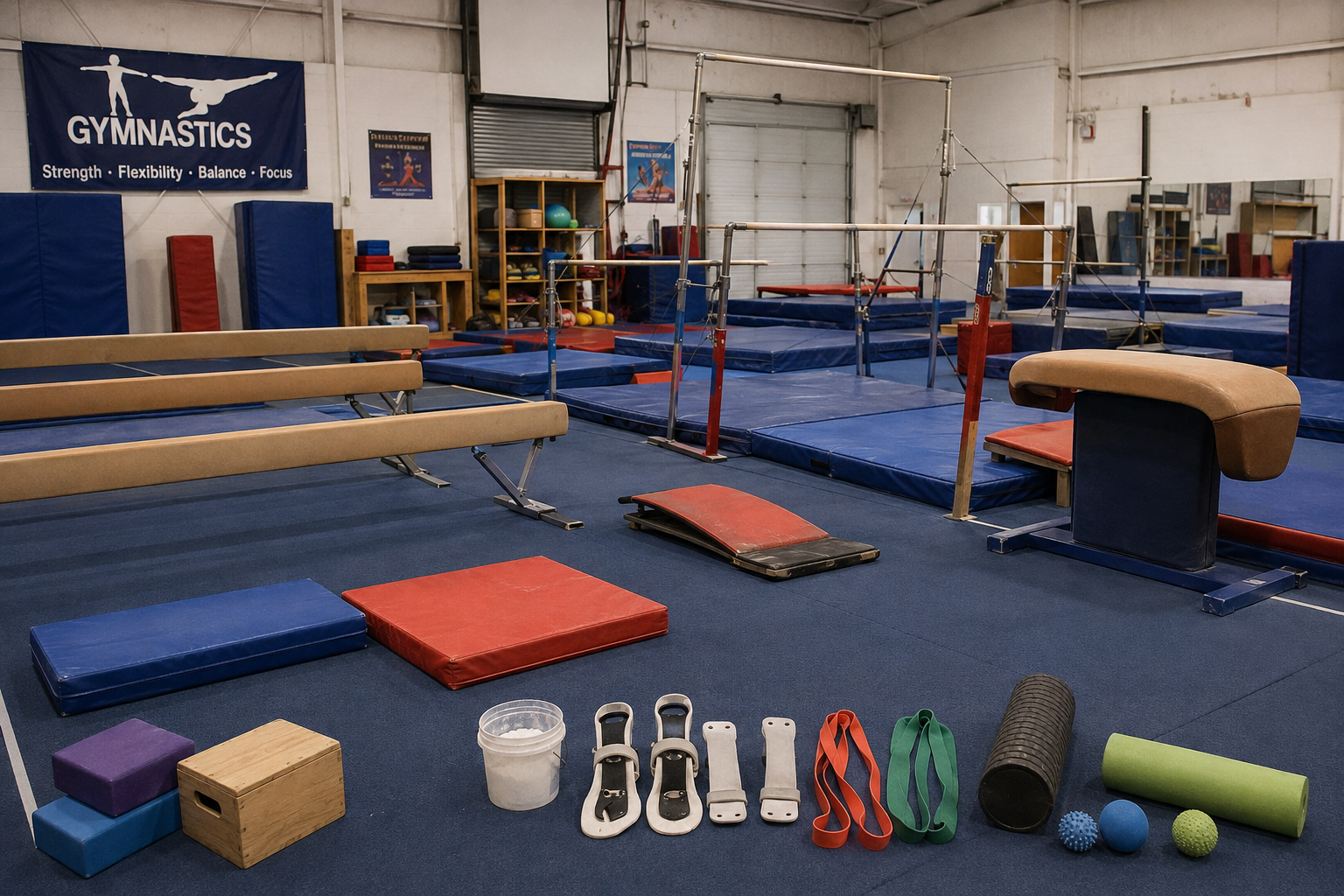
Women usually compete in four events. These include the vault, uneven bars, balance beam, and floor exercise. Men usually compete in six events. These include floor exercise, pommel horse, still rings, vault, parallel bars, and horizontal bar.
Artistic gymnastics requires a combination of strength, flexibility, balance, and coordination. Gymnasts spend years developing their skills and learning how to perform difficult movements safely.
For beginners, artistic gymnastics provides a strong foundation because it teaches basic body positions, movement control, jumping, rolling, balancing, and flexibility.
2. Rhythmic Gymnastics
Rhythmic gymnastics is a beautiful form of gymnastics that combines gymnastics movements with dance and music. It is traditionally performed by female athletes in international competitions.
Gymnasts use different hand held apparatus during their routines. These include rope, hoop, ball, clubs, and ribbon. The gymnast must control the apparatus while performing jumps, turns, balances, and flexible movements.
Rhythmic gymnastics places a strong focus on flexibility, rhythm, coordination, and artistic expression. Music plays an important role because gymnasts must match their movements with the timing and rhythm of the routine.
This type of gymnastics is especially attractive to people who enjoy dance and creative movement. It also helps improve flexibility, body awareness, and coordination.
3. Trampoline Gymnastics
Trampoline gymnastics focuses on performing acrobatic movements while bouncing on a trampoline. Gymnasts perform a series of jumps, twists, and flips while trying to maintain control and body position.
Trampoline routines can include impressive skills such as front flips, back flips, twists, and multiple rotations. Athletes are judged on factors such as difficulty, execution, height, and control.
Although trampoline gymnastics looks like a fun activity, it requires serious training and discipline. Gymnasts must learn how to control their body while moving through the air.
This form of gymnastics is a great choice for people who enjoy jumping and aerial skills. Proper coaching and safety equipment are very important because advanced trampoline movements can be difficult.
4. Acrobatic Gymnastics
Acrobatic gymnastics is different from many other forms because it involves two or more gymnasts working together. Athletes perform balances, lifts, throws, catches, and acrobatic movements as a team.
Acrobatic gymnastics requires excellent communication and trust between partners. One gymnast may support another while performing a balance or lift. Teams must work together carefully to complete routines successfully.
This type of gymnastics is usually performed with music and includes artistic elements. Athletes are judged on difficulty, technique, teamwork, and performance.
Acrobatic gymnastics can be a great choice for people who enjoy teamwork and performing with others. It teaches responsibility, communication, balance, and cooperation.
5. Aerobic Gymnastics
Aerobic gymnastics combines gymnastics movements with fast paced aerobic exercises. Routines are usually performed to energetic music and involve continuous movement.
Gymnasts may perform jumps, kicks, turns, push ups, flexibility movements, and other skills. The routines require strength, endurance, coordination, and rhythm.
Unlike some other forms of gymnastics that focus heavily on apparatus, aerobic gymnastics mainly focuses on body movement and fitness. Athletes need enough stamina to maintain strong movements throughout the routine.
Aerobic gymnastics can be an enjoyable option for people who like energetic workouts, music, and fitness activities.
6. Tumbling
Tumbling is a form of gymnastics that focuses almost completely on acrobatic movements performed on a long spring surface. Gymnasts perform skills such as handsprings, flips, twists, and combinations of multiple movements.
Tumbling routines can be very fast and powerful. Athletes need strong legs, core muscles, shoulders, and arms to perform advanced skills.
Beginners normally start with simple movements such as forward rolls, backward rolls, and basic jumps. As their strength and technique improve, they can progress toward more difficult skills.
Tumbling is popular among athletes who enjoy flips and fast acrobatic movements. It can also provide useful skills for other sports and physical activities.
7. Men’s Artistic Gymnastics
Men’s artistic gymnastics is a specialized form of artistic gymnastics that includes six different events. These events are floor exercise, pommel horse, still rings, vault, parallel bars, and horizontal bar.
Each event requires different physical abilities. The still rings require tremendous upper body strength, while the pommel horse requires balance and coordination. The horizontal bar focuses on swinging and release skills, while the floor exercise combines tumbling and controlled movement.
Men’s artistic gymnastics is known for its powerful movements and high level of strength. Athletes need years of training to develop the skills required for competitive performance.
8. Women’s Artistic Gymnastics
Women’s artistic gymnastics includes four main events: vault, uneven bars, balance beam, and floor exercise.
The balance beam requires excellent balance because gymnasts perform jumps, turns, and acrobatic skills on a narrow surface. The uneven bars require swinging, transitions, releases, and controlled movements between two bars.
Floor exercise combines tumbling, jumps, turns, and choreography, often performed with music. Vault focuses on speed, power, and aerial movement.
Women’s artistic gymnastics requires a mixture of flexibility, strength, balance, coordination, and artistic performance.
9. Para Gymnastics
Para gymnastics provides opportunities for athletes with disabilities to participate in gymnastics and related competitive activities. The sport can be adapted according to the abilities and needs of athletes.
Depending on the discipline and competition format, athletes may perform modified gymnastics movements and routines. Adaptations can help athletes participate safely while demonstrating their strength, flexibility, balance, and coordination.
Para gymnastics shows that gymnastics can be enjoyed by people with different physical abilities. It also promotes inclusion, confidence, and participation in sport.
10. General Gymnastics
General gymnastics is a broad form of gymnastics that is usually focused on participation, fitness, recreation, and enjoyment rather than high level competition.
People can practice basic gymnastics movements, group routines, dance, stretching, jumping, and other physical activities. It can be suitable for people of different ages and skill levels.
General gymnastics is often a good starting point for beginners because there is less pressure to compete. Participants can develop their physical abilities while enjoying movement and learning basic gymnastics skills.
How to Choose the Right Type of Gymnastics
Choosing the right type of gymnastics depends on your interests, goals, age, fitness level, and experience.
If you enjoy traditional gymnastics equipment and acrobatic skills, artistic gymnastics may be a good choice. If you like music and dance, rhythmic gymnastics may be more suitable. People who love jumping and flips may enjoy trampoline gymnastics or tumbling.
If you prefer working with other people, acrobatic gymnastics can provide a strong team experience. Those who want a fitness focused activity may enjoy aerobic or general gymnastics.
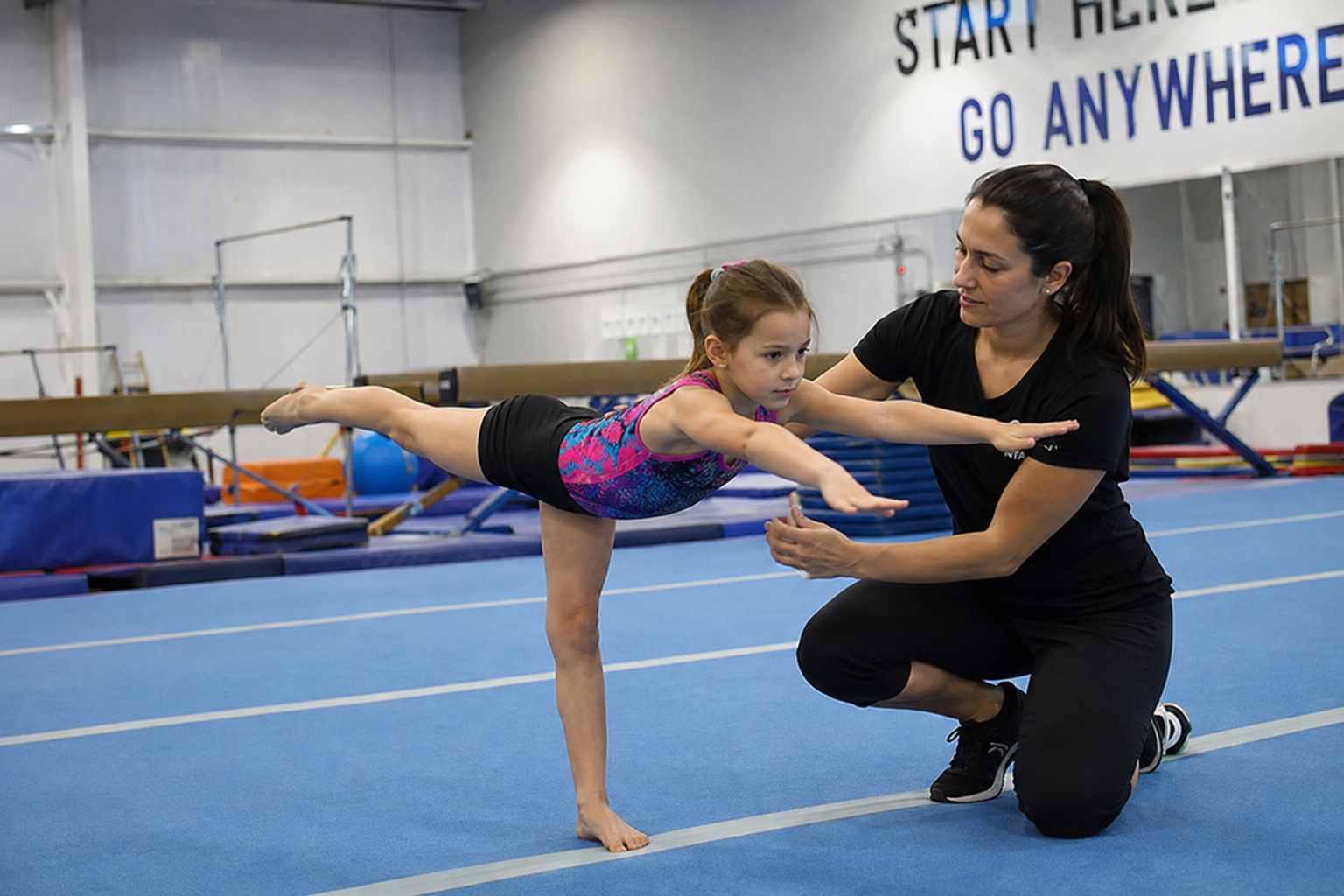
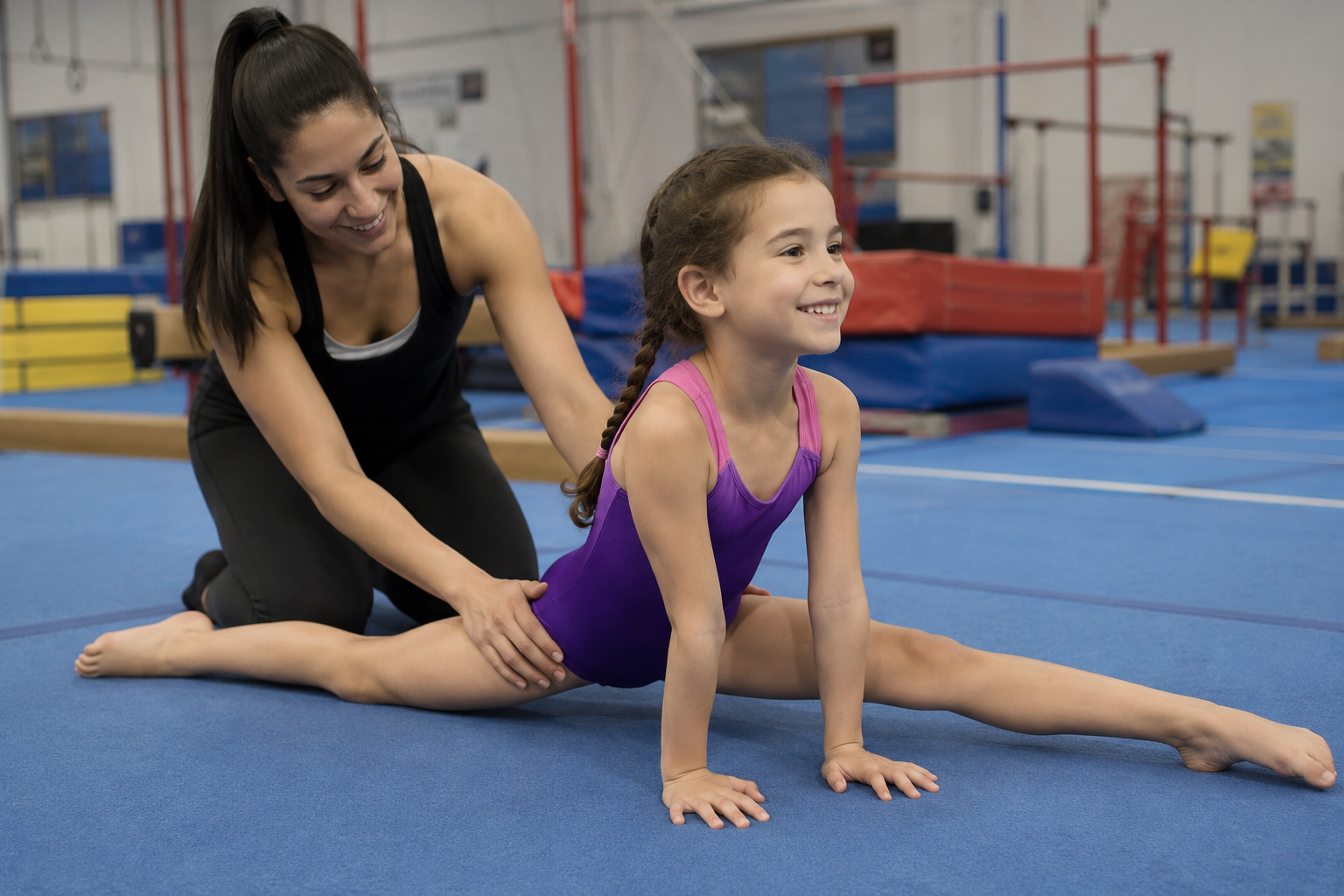
Beginners should always start with basic skills and learn from a qualified coach. Gymnastics involves movements that can become difficult quickly, so proper technique and safety are essential.
Benefits of Different Types of Gymnastics
Although every type of gymnastics is different, most forms provide important physical and mental benefits. Gymnastics can improve flexibility, strength, balance, coordination, posture, and body awareness.
Training can also improve discipline and concentration. Learning a new gymnastics skill often requires patience because progress does not happen immediately. With regular practice, gymnasts can develop confidence and learn how to overcome challenges.
Gymnastics can also be a fun way to stay physically active. Children can develop basic movement skills, while adults can use gymnastics based activities to improve flexibility, mobility, and overall fitness.
Final Thoughts
There are many different types of gymnastics, and each one offers something unique. Artistic gymnastics focuses on traditional apparatus and technical skills, while rhythmic gymnastics combines movement with music and apparatus. Trampoline gymnastics focuses on aerial skills, acrobatic gymnastics emphasizes teamwork, and aerobic gymnastics combines gymnastics with energetic fitness movements.
Tumbling is ideal for people who enjoy powerful flips and acrobatic skills, while general gymnastics provides a more recreational approach. Para gymnastics also demonstrates that gymnastics can be adapted to provide opportunities for athletes with different abilities.
Whether you are a complete beginner or an experienced athlete, there is a type of gymnastics that can match your interests. Starting with basic training, learning proper technique, and practicing consistently can help you build the strength and confidence needed to enjoy gymnastics safely.