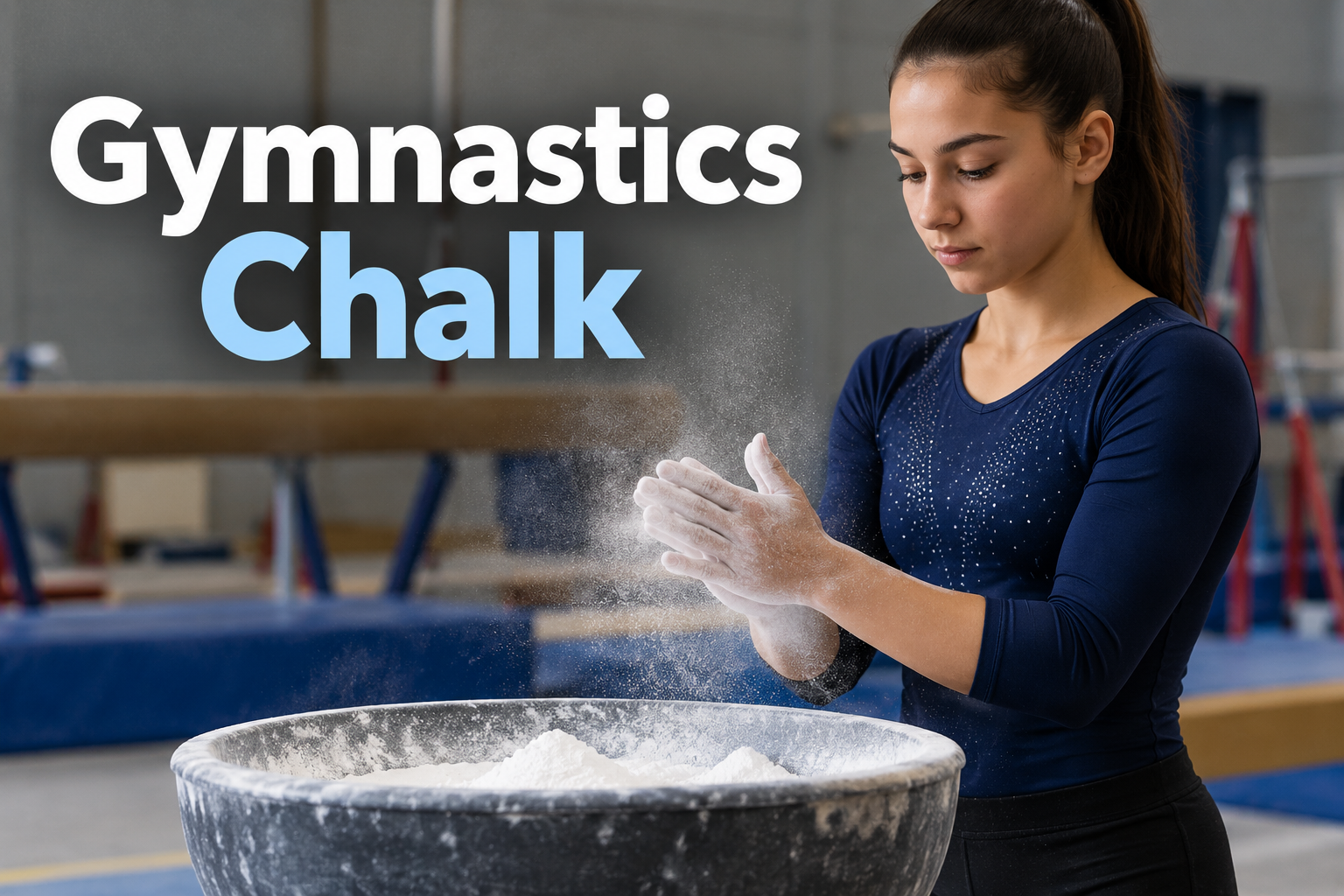
Gymnastics is a sport that demands strength, control, flexibility, balance, and confidence. Whether a gymnast is practicing on uneven bars, parallel bars, rings, or other apparatus, maintaining a secure grip is extremely important. One simple product that plays a major role in improving grip is gymnastics chalk.
Gymnastics chalk may look like an ordinary white powder, but it serves a very specific purpose. It helps absorb moisture from the hands and allows gymnasts to hold equipment more securely. For beginners, recreational gymnasts, and experienced athletes, chalk can make training more comfortable and help improve consistency during many skills.
Understanding what gymnastics chalk is, how it works, when to use it, and how to apply it correctly can help athletes train more effectively. This guide explains the most important facts about gymnastics chalk, including its types, benefits, proper use, storage, and safety considerations.
What Is Gymnastics Chalk?
Gymnastics chalk is a grip enhancing substance commonly used by gymnasts during training and competition. Most gymnastics chalk is made from magnesium carbonate.
Despite the name, it is different from the chalk used on school blackboards. Magnesium carbonate has strong moisture absorbing properties, making it useful for athletes whose hands become sweaty during physical activity.
When applied to the palms and fingers, gymnastics chalk helps keep the skin drier. This can reduce slipperiness when gripping bars, rings, or other equipment.
Gymnastics chalk is also used in sports such as rock climbing, weightlifting, powerlifting, and CrossFit. However, the way it is used may vary depending on the activity.
Why Do Gymnasts Use Chalk?
The main reason gymnasts use chalk is to improve grip.
During gymnastics, hands can become warm and sweaty. Even a small amount of moisture can make a smooth surface more difficult to hold. This becomes especially important during swinging, rotating, releasing, and catching movements.
Chalk absorbs some of the moisture on the gymnast’s hands and creates a drier contact surface between the skin and the apparatus.
A stronger and more predictable grip can help gymnasts focus on technique instead of constantly worrying about their hands slipping.
Chalk is especially common when working on events that require continuous hand contact with the equipment.
How Gymnastics Chalk Works
Gymnastics chalk works mainly by absorbing moisture.
Human hands naturally produce sweat, especially during exercise. Sweat reduces friction between the hands and equipment. When this happens, the gymnast may feel that the bar or apparatus is slippery.
Magnesium carbonate absorbs moisture and helps increase friction.
However, more chalk does not always mean better grip. Applying too much can create a thick layer of powder that may actually reduce direct contact with the apparatus.
Experienced gymnasts usually learn how much chalk works best for their hands and the specific event they are performing.
Different Types of Gymnastics Chalk
Gymnastics chalk is available in several forms. Each type has its own advantages.
Loose Chalk
Loose chalk is probably the most familiar form of gymnastics chalk.
It comes as a fine white powder that can be placed inside a chalk bowl or container. Gymnasts dip or rub their hands into the chalk before performing.
Loose chalk is easy to spread over the palms and fingers. It can also be applied quickly between routines.
One disadvantage is that loose chalk can create a large amount of dust if it is handled carelessly.
Chalk Blocks
Chalk blocks are compressed pieces of magnesium carbonate.
Gymnasts can rub their hands directly on the block or break the block into smaller pieces inside a chalk container.
Blocks tend to create less immediate dust than extremely fine loose chalk, although they eventually break down into powder during use.
They are easy to store and can be a convenient choice for gyms or individual athletes.
Chalk Balls
A chalk ball is usually a small fabric pouch filled with powdered chalk.
Instead of putting the hands directly into loose powder, the gymnast squeezes or rubs the ball. A controlled amount of chalk passes through the fabric.
Chalk balls can help reduce mess and make it easier to avoid using excessive amounts.
Liquid Chalk
Liquid chalk is a mixture that normally contains magnesium carbonate and a fast evaporating liquid.
It is applied to the hands as a liquid and allowed to dry. Once dry, it leaves a thin layer of chalk on the skin.
Liquid chalk usually creates less airborne dust than loose chalk. However, some gymnastics facilities may have their own rules regarding its use, so athletes should check before bringing it into the gym.
Gymnastics Events Where Chalk Is Commonly Used
Chalk is not equally important for every gymnastics event.
It is most useful on apparatus where the gymnast depends heavily on hand grip.
Uneven Bars
Female artistic gymnasts commonly use chalk on the uneven bars.
The hands must maintain control while the gymnast swings, circles, releases, and catches the bars. Chalk helps reduce the effect of sweaty palms.
Many gymnasts also use hand grips along with chalk.
High Bar
The high bar requires strong and reliable hand contact.
Gymnasts perform fast swinging movements and complex release skills, making grip management extremely important.
Chalk is regularly used before high bar routines.
Parallel Bars
Male gymnasts often apply chalk when performing on parallel bars.
Although the grip requirements are different from the high bar, dry hands can help improve control during support, swing, and balance movements.
Still Rings
Gymnasts performing on rings rely heavily on hand strength.
Chalk can help the gymnast maintain contact while performing strength holds, swings, and transitions.
Other Training Activities
Chalk may also be used during certain conditioning exercises or training drills.
For example, some gymnasts use chalk when doing pull ups, rope climbing, or strength exercises that involve bars.
Benefits of Using Gymnastics Chalk
Gymnastics chalk offers several practical benefits.
Better Grip
The most obvious benefit is improved grip.
Dry hands generally create better friction against gymnastics equipment than sweaty hands.
Increased Confidence
A gymnast who feels secure on the apparatus may perform with greater confidence.
Confidence is especially important when learning advanced skills that require full commitment.
More Consistent Training
If sweaty hands constantly interrupt training, it can be difficult to practice skills consistently.
Using chalk can help maintain similar grip conditions throughout a training session.
Support During Long Sessions
Gymnastics practices can last several hours.
As the body becomes warmer, sweating may increase. Chalk allows gymnasts to manage hand moisture throughout training.
How to Apply Gymnastics Chalk Correctly
Applying chalk correctly is simple, but using the right amount is important.
Start with clean and reasonably dry hands.
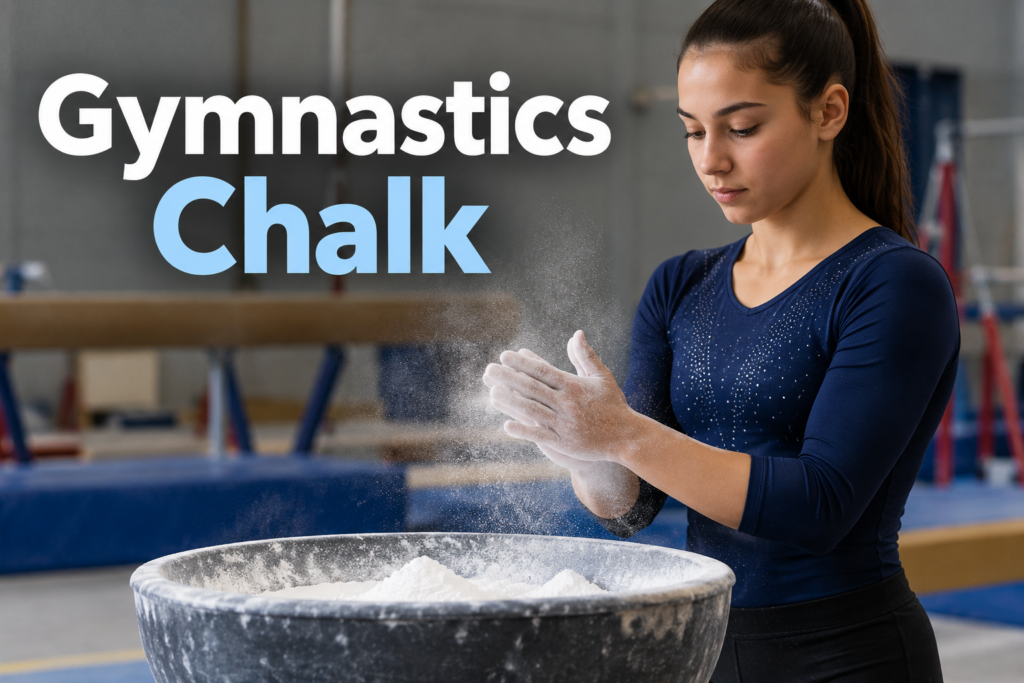
Place a small amount of chalk on the palms. Rub the hands together gently to spread the chalk across the areas that will contact the equipment.
Make sure the fingers and important grip areas are covered.
Avoid creating extremely thick layers.
Some gymnasts repeatedly dip their hands into the chalk bowl because they believe more chalk provides better grip. In reality, excessive chalk can build up on equipment and make surfaces uncomfortable or uneven.
The goal is to create a thin, even layer.
Gymnastics Chalk and Hand Grips
Many gymnasts use chalk together with gymnastics grips.
Grips are pieces of leather or similar material worn around the hands and wrists. They are commonly used on uneven bars, high bar, and rings.
Chalk can be applied to both the hands and the grips.
The combination can help control moisture and provide more predictable contact with the apparatus.
However, gymnasts should always learn how to use grips correctly under the guidance of a qualified coach. Poorly fitted or incorrectly used grips may create problems rather than improve performance.
Can Gymnastics Chalk Prevent Blisters?
Chalk is mainly used for grip management, not for preventing every type of hand injury.
Gymnasts can still develop blisters, calluses, and skin tears even when using chalk.
In some situations, extremely dry skin combined with repeated friction may actually become more vulnerable to cracking or tearing.
Good hand care is therefore important.
Gymnasts often inspect their hands regularly, manage rough calluses carefully, and use appropriate skin care products outside training.
A coach can also help beginners learn how to manage their hands as their training volume increases.
Is Gymnastics Chalk Safe?
Magnesium carbonate gymnastics chalk is widely used in sports.
For normal athletic use, the main concerns are usually related to dust, skin dryness, and cleanliness rather than serious danger.
Loose chalk can produce airborne particles, especially in busy gyms.
People who are sensitive to dust may prefer chalk balls or other lower dust options where permitted.
Chalk can also dry the skin. Washing the hands after practice and using a suitable moisturizer may help keep the skin comfortable.
Athletes with existing skin problems or breathing concerns should follow appropriate professional advice and gym policies.
Keeping Chalk Areas Clean
Gymnastics chalk can become messy very quickly.
Most gyms provide designated chalk bowls or stations.
Gymnasts should apply chalk near these areas instead of walking around the gym with loose powder.
Spilled chalk should be cleaned according to the facility’s procedures.
Equipment may also need regular cleaning because chalk can gradually build up on surfaces.
Good chalk management keeps the gym cleaner and helps maintain equipment in better condition.
How to Store Gymnastics Chalk
Chalk should be kept in a dry location.
Because magnesium carbonate is used to absorb moisture, storing it in a humid environment can reduce its quality.
Loose chalk should be kept in a sealed container when it is not being used.
Chalk blocks can also be stored in resealable bags or containers.
Liquid chalk should be closed tightly after use to prevent the liquid component from evaporating inside the bottle.
Keeping chalk organized also prevents unnecessary waste.
How Much Chalk Should a Gymnast Use?
There is no perfect amount that works for everyone.
The correct amount depends on the gymnast’s hands, the apparatus, environmental conditions, and personal preference.
Some athletes naturally sweat more than others.
Hot and humid gyms may also require slightly more frequent applications.
The best approach is usually to begin with a small amount and add more only when necessary.
A thin coating across the main grip areas is often enough.
Common Mistakes When Using Gymnastics Chalk
One common mistake is using far too much chalk.
Excessive powder can create unnecessary dust and leave thick deposits on equipment.
Another mistake is applying chalk without removing heavy moisture first. If the hands are extremely sweaty, lightly drying them before applying chalk may help.
Gymnasts should also avoid wasting chalk by throwing it into the air or clapping heavily chalked hands together.
These habits create mess without improving performance.
Finally, gymnasts should follow the rules of their training facility. Some gyms may limit certain types of chalk to protect equipment and air quality.
Choosing the Right Gymnastics Chalk
When selecting gymnastics chalk, consider the form, quality, storage method, and rules of the gym where it will be used.
Loose chalk is simple and traditional.
Blocks are easy to store and transport.
Chalk balls provide more controlled application.
Liquid chalk may create less airborne powder, although it may not be allowed in every gymnastics facility.
Beginners usually do not need expensive or highly specialized products. A reliable magnesium carbonate chalk that is suitable for gymnastics is normally sufficient.
Coaches may also recommend specific products based on the equipment used in their gym.
The Importance of Good Technique
Chalk can improve grip conditions, but it cannot replace proper gymnastics technique.
A gymnast still needs correct hand position, strength, body control, timing, and safe progression.
Beginners should learn new skills under qualified supervision.
If a gymnast constantly feels that the apparatus is slipping even after using chalk correctly, the problem may involve technique, hand position, equipment condition, or another factor that should be discussed with a coach.
Equipment should also be maintained properly according to the manufacturer’s instructions and the gym’s safety procedures.
Final Thoughts
Gymnastics chalk is a simple but important part of training for many gymnasts. Made mainly from magnesium carbonate, it helps absorb moisture from the hands and creates a drier surface for gripping gymnastics equipment.
It is commonly used on uneven bars, high bar, rings, parallel bars, and during various strength exercises.
Gymnasts can choose between loose chalk, chalk blocks, chalk balls, and liquid chalk depending on their needs and gym rules.
The most important thing is to use chalk correctly. A light and even coating is usually more effective than covering the hands with excessive powder.
Chalk can support better grip and more consistent training, but it should always be combined with proper technique, responsible equipment use, good hand care, and guidance from qualified coaches.
For gymnasts of all experience levels, learning how to use chalk properly is one of the small details that can make training feel more controlled, comfortable, and reliable.