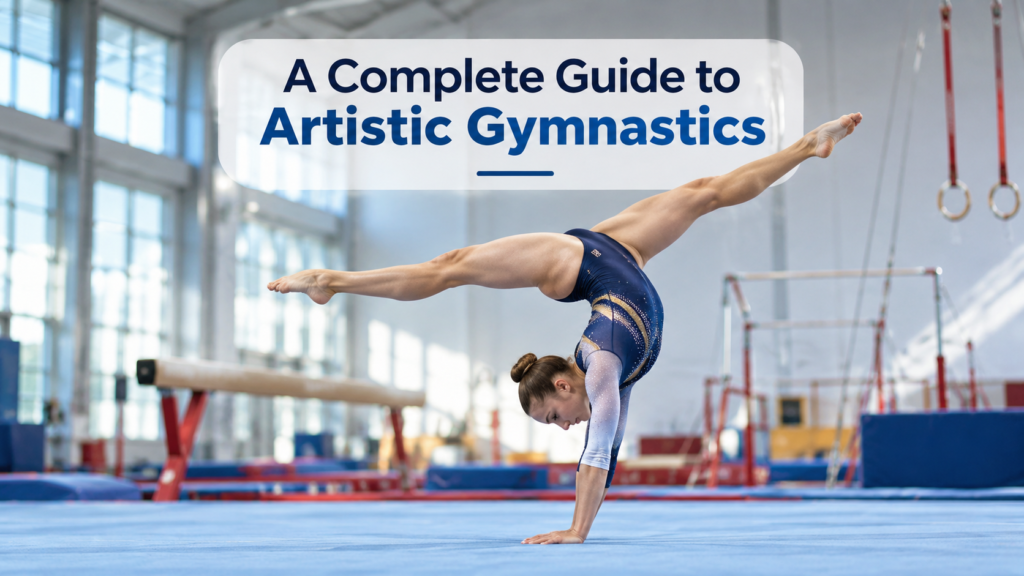
Artistic gymnastics is one of the most exciting and visually impressive sports in the world. It combines strength, flexibility, balance, coordination, speed, control, and creativity in a way that very few other sports can match. Gymnasts perform routines on different apparatus while trying to show technical accuracy, confident movement, and artistic presentation.
For beginners, artistic gymnastics can sometimes look complicated because athletes perform many different skills in a short period of time. Flips, turns, swings, jumps, handstands, and landings often happen so quickly that it can be difficult to understand what the gymnast is actually doing.
However, once the basic structure of artistic gymnastics is understood, the sport becomes much easier to follow and appreciate.
This complete guide explains what artistic gymnastics is, how it works, the main apparatus used by men and women, basic skills, scoring, training, safety, and some important tips for beginners.
What Is Artistic Gymnastics?
Artistic gymnastics is a competitive form of gymnastics in which athletes perform short routines on specific pieces of equipment known as apparatus.
Each routine contains a combination of skills. Depending on the apparatus, these skills may include handstands, jumps, leaps, turns, swings, flips, rolls, holds, and controlled landings.
The word “artistic” is important because gymnastics is not only about completing difficult movements. Gymnasts are also expected to perform with control, body awareness, good posture, rhythm, and confidence.
Men’s and women’s artistic gymnastics have different events, although some skills and training methods are similar.
Women’s artistic gymnastics traditionally includes four events, while men’s artistic gymnastics includes six.
Women’s Artistic Gymnastics Events
Women’s artistic gymnastics is performed on four apparatus.
Vault
Vault is one of the fastest events in artistic gymnastics.
The gymnast runs along a runway, jumps onto a springboard, places the hands on the vaulting table, and performs a movement through the air before landing on the floor.
A good vault requires speed, power, timing, body position, and landing control.
Beginner gymnasts usually learn basic jumping and landing techniques before attempting more advanced vaults. As athletes progress, vaults may include twists, flips, and other complex movements.
One of the most important parts of vault training is learning how to land safely. Gymnasts should try to land with controlled body position rather than allowing the body to collapse forward or backward.
Uneven Bars
Uneven bars consist of two horizontal bars positioned at different heights.
Gymnasts swing around the bars and move between them using a combination of releases, turns, handstands, and transitions.
Upper body strength is extremely important on uneven bars. Strong shoulders, arms, wrists, hands, and core muscles help gymnasts maintain control during their routines.
Beginners normally start with basic support positions, hanging exercises, simple swings, and safe dismount practice.
Over time, these movements can develop into more difficult skills involving large swings and releases.
Balance Beam
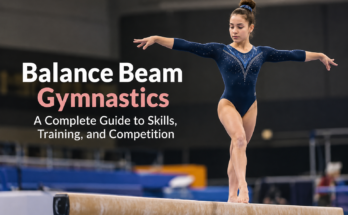
The balance beam is one of the most demanding apparatus because gymnasts perform their routines on a very narrow surface.
A beam routine may include jumps, leaps, turns, acrobatic movements, poses, and a final dismount.
Balance is obviously important, but successful beam work also depends on concentration and confidence.
A gymnast who hesitates too much may lose rhythm or body position.
Beginners often practice beam skills close to the ground. This allows them to improve balance and movement without unnecessary fear.
Walking forward and backward, holding different positions, simple turns, and basic jumps are useful starting exercises.
Floor Exercise
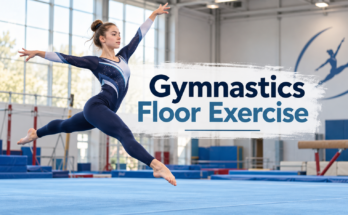
Floor exercise combines gymnastics skills with movement and choreography.
Women’s floor routines are traditionally performed with music.
A gymnast may perform tumbling passes, leaps, jumps, turns, dance movements, and artistic transitions across the floor area.
Floor training helps develop many skills that are useful throughout gymnastics.
Handstands, cartwheels, rolls, bridges, round offs, and basic jumps are often introduced during early floor training.
As gymnasts become more experienced, they may begin practicing more advanced tumbling skills.
Men’s Artistic Gymnastics Events
Men’s artistic gymnastics includes six apparatus.
Floor Exercise
Men’s floor routines contain powerful tumbling skills along with strength, balance, and control movements.
Gymnasts use the entire floor area while combining different movement patterns.
Good floor routines require explosive power for tumbling as well as precise control during slower positions.
Pommel Horse
The pommel horse is one of the most technical events in men’s gymnastics.
Gymnasts support themselves with their hands while swinging their legs around the apparatus.
Circular movements are a major part of pommel horse routines.
Strong shoulders, wrists, arms, hips, and core muscles are especially important.
The gymnast must also maintain rhythm because even a small interruption can affect the entire movement sequence.
Still Rings
Still rings require exceptional upper body and core strength.
The gymnast hangs from two rings and performs swinging movements as well as strength positions.
Some positions require the gymnast to hold the body completely still for a short period.
This is difficult because the rings naturally move.
Good ring technique requires strength together with careful control.
Vault
Men also compete on vault.
The basic concept is similar to women’s vault. The gymnast runs toward the springboard, contacts the vaulting table, performs an aerial movement, and then lands.
Men’s vaults can involve significant height, speed, rotation, and twisting.
Parallel Bars
Parallel bars consist of two horizontal bars placed side by side.
Gymnasts perform swings, support positions, handstands, releases, and dismounts.
Balance and upper body control are essential throughout the routine.
Horizontal Bar
The horizontal bar, sometimes called the high bar, is one of the most dramatic events in men’s gymnastics.
Gymnasts perform large swings around the bar and may release the bar during certain skills before catching it again.
These movements require excellent timing, grip strength, body control, and confidence.
Basic Artistic Gymnastics Skills
Every advanced gymnast starts with basic movements.
Learning correct technique early is extremely important because many difficult skills are built from simpler ones.
Some common beginner gymnastics skills include:
- Forward roll
- Backward roll
- Handstand
- Cartwheel
- Bridge
- Straight jump
- Tuck jump
- Split position
- Basic balance hold
- Round off
These skills help gymnasts develop coordination, spatial awareness, strength, and confidence.
Beginners should avoid rushing into advanced flips or aerial skills before developing strong foundations.
Importance of Strength in Gymnastics
Gymnastics requires strength throughout the entire body.
Upper body strength helps with bars, rings, handstands, and support positions.
Leg strength is important for jumping, tumbling, vaulting, and landing.
Core strength is especially important because the core helps connect upper and lower body movements.
Common strength exercises used in gymnastics training may include push ups, pull ups, squats, leg raises, planks, hollow body holds, and controlled handstand exercises.
Training should be appropriate for the gymnast’s age, ability, and experience.
Flexibility in Artistic Gymnastics
Flexibility allows gymnasts to move through larger ranges of motion.
It can improve body positions in jumps, leaps, splits, bridges, and other skills.
However, flexibility should be developed gradually.
Trying to force the body into extreme positions can cause discomfort or injury.
A proper warm up should normally be completed before deeper stretching.
Gymnasts often work on flexibility in the shoulders, hips, legs, back, ankles, and wrists.
Consistency is usually more useful than trying to make very large improvements in one session.
Balance and Coordination
Balance is necessary in almost every gymnastics event.
Even floor skills depend on balance during takeoff, rotation, and landing.
Balance training can begin with simple exercises such as standing on one leg.
As control improves, gymnasts may practice different arm positions, turns, jumps, and movements on a low beam.
Coordination is also essential.
Gymnasts often need several parts of the body to move at exactly the right moment.
This is one reason gymnastics skills improve through repetition.
The nervous system gradually becomes more familiar with the movement pattern.
How Artistic Gymnastics Is Scored
Competitive artistic gymnastics uses a structured scoring system.
At higher competitive levels, routines are generally evaluated based on difficulty and execution.
The difficulty portion reflects the value of the skills included in the routine.
The execution portion considers how accurately the gymnast performs those skills.
Judges may consider issues such as body position, balance errors, falls, bent arms or legs, steps during landings, and other technical mistakes.
Different competitions may use rules that vary according to level, age group, and governing organization.
For beginners, it is more important to understand that clean technique and controlled performance matter alongside difficulty.
Performing a simpler routine well can be more useful for development than attempting advanced skills without proper control.
Why Landings Matter
Landing technique is one of the most important parts of gymnastics training.
Gymnasts land after jumps, vaults, tumbling passes, bar dismounts, and beam dismounts.
A controlled landing helps complete the skill and can also reduce unnecessary stress on the body.
Beginners are usually taught to land with the knees slightly bent and the body under control.
The knees should generally follow the direction of the feet rather than collapsing inward.
Landing drills can be practiced from low heights before progressing to more difficult skills.
Warm Up Before Gymnastics
A good gymnastics session normally begins with a warm up.
The purpose of warming up is to gradually prepare the muscles and joints for movement.
A basic warm up may include light jogging, arm circles, leg movements, gentle jumping, wrist preparation, ankle movements, and dynamic stretching.
Gymnasts should also prepare the specific body areas that will be heavily used during the session.
For example, a bar session may require additional wrist and shoulder preparation.
Safety in Artistic Gymnastics
Safety should always come before difficulty.
Gymnastics involves movements that can place significant demands on the body.
Advanced skills should be learned under qualified supervision and with appropriate equipment.
Beginners should not attempt complex flips, releases, or high level tumbling simply after watching videos online.
Proper progression is extremely important.
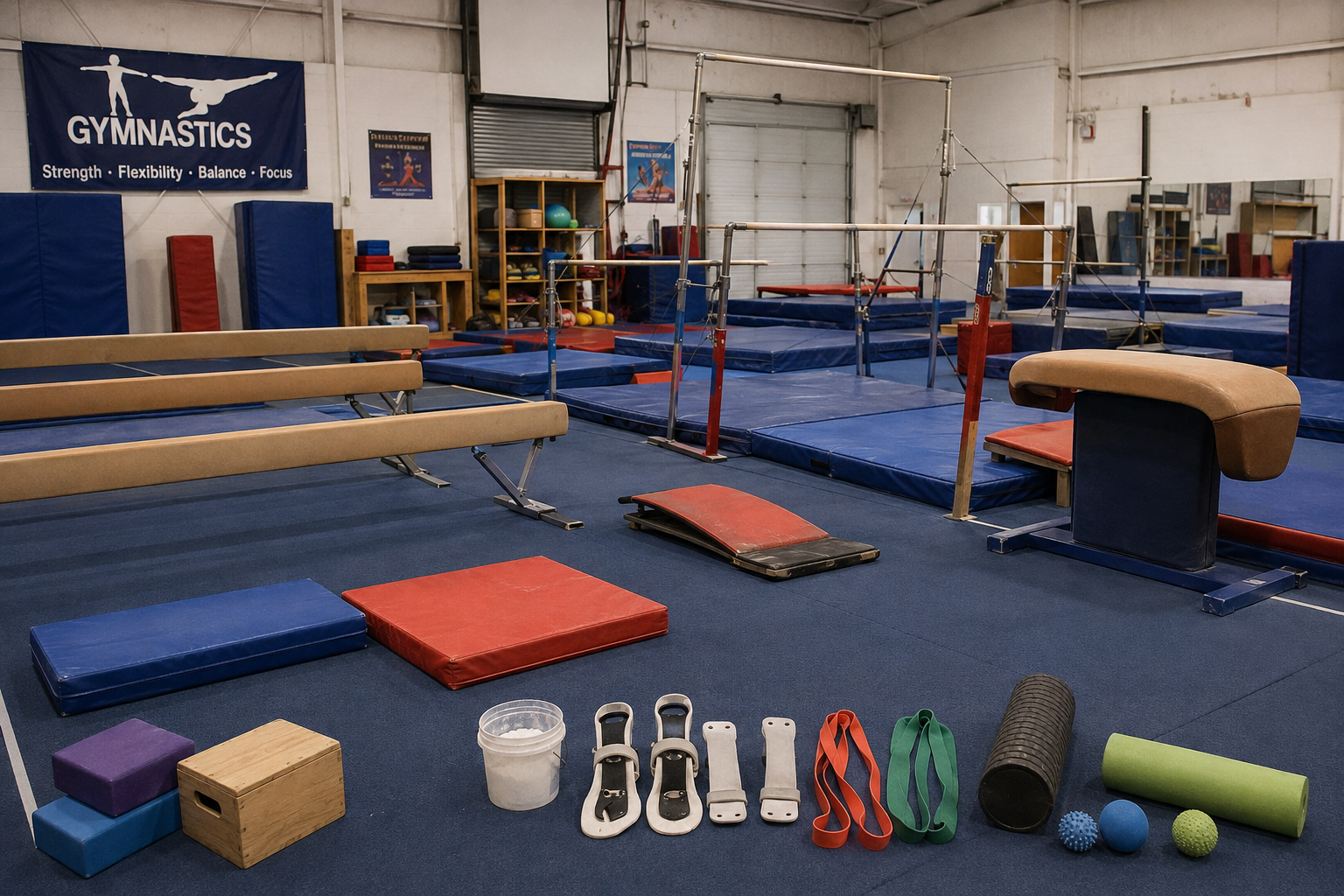
Training mats, spotting, suitable equipment, and experienced coaching can help create a safer learning environment.
Gymnasts should also communicate when they experience pain.
Normal muscle tiredness after training is different from sharp or persistent pain.
Ignoring discomfort and continuing difficult training can make a minor problem worse.
The Role of a Gymnastics Coach
A good coach teaches much more than individual skills.
Coaches help gymnasts understand technique, progression, conditioning, discipline, safety, and competition preparation.
They can also identify mistakes that may be difficult for the gymnast to notice.
For example, a gymnast may feel that a handstand is straight while the hips are actually slightly bent.
A coach can provide corrections and appropriate drills.
Trust and communication between the gymnast and coach are important parts of long term development.
How Beginners Can Improve Faster
Beginners often want to learn impressive skills quickly, but gymnastics usually rewards patience.
The fastest long term progress often comes from improving basic technique.
A strong handstand can support progress in many other skills.
Good jumping technique can improve vaulting and tumbling.
Proper body tension can help with bars and strength positions.
Regular training is also important.
Practicing consistently allows the body to become familiar with movements.
Progress may sometimes feel slow, but small technical improvements can eventually lead to major results.
Common Mistakes Beginners Make
One common mistake is trying advanced skills too early.
Another mistake is focusing only on flexibility while ignoring strength.
Some gymnasts also train strength but neglect mobility and technique.
A balanced training approach is usually more effective.
Poor landings are another issue.
Beginners sometimes concentrate so much on completing the skill that they forget about the landing.
The landing should be considered part of the skill itself.
Skipping warm ups is another mistake that should be avoided.
Benefits of Artistic Gymnastics
Artistic gymnastics can provide many physical benefits.
Regular training may improve strength, flexibility, balance, coordination, body awareness, and general fitness.
The sport can also develop valuable mental habits.
Learning gymnastics requires patience because difficult skills may take weeks, months, or even longer to master.
Gymnasts learn how to repeat movements, accept corrections, manage mistakes, and continue improving.
Competition may also help athletes become more comfortable performing under pressure.
Artistic Gymnastics for Children
Gymnastics can be introduced to children through age appropriate programs.
Young beginners normally focus on basic movement rather than advanced competition skills.
Classes may include rolling, jumping, balancing, climbing, hanging, and simple coordination activities.
A positive training environment is especially important for children.
The main goal should be learning proper movement while building confidence and enjoyment.
Parents should look for programs that use qualified coaches and suitable equipment.
Can Adults Learn Artistic Gymnastics?
Gymnastics is not only for children.
Adults can also learn many gymnastics skills.
Adult beginners may need more time for flexibility, strength, or recovery compared with younger gymnasts, but significant progress is still possible.
The training approach should match the individual’s fitness level and experience.
Adult learners may begin with rolls, handstands, cartwheels, basic strength exercises, balance drills, and introductory apparatus work.
There is no need to compare progress with competitive athletes who have trained from childhood.
How Long Does It Take to Learn Gymnastics?
There is no single answer.
Progress depends on age, physical condition, training frequency, coaching quality, confidence, and the difficulty of the skill.
Some basic movements may be learned relatively quickly.
Advanced skills can require years of preparation.
Instead of focusing only on speed, beginners should focus on safe and consistent improvement.
Good technique learned slowly is usually more valuable than poor technique learned quickly.
Final Thoughts
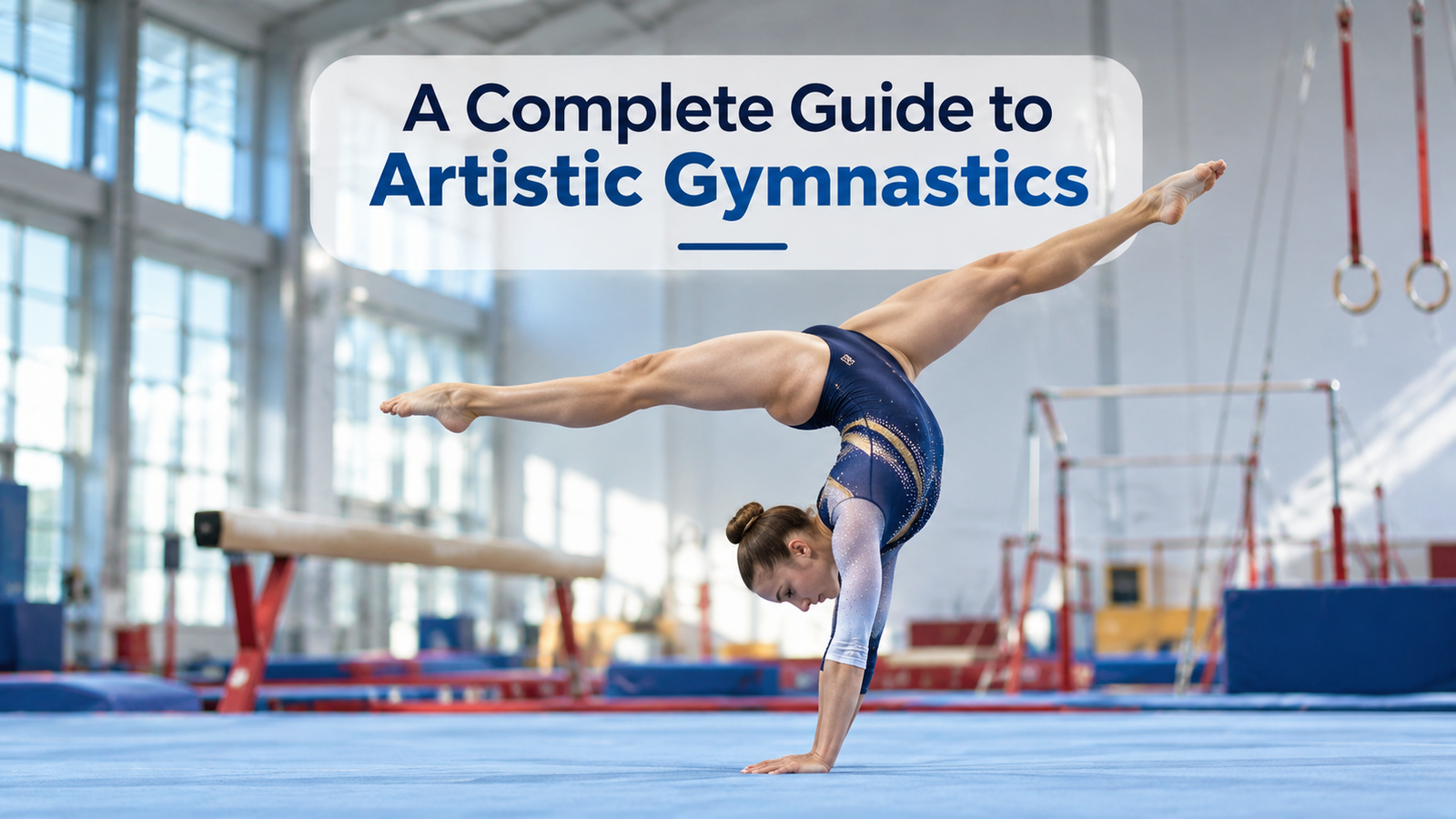
Artistic gymnastics is a unique sport that combines athletic power with controlled movement and artistic expression.
From the balance beam and uneven bars to rings, vault, floor, and horizontal bar, every apparatus presents a different challenge.
Successful gymnasts need much more than flexibility.
They develop strength, coordination, balance, timing, body awareness, discipline, and confidence.
For anyone beginning artistic gymnastics, the most important lesson is to respect the basics. Strong fundamentals create the foundation for advanced skills.
Learn movements gradually, practice consistently, use proper equipment, listen to qualified coaches, and place safety before difficulty.
Whether gymnastics is practiced recreationally or competitively, it can be an enjoyable way to develop impressive physical abilities while learning patience, concentration, and control.