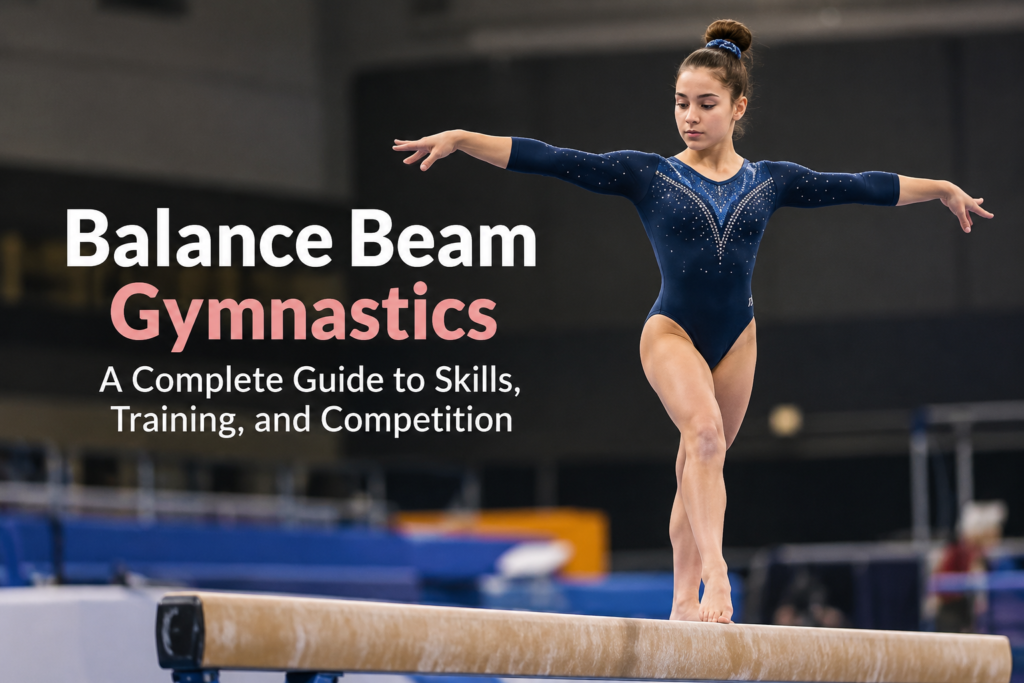
Balance beam gymnastics is one of the most impressive and demanding events in artistic gymnastics. It combines balance, flexibility, strength, coordination, confidence, and creativity on a very narrow surface. A gymnast must perform jumps, turns, acrobatic movements, dance elements, and a dismount while maintaining control from beginning to end.
The balance beam may look simple when viewed from the audience, but performing on it requires years of practice. Even experienced gymnasts must constantly work on technique, body control, and confidence. A small mistake in foot placement or body position can lead to a wobble or fall.
This guide explains what balance beam gymnastics is, how the apparatus is designed, the main types of skills performed, how routines are created, how gymnasts train, and why this event remains one of the most exciting parts of women’s artistic gymnastics.
What Is Balance Beam Gymnastics?
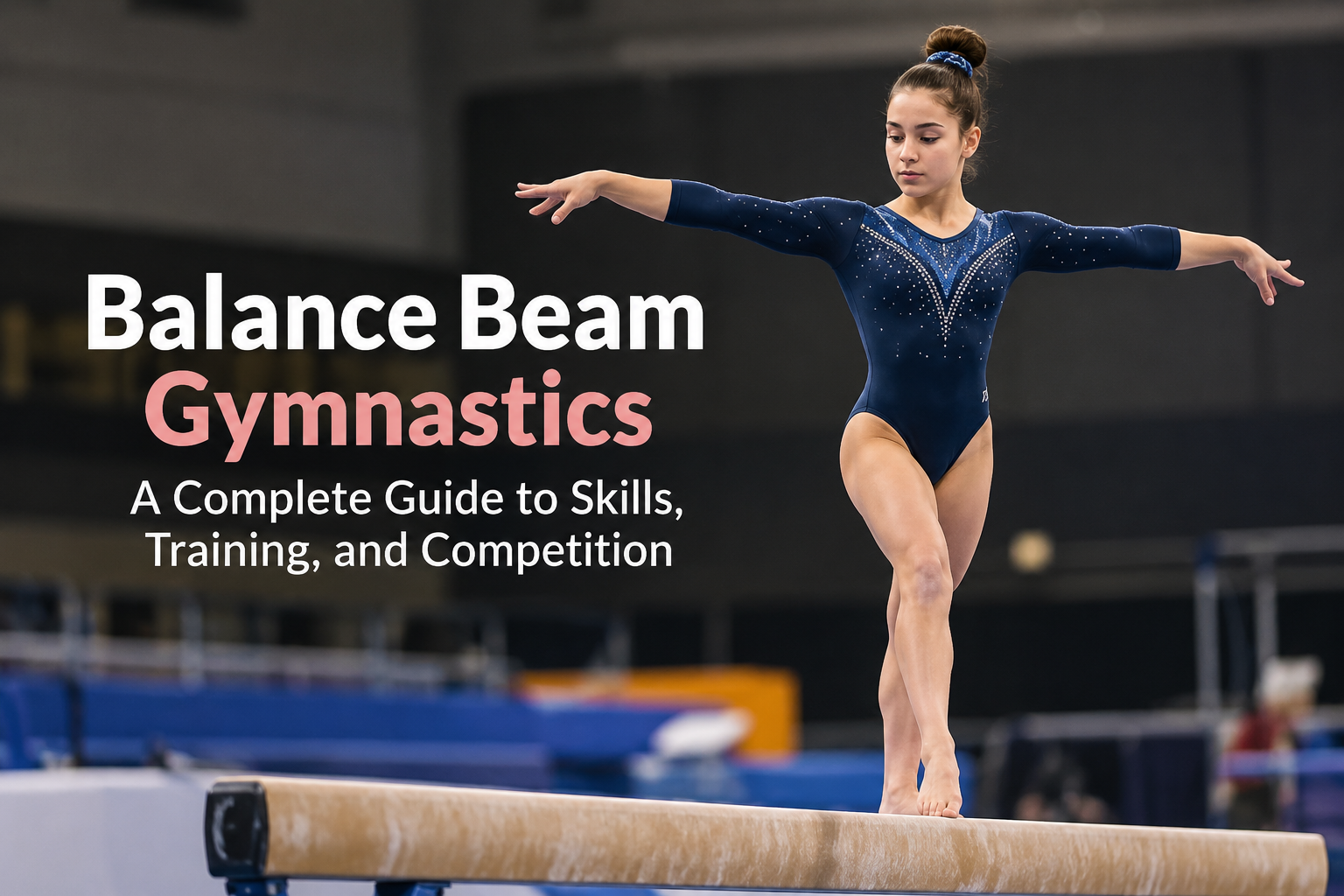
Balance beam is an apparatus used in women’s artistic gymnastics. The gymnast performs a routine on a long, narrow beam raised above the floor.
The challenge comes from performing difficult movements while staying balanced on a surface that is only about the width of an adult hand.
A balance beam routine normally includes a combination of dance and acrobatic elements. Gymnasts may perform leaps, jumps, turns, handstands, walkovers, flips, and other movements before finishing with a dismount.
Judges evaluate both the difficulty of the routine and the quality of its execution.
Balance beam is not only about avoiding falls. A strong routine should look confident, controlled, fluid, and artistic.
Balance Beam Dimensions
In competitive gymnastics, the beam follows standard dimensions.
A regulation balance beam is approximately five meters long and ten centimeters wide. It is positioned about 1.25 meters above the floor.
The surface is covered with a padded material that provides some grip and cushioning while still remaining firm enough for gymnastics skills.
The narrow width is what makes the event so difficult. A gymnast must place the feet, hands, and body very accurately.
Beginners usually start training on a beam that is close to the floor. As their confidence and skills improve, they gradually move to higher beams.
Why Balance Beam Requires So Much Control
Balance beam gymnastics demands complete body awareness.
During a floor exercise, a gymnast has a large area for landing. On the beam, the available landing surface is extremely narrow.
Every movement must therefore be carefully controlled.
The gymnast needs to understand where the body is positioned even during fast flips and turns. This ability is often called spatial awareness.
Core strength is also essential. Strong abdominal and back muscles help gymnasts stabilize their bodies and recover from small balance mistakes.
The legs, ankles, and feet play an equally important role. They help control landings and maintain stability throughout the routine.
Basic Balance Beam Skills
Beginners usually start with simple movements before learning advanced acrobatics.
Walking correctly on the beam is one of the first skills. Gymnasts learn to keep their posture upright while placing the feet carefully.
They also practice basic turns, poses, jumps, and balances.
Simple skills may include forward walking, backward walking, side steps, relevé walks, half turns, full turns, straight jumps, tuck jumps, and basic handstands.
Although these movements may look easy, proper technique is important.
Learning good habits at the beginner level creates a strong foundation for advanced gymnastics.
Jumps and Leaps
Jumps and leaps are important parts of balance beam routines.
A jump normally begins and ends with both feet or involves taking off from a stable position. A leap often involves traveling through the air with one leg leading.
Gymnasts may perform straight jumps, split jumps, tuck jumps, wolf jumps, or more difficult variations.
Leaps require flexibility and accurate timing.
One of the main challenges is landing directly on the beam after the body has left the apparatus.
The gymnast must control the landing immediately without taking extra steps or making large arm movements.
Good beam leaps should show height, body extension, and confidence.
Turns and Dance Elements
Turns add artistry and difficulty to a beam routine.
A gymnast may perform a full turn, multiple turns, or turns in difficult body positions.
Successful turns require strong balance and excellent spotting technique.
The gymnast needs to rotate while keeping the supporting foot in a stable position.
Dance elements are also used to connect the routine together.
These movements help create flow between acrobatic sections.
Judges look for rhythm, expression, confident movement, and smooth transitions rather than a routine that appears hesitant or disconnected.
Acrobatic Skills
Acrobatics are some of the most exciting elements performed on the balance beam.
Gymnasts may perform skills such as handstands, cartwheels, walkovers, back handsprings, aerials, and flips.
Advanced gymnasts often connect several acrobatic skills together.
For example, a gymnast might perform a back handspring followed immediately by another acrobatic element.
These combinations can increase the difficulty value of the routine.
The main challenge is maintaining alignment.
If the shoulders, hips, or feet move too far away from the center of the beam, the gymnast can lose balance.
For this reason, advanced skills are practiced repeatedly on safer training surfaces before they are attempted on a competition height beam.
Mounts
Every beam routine begins with a mount.
A mount is the movement used to get onto the beam.
Some gymnasts use a relatively simple mount, while others perform complex acrobatic movements.
The choice depends on the gymnast’s skill level, routine strategy, and confidence.
A strong mount allows the gymnast to begin the routine smoothly.
Because it is the first movement judges see, it can also influence the overall impression of the performance.
Gymnasts therefore practice mounts carefully so they can begin with confidence and control.
Dismounts
The dismount is the final part of a balance beam routine.
The gymnast leaves the beam using an acrobatic movement and lands on the mat.
Common dismounts may involve flips, twists, or combinations of both.
Advanced dismounts can be extremely difficult.
The gymnast must generate enough power from the narrow beam while maintaining precise body positioning.
Landing is particularly important.
A controlled landing with little or no movement demonstrates excellent technique.
A large step, hop, or fall can lead to deductions.
Because the dismount is the final skill, a strong landing often creates a memorable finish.
How Balance Beam Routines Are Created
A successful balance beam routine combines difficulty, execution, and artistry.
Coaches usually select skills that match the gymnast’s strengths.
The most difficult routine is not always the best routine.
A gymnast needs to perform each skill consistently under competition pressure.
The routine may include a mount, acrobatic elements, dance elements, leaps, turns, connections, and a dismount.
The gymnast also needs to use different directions and levels while moving along the beam.
Transitions between skills should appear natural.
A routine that includes difficult skills but many pauses may not look as polished as one that flows smoothly.
Good choreography helps connect everything together.
How Balance Beam Is Scored
Modern elite artistic gymnastics uses a scoring system that evaluates both difficulty and execution.
The Difficulty Score reflects the value of selected skills and combinations performed in the routine.
The Execution Score evaluates how well the routine is performed.
Judges may deduct points for mistakes such as bent legs, poor body alignment, lack of height, incomplete turns, pauses, balance checks, steps on landing, or falls.
Even a gymnast with a highly difficult routine can lose many points if the performance contains major errors.
This is why consistency is extremely important.
A successful gymnast must find the right balance between difficulty and reliable execution.
Common Balance Beam Mistakes
Wobbles are among the most common mistakes.
A small balance correction may lead to a minor deduction, while a major wobble can result in a larger deduction.
Falls are more serious and can significantly affect the final score.
Other common mistakes include bent knees, flexed feet, low jumps, incomplete split positions, poor landings, and long pauses before difficult skills.
Gymnasts sometimes hesitate because they are preparing mentally for a difficult movement.
However, too much hesitation can disrupt the rhythm of the routine.
Regular repetition helps athletes perform skills more naturally.
How Gymnasts Train for Balance Beam
Balance beam training usually begins with basic positions and movements.
Young gymnasts may practice on lines marked on the floor before moving onto a low beam.
They then gradually learn more difficult skills.
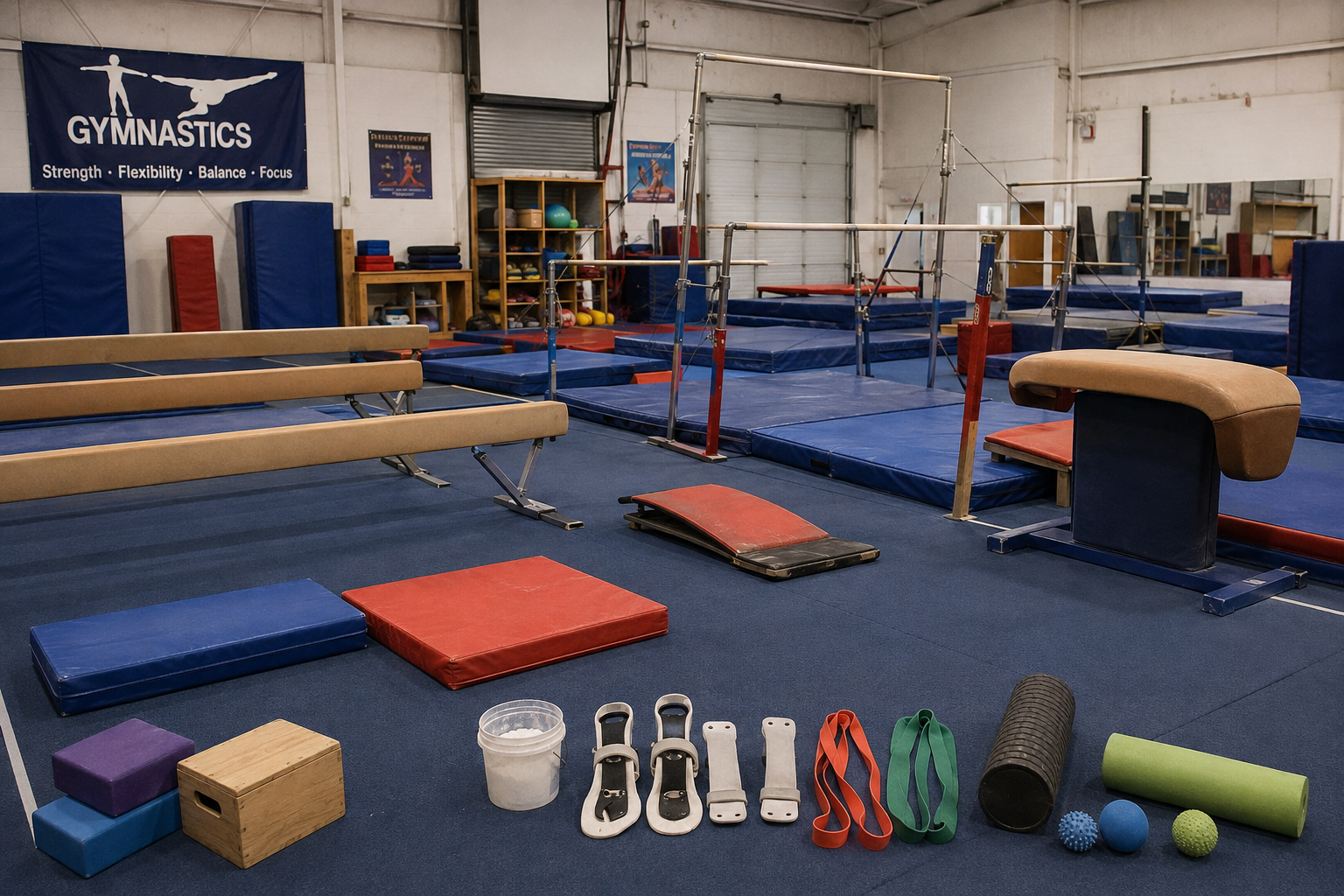
Coaches often use soft mats, training beams, spotting techniques, and foam pits when introducing advanced movements.
Gymnasts may practice the same skill hundreds or even thousands of times.
Repetition helps build muscle memory.
Conditioning is also important.
Core exercises, leg strengthening, flexibility work, ankle training, and coordination drills help athletes perform more safely and consistently.
Training is not limited to physical preparation.
Mental preparation is equally important.
The Importance of Confidence
Confidence plays a major role in balance beam gymnastics.
A gymnast may know how to perform a skill perfectly in training but still feel nervous during competition.
Because the beam is narrow and elevated, fear can affect timing and body movement.
Gymnasts therefore develop routines for managing pressure.
Some use breathing techniques or visualization before competing.
Others mentally rehearse the entire routine.
The goal is to perform the skills automatically instead of thinking about every small movement.
Confidence usually grows through preparation.
The more consistently a gymnast performs a skill during training, the more comfortable it becomes during competition.
Safety in Balance Beam Training
Safety should always be a priority.
Gymnasts should learn skills progressively instead of attempting difficult movements too early.
A qualified coach can determine when an athlete is ready to progress.
Proper mats should be placed around the beam during training.
Advanced skills may also require spotting or additional safety equipment.
Gymnasts should warm up before practicing and avoid training difficult movements when excessively tired.
Correct technique reduces unnecessary stress on the ankles, knees, wrists, and other parts of the body.
Strength and Flexibility
Balance beam requires a combination of strength and flexibility.
Strong legs help gymnasts jump and land.
Core strength keeps the body stable during turns and acrobatics.
Arm and shoulder strength are needed for handstands, walkovers, and other skills involving weight on the hands.
Flexibility allows gymnasts to achieve larger split positions and more attractive body shapes.
However, flexibility alone is not enough.
The gymnast also needs strength to control flexible positions.
This combination creates movements that look powerful yet graceful.
Why Balance Beam Is Exciting to Watch
Balance beam creates a unique kind of excitement.
The audience understands that even a very small mistake can change the outcome of a competition.
A gymnast may perform an extremely difficult routine perfectly, while another gymnast may lose valuable points because of a single fall.
The event also combines athleticism and artistry.
A routine can include powerful flips followed immediately by graceful dance movements.
This contrast makes balance beam different from many other sporting events.
At the highest level, elite gymnasts make incredibly difficult movements appear effortless.
Balance Beam for Beginners
Beginners should focus on fundamentals rather than difficult tricks.
Learning proper posture, foot placement, body alignment, and landing technique is more valuable than rushing toward advanced skills.
Simple balance exercises can also be practiced away from the beam.
Standing on one leg, walking along a straight line, practicing turns, and strengthening the core can all improve balance.
Progress may sometimes feel slow, but patience is important.
Gymnastics skills develop gradually.
Every advanced gymnast once started with basic walking and balancing exercises.
Final Thoughts
Balance beam gymnastics is a remarkable combination of precision, strength, flexibility, courage, and artistry. The narrow beam creates a challenge that requires complete concentration and excellent body control.
Gymnasts spend years developing the ability to perform jumps, turns, acrobatic skills, and complex combinations while remaining balanced.
A successful routine is not simply a collection of difficult tricks. It should demonstrate confidence, rhythm, clean technique, creativity, and control from the mount to the final landing.
For beginners, the key is to develop strong fundamentals and progress gradually under proper coaching. For competitive gymnasts, consistent training and mental preparation are just as important as physical ability.
Whether performed by a young beginner or an elite international athlete, balance beam remains one of the most fascinating events in artistic gymnastics. It shows how discipline and practice can transform a narrow piece of equipment into a stage for extraordinary athletic performance.