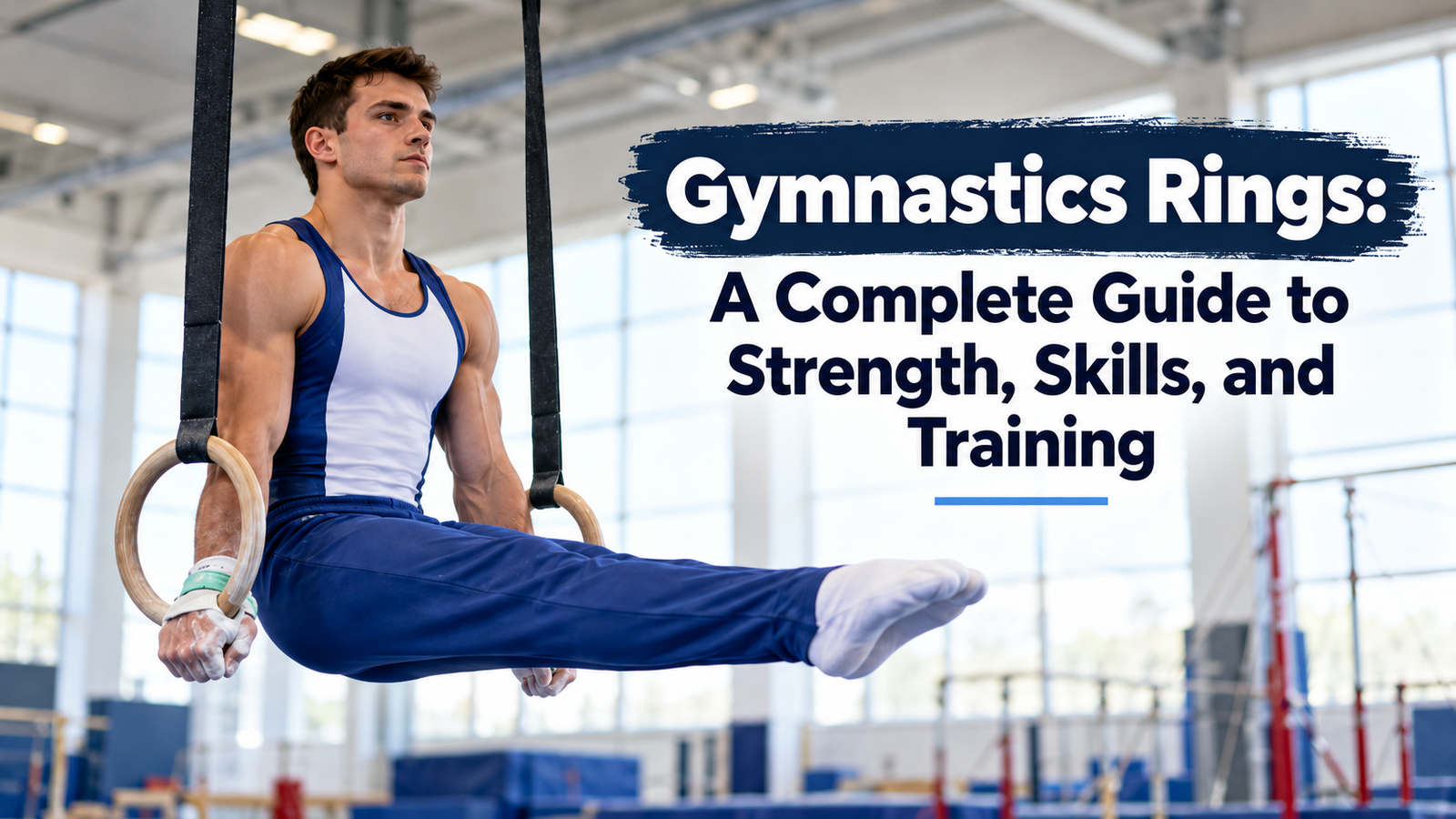
Gymnastics rings are one of the most challenging and impressive pieces of equipment in artistic gymnastics. They require a unique combination of strength, balance, body control, flexibility, and concentration. Unlike many other gymnastics events where the apparatus remains fixed, the rings move freely. This instability makes even simple positions difficult and places a high demand on the shoulders, arms, chest, back, and core.
The rings event is mainly associated with men’s artistic gymnastics. During a competitive routine, a gymnast performs a combination of swinging movements, strength holds, transitions, and a dismount. Every movement must be performed with control and proper body alignment.
Although elite gymnasts make ring skills look effortless, years of structured training are required to build the strength and technique needed for advanced movements. Understanding how gymnastics rings work can help beginners, parents, coaches, and gymnastics fans appreciate the event more deeply.
What Are Gymnastics Rings?
Gymnastics rings are two circular rings suspended from straps above the floor. The gymnast holds one ring in each hand and performs movements while the rings remain free to swing.
The rings are sometimes called still rings because gymnasts are expected to keep them as stable as possible during strength positions. However, keeping the rings still is extremely difficult because they naturally move whenever the gymnast changes body position.
In competition, gymnasts perform both static and dynamic skills. Static skills involve holding the body in a fixed position, while dynamic skills include swings, rotations, transitions, and dismounts.
The combination of movement and stability makes rings different from most traditional strength exercises.
Why Are Gymnastics Rings So Difficult?
The greatest challenge of gymnastics rings comes from instability.
When performing an exercise on a fixed bar, the equipment provides a stable point of support. Rings can move forward, backward, sideways, and outward. The athlete must constantly make small adjustments to keep the body balanced.
This requires many muscles to work together.
The shoulders stabilize the arms. The chest and back control the upper body. The abdominal muscles keep the body straight. The hands and forearms maintain a secure grip.
Even basic exercises such as holding the body above the rings can feel difficult for beginners.
As athletes become stronger, they gradually learn how to control the movement of the rings rather than fighting against it.
Basic Gymnastics Rings Positions
Before learning advanced skills, gymnasts usually practice several fundamental positions.
Support Position
The support position is one of the first skills learned on rings.
The gymnast holds the body above the rings with straight arms. The rings are positioned beside the hips while the legs remain straight underneath the body.
Although it appears simple, maintaining a stable support position requires considerable shoulder and core strength.
Beginners may initially notice the rings shaking. With regular training, stability gradually improves.
Dead Hang
A dead hang is another basic position.
The gymnast hangs from the rings with straight arms and allows the body to extend downward.
This position helps develop grip strength and shoulder awareness. It is also commonly used as the starting position for pulling exercises and swinging drills.
Tuck Position
In a tuck position, the knees are brought toward the chest.
This position shortens the body and makes several skills easier to control. Gymnasts often learn movements in a tuck position before progressing to straight leg variations.
L Sit
The L sit is a strength position where the gymnast supports the body with straight arms while extending both legs forward.
The body forms a shape similar to the letter L.
This exercise requires strong abdominal muscles, hip flexors, shoulders, and arms.
Important Strength Skills on Gymnastics Rings
Strength elements are a major part of ring routines. Gymnasts must demonstrate complete control while holding demanding positions.
Iron Cross
The iron cross is perhaps the most famous gymnastics rings skill.
The gymnast supports the body with both arms extended sideways at approximately shoulder level. The body remains vertical while the arms form a straight line.
The position resembles a cross, which explains the name.
The iron cross requires extraordinary shoulder, chest, arm, and back strength. Gymnasts usually spend years developing the strength needed to perform it safely.
Maltese
The Maltese is an advanced strength position.
The gymnast holds the body horizontally while the arms extend outward and slightly backward. The body remains close to ring height.
This skill places significant stress on the shoulders and arms and requires exceptional control.
Planche
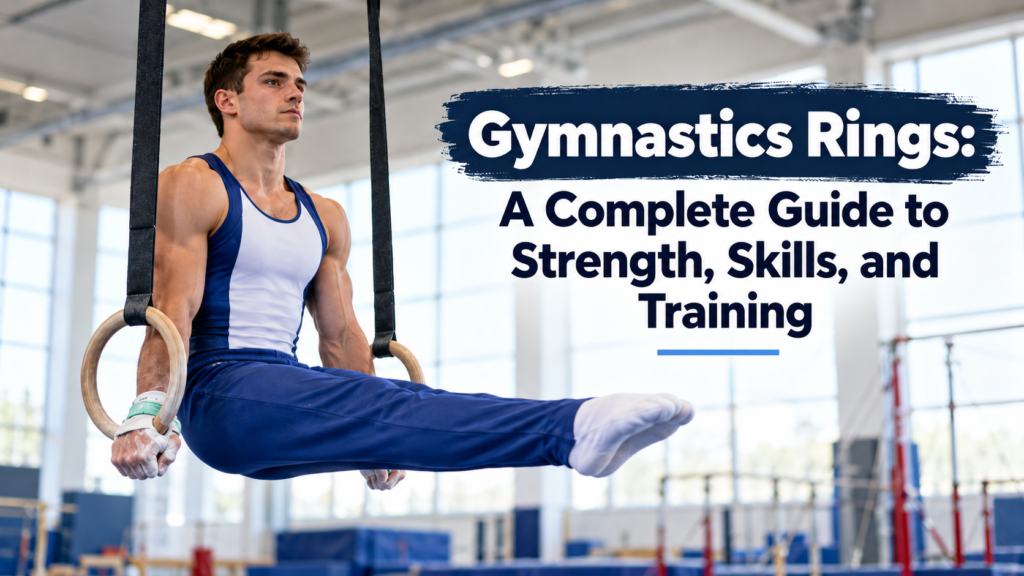
A ring planche involves supporting the entire body horizontally with straight arms.
Unlike floor planche training, performing the skill on rings adds instability, making it significantly more difficult.
Strong shoulders, chest muscles, abdominal muscles, and wrists are essential.
Front Lever
During a front lever, the gymnast hangs from the rings while holding the entire body horizontally facing upward.
The arms stay straight while the back and core muscles prevent the hips from dropping.
Beginners usually practice easier progressions before attempting a full front lever.
Back Lever
The back lever is similar to the front lever, but the gymnast’s body faces toward the floor.
The shoulders, chest, back, and core work together to maintain the horizontal position.
Proper preparation is important because the skill places considerable demand on shoulder flexibility and strength.
Swinging Skills on Rings
A good rings routine is not made entirely of strength holds.
Swinging movements are also an important part of competitive gymnastics.
During swings, the gymnast moves forward and backward underneath the rings. These movements create momentum that can be used for transitions, handstands, and other elements.
Successful swinging requires rhythm.
If the gymnast uses too much unnecessary movement, the rings may begin swinging excessively. This makes the next skill more difficult.
Experienced gymnasts learn to generate power while keeping the rings controlled.
The Handstand on Rings
A handstand is one of the most important advanced positions in gymnastics.
Performing a handstand on rings is considerably more difficult than performing one on the floor.
The gymnast pushes through straight arms while keeping the body completely vertical. Because each ring can move independently, the athlete must constantly stabilize both shoulders.
A strong core is also necessary to prevent the back from arching excessively.
Ring handstands are often included in advanced competitive routines.
Dismounts From Gymnastics Rings
A routine normally ends with a dismount.
The gymnast releases the rings after generating enough swing and rotation to complete a flipping or twisting movement before landing.
Advanced gymnasts may perform multiple rotations or combinations of flips and twists.
Landing is very important.
The athlete should aim to land with balance and control. Taking unnecessary steps after landing may affect the execution score in competition.
Muscles Used During Ring Training
Gymnastics rings provide an intense upper body workout.
The shoulders are constantly working to stabilize the arms. The chest muscles contribute to pushing and strength positions. The back muscles are heavily involved in pulling exercises and lever movements.
The biceps and triceps help control elbow movement.
Grip and forearm muscles remain active whenever the gymnast holds the rings.
The abdominal muscles also play an essential role. Many ring movements require the body to remain straight and rigid.
For this reason, rings training is often considered a full upper body and core challenge.
Benefits of Training With Gymnastics Rings
Gymnastics rings offer several physical benefits.
One of the biggest advantages is functional strength. Because the rings move freely, the muscles must work together rather than operating independently.
Ring training can also improve body awareness.
Athletes quickly learn how small changes in shoulder, hip, or leg position affect balance.
Grip strength may improve significantly through hanging and pulling exercises.
Another benefit is versatility. Rings can be used for many exercises, including rows, pull ups, dips, push ups, holds, and core movements.
However, training should always match the athlete’s current ability.
Beginner Gymnastics Rings Exercises
Beginners do not need to attempt advanced gymnastics skills immediately.
Several basic exercises can help build the necessary foundation.
Ring rows are an excellent starting exercise. The athlete holds the rings while leaning backward and then pulls the chest toward the hands.
Assisted ring dips can help develop pushing strength.
Dead hangs improve grip strength and shoulder comfort.
Support holds teach beginners how to stabilize the rings.
Tuck holds develop abdominal control.
These exercises can gradually prepare the body for more advanced movements.
The Importance of Progressions
Progression is especially important in gymnastics rings training.
Advanced skills create large forces around the shoulder and elbow joints. Attempting them before developing sufficient strength can increase the risk of injury.
For example, a gymnast interested in learning the front lever may first practice tuck front levers.
As strength improves, the legs can gradually be extended.
A similar approach is used for many other ring skills.
The goal is to increase difficulty gradually while maintaining good technique.
Shoulder Strength and Stability
Healthy and stable shoulders are extremely important for ring gymnasts.
Because the rings can move independently, the shoulders must constantly respond to changing forces.
Training often includes controlled pulling, pushing, hanging, and stabilization exercises.
Proper warm ups are also important before demanding sessions.
Young gymnasts should receive guidance from qualified coaches when practicing difficult strength positions.
Trying to force advanced skills before the body is prepared can create unnecessary strain.
Grip on Gymnastics Rings
Grip technique plays an important role in ring performance.
For basic movements, gymnasts usually hold the rings naturally with the fingers wrapped around them.
Advanced movements may involve a false grip.
A false grip places the wrist higher over the ring rather than allowing the ring to sit entirely in the palm.
This grip can help with transitions such as muscle ups.
However, it may feel uncomfortable at first and should be practiced gradually.
Gymnastics Ring Routines
Competitive routines combine several categories of movements.
A gymnast may begin with swinging elements, transition into strength holds, perform inverted positions, move into a handstand, and finish with a difficult dismount.
The routine should demonstrate both strength and control.
Athletes also try to connect movements smoothly.
Long pauses or unnecessary adjustments can make a routine appear less polished.
At higher competitive levels, the difficulty and quality of individual elements contribute to the final score.
Common Mistakes Beginners Make
One common mistake is progressing too quickly.
Seeing advanced gymnasts perform iron crosses or planches can make these skills appear easier than they actually are.
Another mistake is training only the arms.
Successful ring training requires strong shoulders, chest, back, core, and grip.
Poor body alignment is another common problem.
During many skills, the body should remain tight rather than allowing the hips or legs to move unnecessarily.
Beginners may also perform too much training before their joints have adapted to the demands of rings.
Consistent training with appropriate recovery is usually more effective than rushing progress.
Safety When Training on Gymnastics Rings
Safety should always be a priority.
The rings should be securely attached to equipment designed to support the athlete’s body weight.
The surrounding area should remain clear of obstacles.
Appropriate mats are important when practicing gymnastics skills.
Beginners should keep the rings relatively close to the floor when learning basic strength exercises.
Advanced skills involving flips, inverted positions, or difficult strength holds should be practiced under qualified coaching.
Pain should never be ignored. Sharp discomfort around the shoulders, elbows, wrists, or chest may indicate that an exercise is too demanding.
Gymnastics Rings for General Fitness
Gymnastics rings are not limited to competitive gymnasts.
They have become popular in general fitness, calisthenics, and strength training.
Exercises such as ring rows, push ups, dips, and pull ups can be adjusted for different fitness levels.
Changing the angle of the body can make many exercises easier or harder.
For example, a ring row performed with the body nearly upright is easier than a row performed with the body closer to horizontal.
This makes rings useful for progressive training.
However, recreational users should still respect the instability of the equipment and learn basic technique before increasing difficulty.
Final Thoughts
Gymnastics rings are one of the most demanding events in artistic gymnastics. They combine strength, balance, control, coordination, and technical precision in a way that few other pieces of equipment can match.
From basic support holds and hangs to advanced skills such as the iron cross, Maltese, planche, and lever positions, every stage of ring training requires patience and consistent practice.
The most successful gymnasts build strong foundations before attempting difficult skills. They develop shoulder stability, grip strength, core control, and proper body alignment over many years of training.
For beginners, rings can provide an excellent way to improve upper body strength and body awareness when used appropriately. For competitive athletes, they offer an opportunity to demonstrate extraordinary strength and control.
Whether you are learning gymnastics, watching a competition, or exploring rings for fitness, understanding the techniques behind the apparatus makes the event even more impressive.