Gymnastics is one of the best physical activities for improving flexibility and mobility. Many gymnastics movements require the body to stretch, bend, rotate, balance, and move through a wide range of motion. Because of this, regular gymnastics training can help the muscles become more flexible while also teaching the joints to move smoothly and safely.
Flexibility and mobility are important for gymnasts, but they are also useful for people who simply want to improve their overall fitness. Better flexibility can make daily movements easier, while good mobility can help the body perform exercises with better control. Gymnastics combines stretching, strength, balance, and body control, making it a complete way to develop movement quality.
What Is Flexibility and Mobility?
Before understanding how gymnastics improves flexibility and mobility, it is important to know the difference between them.
Flexibility is the ability of a muscle to stretch and allow a joint to move through a certain range of motion. For example, being able to touch your toes or perform a split requires a good level of flexibility.
Mobility is slightly different. Mobility refers to the ability of a joint to move through its available range of motion with control and strength. A person may have flexible muscles but still have poor mobility if they cannot control their movements properly.
Gymnastics works on both areas. Gymnasts do not simply stretch their muscles. They also develop strength and control while moving through different positions.
Gymnastics Uses a Wide Range of Motion
One major reason gymnastics improves flexibility is that the sport regularly uses a wide range of body movements. Gymnasts perform movements that involve the shoulders, hips, legs, back, ankles, and arms.
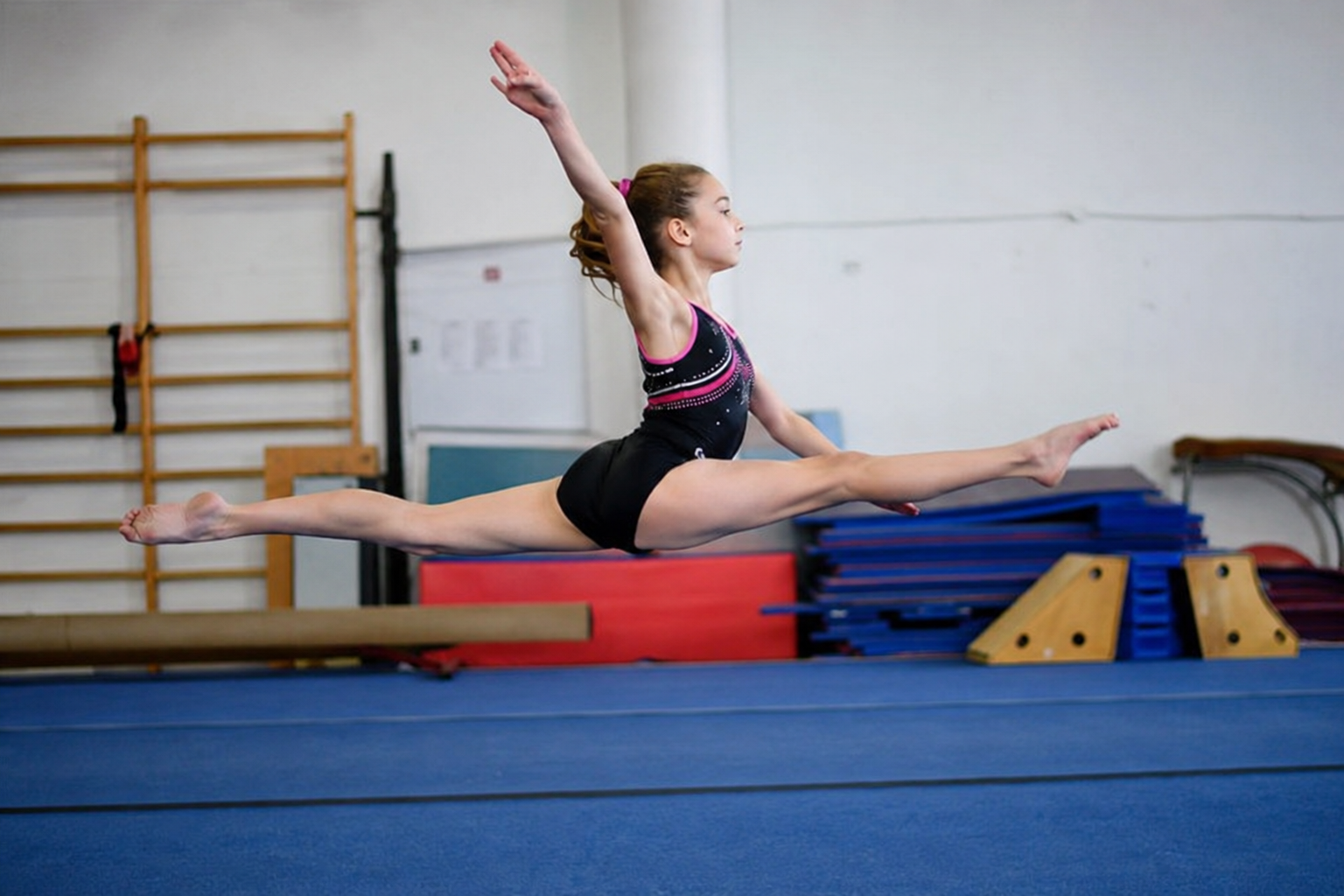
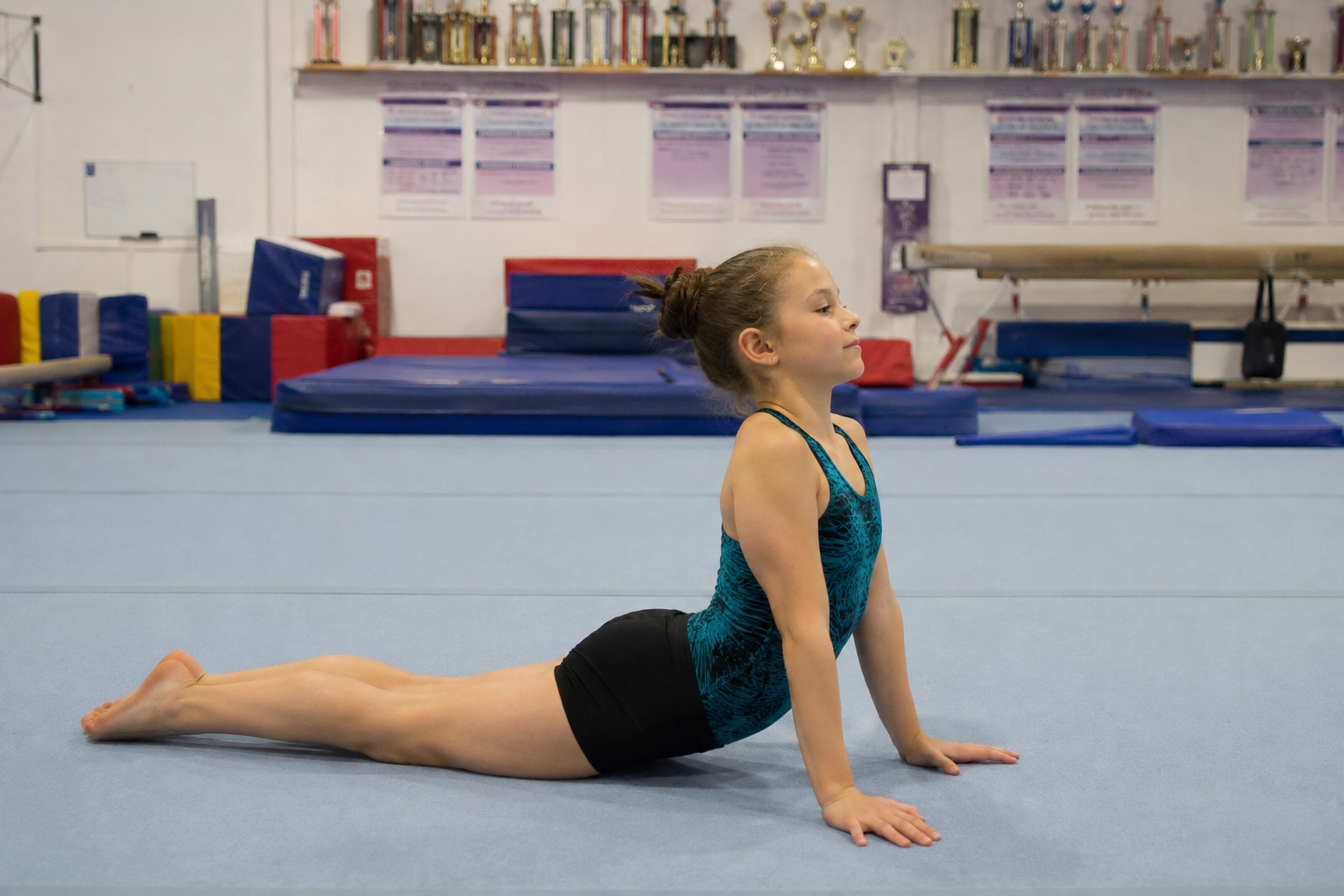
Skills such as bridges, handstands, splits, cartwheels, leaps, and kicks require the body to move beyond the range used in many normal daily activities. With consistent practice, the muscles and joints become more comfortable with these positions.
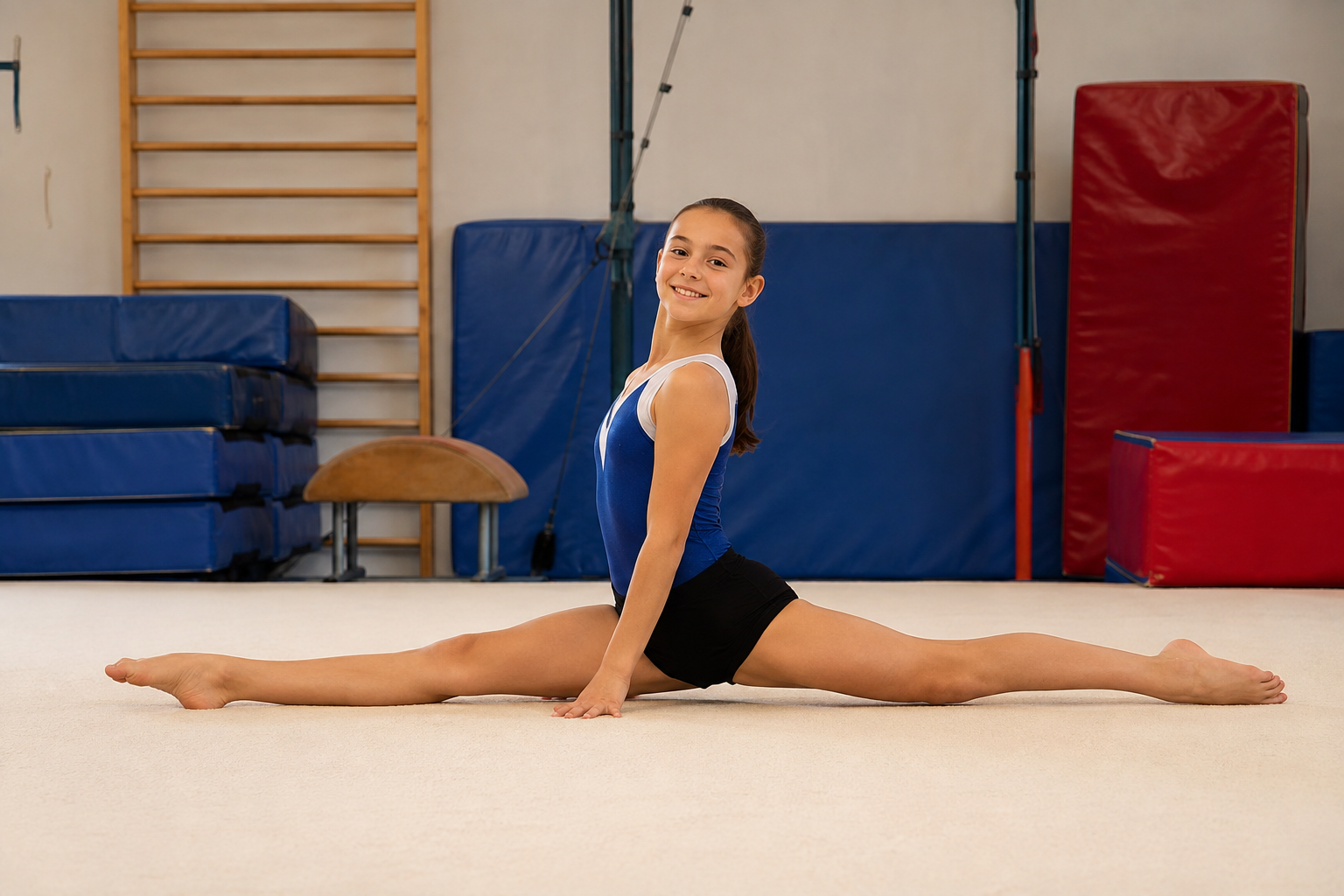
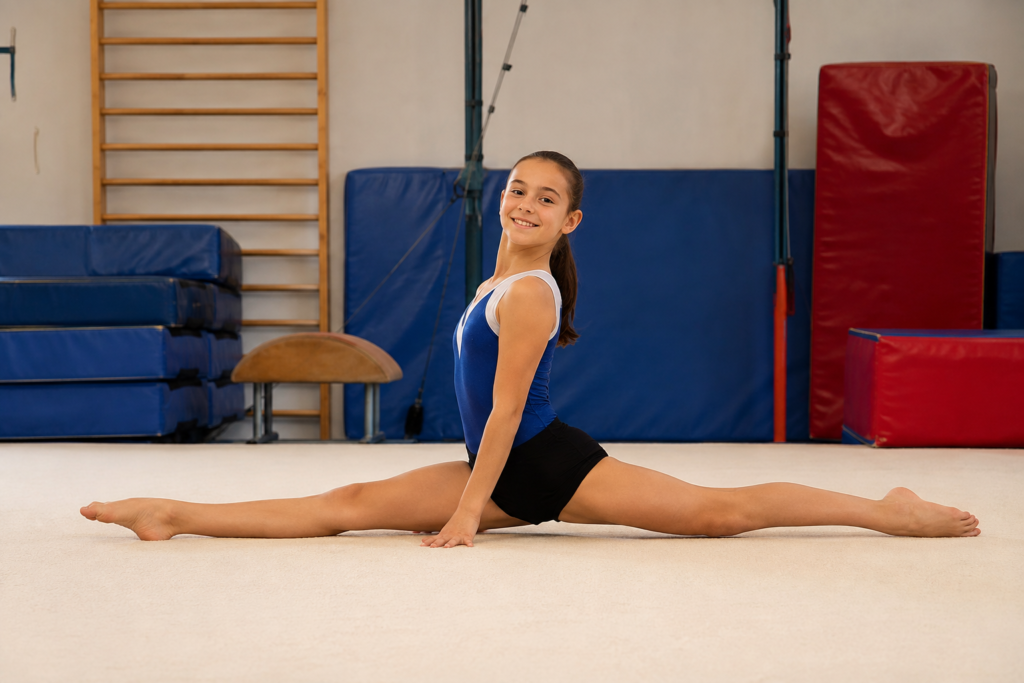
For example, a gymnast practicing a split gradually trains the muscles around the hips and legs to tolerate a greater range of motion. The same principle applies to shoulder movements during handstands and back movements during bridges.
Regular Stretching Supports Better Flexibility
Stretching is an important part of gymnastics training. Most gymnastics sessions include warm ups, dynamic movements, active stretching, and sometimes static stretching.
Dynamic stretching involves controlled movement through a range of motion. Examples include leg swings, arm circles, walking lunges, and controlled kicks. These movements prepare the body for gymnastics skills while helping improve movement range.
Static stretching involves holding a position for a period of time. Gymnasts may use static stretches for the hamstrings, hips, shoulders, calves, and back.
When stretching is performed regularly and correctly, it can gradually improve flexibility. However, stretching should never be forced. Pushing the body too far can increase the risk of injury.
Gymnastics Improves Hip Mobility
Hip mobility is extremely important in gymnastics. Many skills require the hips to open, rotate, bend, and extend.
Splits, jumps, leaps, kicks, and certain floor exercises all depend on good hip movement. Gymnasts regularly train these movements, which can help improve the range of motion around the hips.
Good hip mobility can also benefit other physical activities. Running, squatting, jumping, dancing, and many strength exercises require the hips to move efficiently.
Gymnastics training teaches the body how to control these movements rather than simply forcing the joints into extreme positions.
Gymnastics Develops Shoulder Mobility
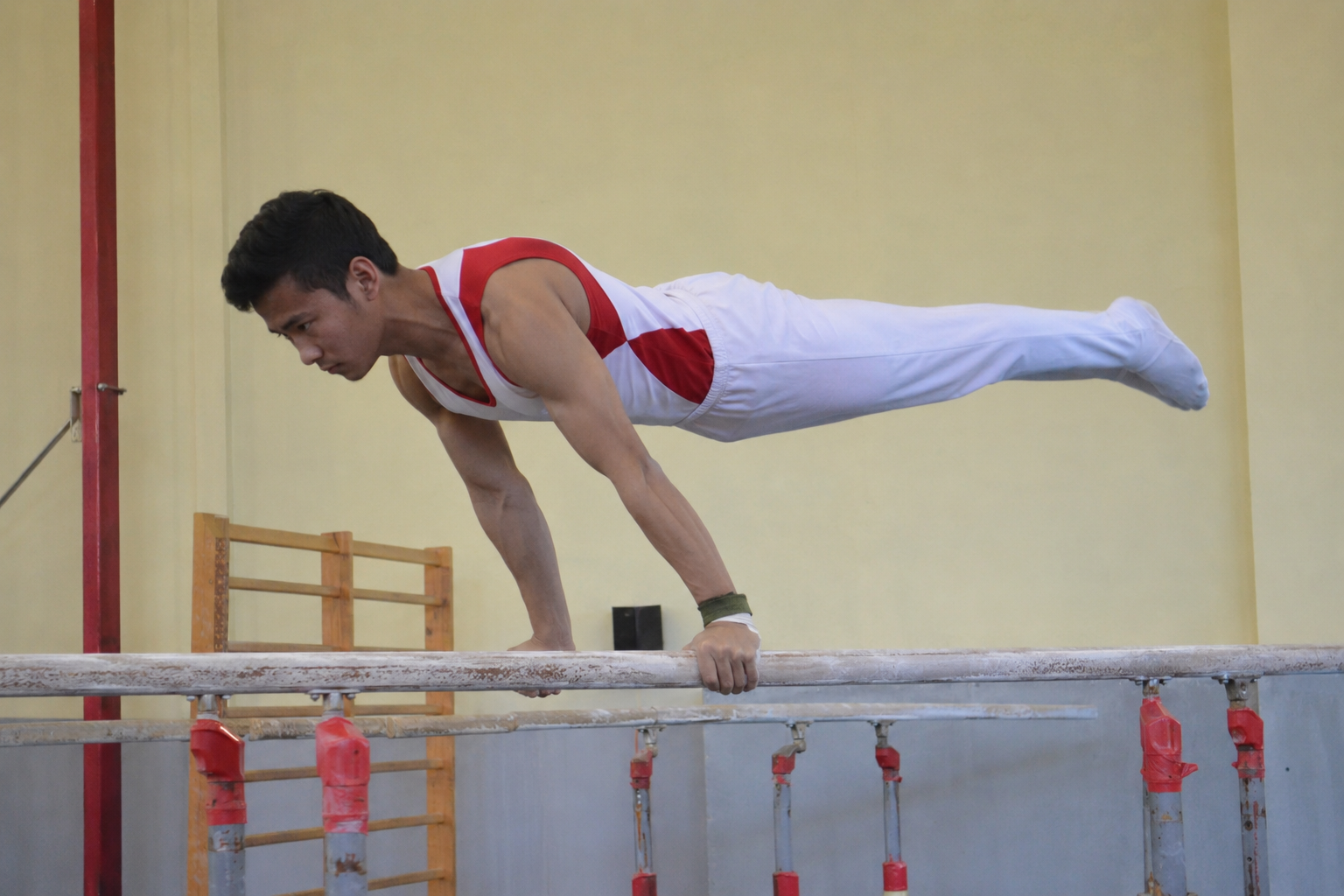
Shoulder mobility is another important part of gymnastics. Handstands, bridges, swings, and many other skills require the shoulders to move freely.
During a handstand, for example, the arms need to reach overhead while the gymnast maintains control of the body. This requires shoulder flexibility, strength, and stability.
Regular gymnastics practice can gradually improve the ability of the shoulders to move through different positions. Strong and mobile shoulders can also make other exercises easier, especially movements that involve lifting the arms overhead.
Better Back and Spine Movement
Gymnastics also involves many movements that challenge the flexibility and mobility of the back. Bridges and other floor skills require the spine and surrounding muscles to work through different positions.
A healthy level of spinal mobility can help with posture and general movement. Gymnastics encourages people to learn how to bend, extend, rotate, and stabilize the body with control.
It is important to remember that back flexibility should always be developed gradually. Good gymnastics training focuses on technique and strength instead of trying to achieve extreme flexibility as quickly as possible.
Strong Muscles Help Control Flexibility
One of the biggest advantages of gymnastics is that it combines flexibility with strength. Being flexible without having enough strength to control that range of motion is not ideal.
Gymnasts develop strength through bodyweight exercises, holds, jumps, climbs, and gymnastics skills. This strength allows them to control their limbs while they move through larger ranges of motion.
For example, a gymnast may have enough flexibility to lift a leg high, but they also need the strength to hold and control that position. This is called active flexibility.
Active flexibility is especially useful because it combines range of motion with muscular control.
Balance and Mobility Work Together
Balance is another important part of gymnastics that supports better mobility. Many gymnastics movements require the athlete to maintain balance while the body is stretched or positioned in unusual ways.
A handstand is a good example. The gymnast needs shoulder mobility, wrist mobility, core strength, balance, and body awareness at the same time.
As gymnasts practice these skills, they learn how to control their bodies more effectively. This improved body awareness can make movement smoother and more coordinated.
Gymnastics Helps Improve Leg Flexibility
Leg flexibility is important for many gymnastics skills. Gymnasts often work on their hamstrings, quadriceps, hip flexors, calves, and inner thighs.
Moves such as front splits, side splits, high kicks, jumps, and leaps require good flexibility in the legs.
Regular practice can gradually increase the range of motion in these areas. However, progress is different for everyone. Age, training experience, body structure, recovery, and consistency can all affect flexibility.
The goal should be steady improvement rather than comparing your flexibility with someone else.
Mobility Can Improve Everyday Movement
The benefits of gymnastics flexibility and mobility are not limited to the gym. Better movement can make everyday activities more comfortable.
Simple actions such as bending down, reaching overhead, sitting, climbing stairs, and getting up from the floor require mobility.
People who regularly practice gymnastics may become more aware of how their bodies move. This awareness can encourage better posture, coordination, and movement habits.
For children, gymnastics can be especially useful because it introduces movement skills at an early age. For adults, beginner gymnastics exercises can provide a fun way to work on flexibility, strength, and mobility together.
Consistency Is More Important Than Speed
Flexibility does not usually improve overnight. The body needs time to adapt to new movements and stretching positions.
Consistent gymnastics training is more useful than occasional intense stretching. Practicing mobility and flexibility exercises several times each week can help create gradual progress.
Rest is also important. Muscles need time to recover after training. A balanced routine should include exercise, stretching, recovery, proper nutrition, and enough sleep.
Trying to become flexible too quickly can lead to unnecessary strain. Slow and controlled progress is usually a better approach.
How Beginners Can Improve Flexibility Through Gymnastics
Beginners do not need to start with advanced gymnastics skills. Simple movements can provide a strong foundation.
A beginner can start with gentle dynamic stretches, bodyweight squats, lunges, controlled leg swings, arm circles, basic bridges, and beginner floor movements.
A qualified gymnastics coach can help beginners learn proper technique and choose exercises suitable for their current ability.
Warm up before stretching and avoid bouncing aggressively into a stretch. Breathing slowly can also help the body relax during flexibility exercises.
Over time, beginners can gradually increase the difficulty of their movements as their strength, flexibility, and mobility improve.
Final Thoughts
Gymnastics improves flexibility and mobility by combining stretching, strength, balance, coordination, and body control. Regular gymnastics training encourages the body to move through a wide range of motion while developing the strength needed to control those movements.
From better hip and shoulder mobility to improved leg flexibility and body awareness, gymnastics can provide many physical benefits. The key is to train consistently, use proper technique, respect your body’s limits, and allow enough time for progress.
Whether you are a beginner, an experienced athlete, or someone looking for a new way to stay active, gymnastics can be an effective method for improving flexibility and mobility. With patience and regular practice, your body can become stronger, more mobile, and more comfortable with a wider variety of movements.