Gymnastics is a fun activity that helps children become stronger, more flexible, balanced, and confident. Many parents think that gymnastics can only be practiced in a professional gym, but there are several simple gymnastics exercises for kids at home that can be done safely with enough space and adult supervision. Home gymnastics exercises can help children improve their basic movement skills while making physical activity enjoyable.
Kids naturally love jumping, rolling, stretching, balancing, and moving their bodies. These activities are also important foundations for gymnastics. With regular practice, children can develop better coordination, body control, flexibility, and strength. The goal of home gymnastics should not be to perform difficult tricks quickly. Instead, children should learn basic movements correctly and enjoy the process.
Why Gymnastics Exercises Are Good for Kids
Gymnastics provides many physical and mental benefits for children. Regular gymnastics exercises can improve strength, flexibility, balance, coordination, posture, and body awareness. Children also learn how to control their movements and follow instructions.
Gymnastics can support confidence as well. When a child learns a new movement after practicing it several times, they experience a sense of achievement. This can encourage them to try other activities and become more comfortable with challenges.
Another advantage is that gymnastics exercises for kids at home can reduce inactive time. Children can enjoy movement without needing expensive equipment. Simple exercises using body weight are enough for beginners.
Safety First Before Starting Home Gymnastics
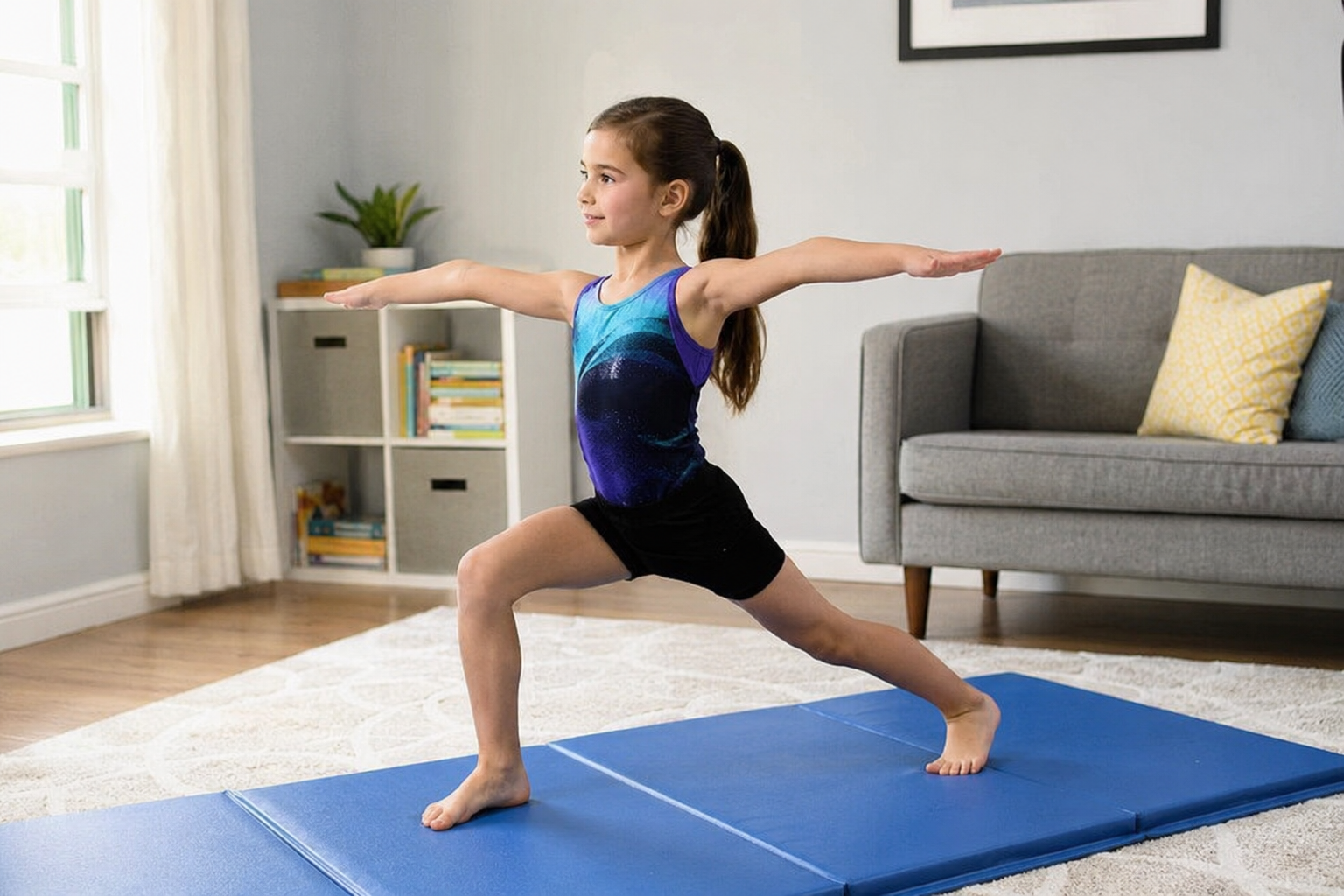
Safety should always be the first priority when children practice gymnastics at home. Parents should choose a clear area without furniture, sharp objects, slippery surfaces, or other obstacles. A soft gymnastics mat is helpful for floor exercises.
Children should always have adult supervision, especially when they are learning new movements. Parents should never encourage children to attempt advanced flips, difficult handstands, or other dangerous skills without professional coaching.
A short warm up should be completed before exercise. Simple movements such as walking around the room, arm circles, gentle jumping, and light stretching can prepare the body for activity.
1. Basic Stretching
Stretching is one of the easiest gymnastics exercises for kids at home. It can help children improve flexibility and prepare their muscles for movement.
Children can begin with simple arm stretches, shoulder movements, side stretches, and gentle leg stretches. A seated forward stretch can also be practiced by sitting with the legs comfortably extended and reaching toward the feet without forcing the movement.
Stretching should feel gentle. Children should never bounce or force their bodies into uncomfortable positions. Holding a comfortable stretch for several seconds is enough for beginners.
2. Balance on One Foot
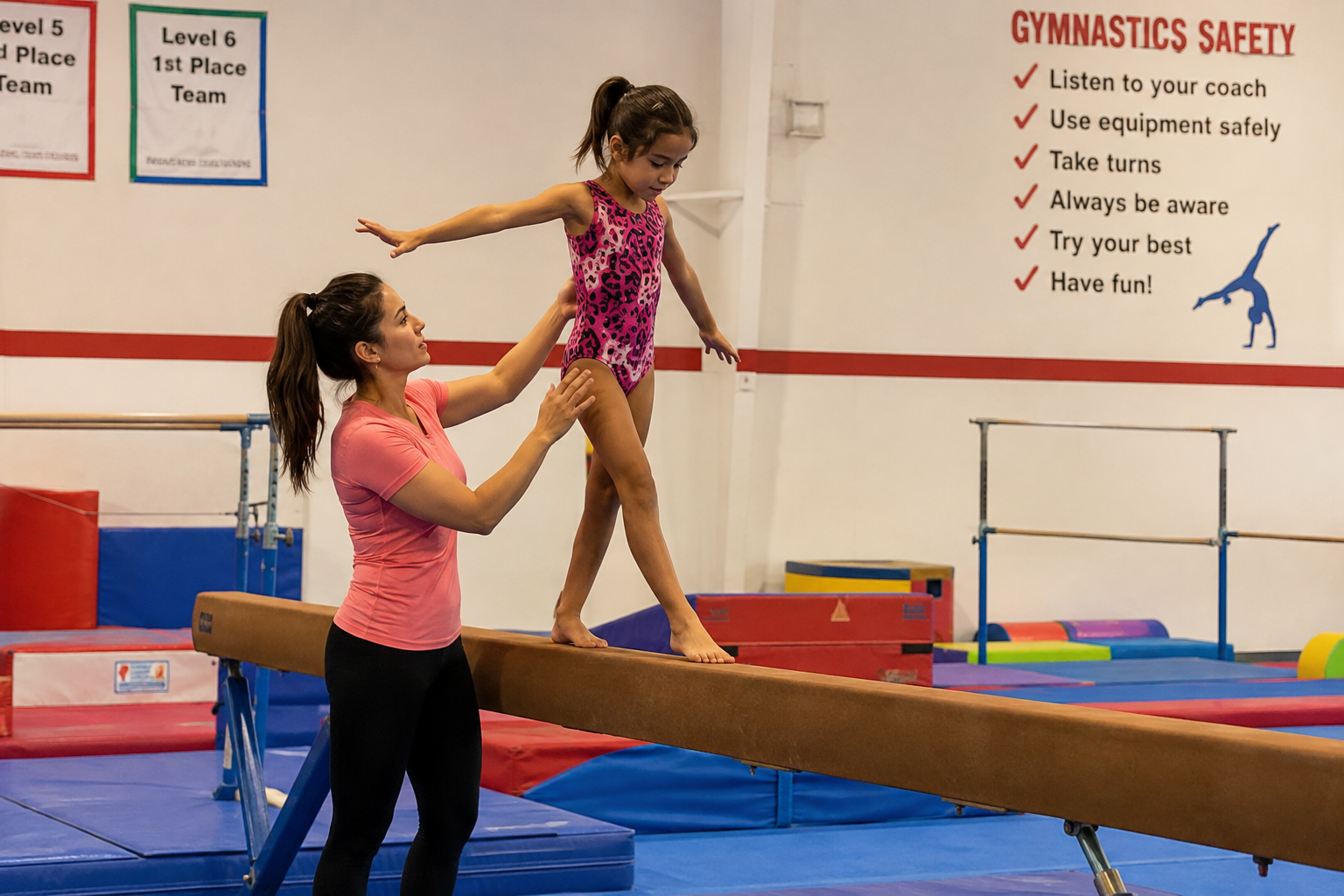
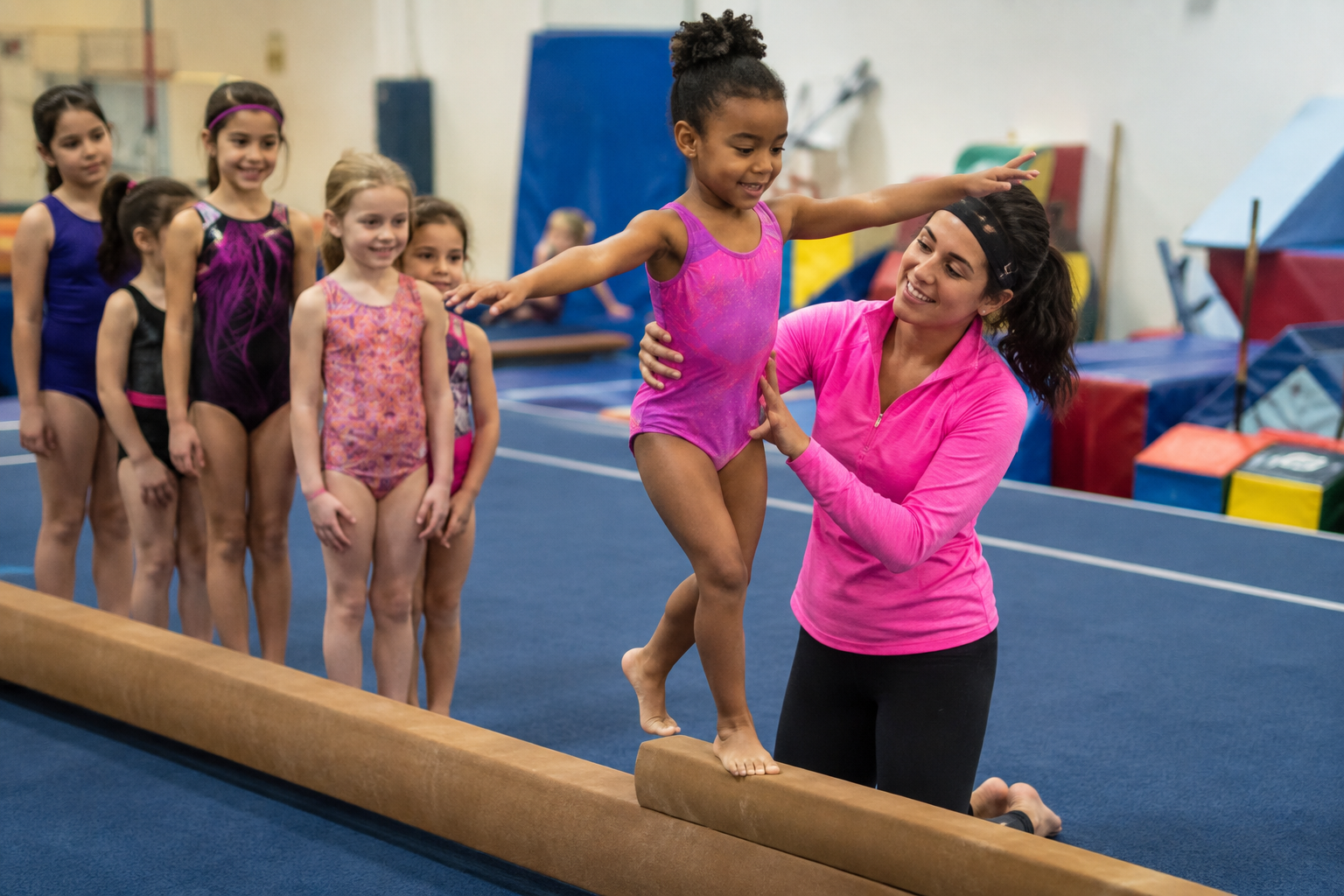
Balance is an important gymnastics skill. A simple one foot balance exercise can help children improve body control and stability.
Ask the child to stand with their feet together and slowly lift one foot from the floor. They can hold the position for five to ten seconds before changing legs. Younger children can begin with shorter periods.
To make the exercise more enjoyable, parents can turn it into a game. Children can pretend to be flamingos or trees while trying to stay balanced.
3. Bear Walk
The bear walk is a simple full body movement that can develop strength and coordination. Children begin with their hands and feet on the floor while keeping their hips slightly raised.
They can slowly move forward using opposite hands and feet. For example, the right hand moves together with the left foot, followed by the left hand and right foot.
Parents can create a small safe path and let children walk from one side to another. This exercise can make home gymnastics practice more active and fun.
4. Crab Walk
The crab walk is another useful gymnastics exercise for children. It works the arms, shoulders, legs, and core muscles.
Children sit on the floor, place their hands behind them, bend their knees, and lift their hips slightly. They can then move backward or sideways using their hands and feet.
This exercise should be performed slowly. Children should stop if they feel pain or discomfort.
5. Straight Line Walking
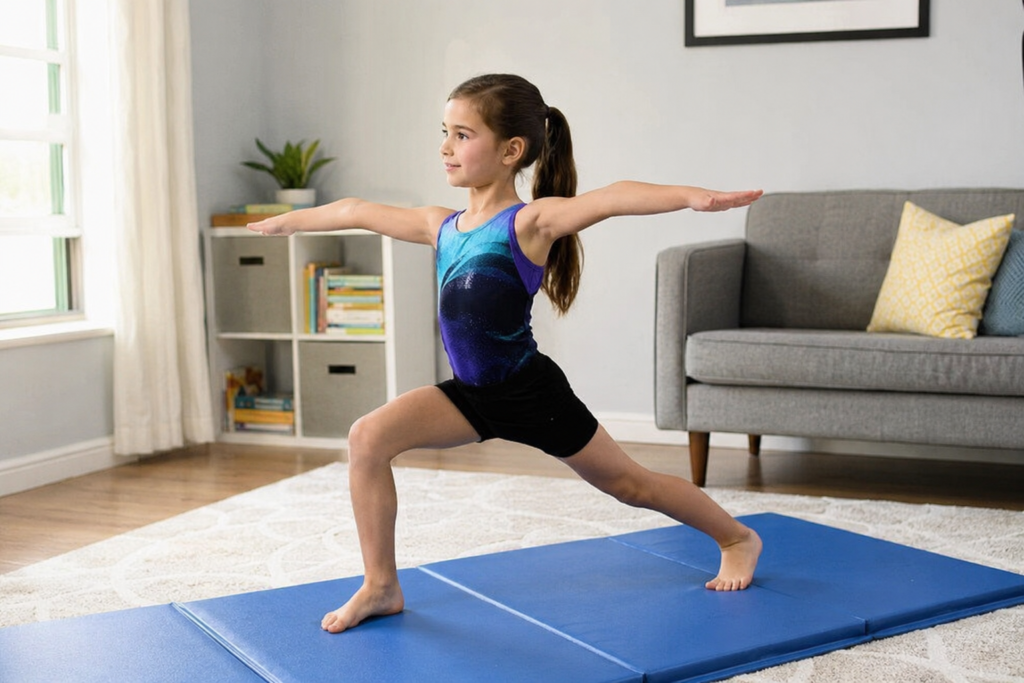
Straight line walking is a simple way to practice balance and coordination. Parents can place a piece of tape on the floor to create a straight line.
The child can walk along the line while keeping their arms stretched out to the sides. They should look forward rather than constantly looking down.
This activity can later become more challenging by asking the child to walk backward or take slow steps while maintaining control.
6. Small Jumps
Jumping is an important movement skill in gymnastics. Children can practice small controlled jumps on a suitable soft surface.
Start with both feet together. Ask the child to bend their knees slightly and jump a short distance upward. They should land softly with their knees slightly bent.
The focus should be on controlled movement rather than jumping as high as possible. Children can practice several repetitions while taking breaks when needed.
7. Star Jumps
Star jumps are an enjoyable exercise for active children. Start by standing with the feet together and arms beside the body. Jump gently while moving the arms and legs outward, then return to the starting position.
This movement can improve coordination and make a home gymnastics session more energetic. Children can perform a small number of repetitions and gradually increase them as they become comfortable.
8. Forward Roll Practice
Forward rolls are a common beginner gymnastics skill, but they should only be practiced on a suitable soft mat and with proper adult supervision.
Children should learn the correct basic position from a qualified gymnastics coach before practicing independently. The movement should be controlled, and children should never roll on hard floors.
Parents who are unsure about teaching a forward roll should choose simpler exercises instead or seek guidance from a professional gymnastics instructor.
9. Hollow Body Hold
The hollow body position is useful for developing core strength. Children can lie on their backs on a mat and gently lift their shoulders and legs from the floor while keeping the body controlled.
Beginners do not need to hold a perfect position for a long time. A few seconds can be enough at first.
Parents should make sure the child is comfortable and breathing normally throughout the exercise.
10. Superman Exercise
The Superman exercise is another simple floor exercise that can help strengthen the back and core.
Children lie on their stomachs with their arms extended in front of them. They gently lift their arms and legs a little from the floor and hold the position briefly before relaxing.
The movement should be controlled rather than forced. A few repetitions are enough for young beginners.
11. Bridge Preparation
Bridges are an important gymnastics movement, but they require flexibility and proper technique. Children should not be pushed into a full bridge before their shoulders, wrists, back, and hips are ready.
Instead, beginners can start with simple bridge preparation exercises taught by a qualified coach. Gentle shoulder mobility and controlled body movements can help prepare children for more advanced skills.
Never force a child into a bridge or push their body beyond a comfortable range.
12. Animal Movement Games
Animal movement games can make gymnastics exercises for kids at home more exciting. Children can walk like bears, crawl like cats, jump like frogs, or balance like flamingos.
These activities encourage children to move in different ways while developing coordination and body awareness. Parents can create a simple movement course around a safe room using cushions, mats, and clearly defined spaces.
The activity should remain playful instead of feeling like a difficult workout.
Creating a Simple Home Gymnastics Routine
A good home gymnastics routine does not need to be long. For young children, a short and enjoyable session can be more effective than a long session that becomes tiring or boring.
Parents can begin with five minutes of warm up movements. This can be followed by stretching, balance exercises, animal walks, small jumps, and simple strength exercises. Finish with gentle stretching and relaxation.
Children should have enough rest between exercises. The routine can be adjusted according to the child’s age, experience, energy level, and comfort.
Tips for Parents
Parents can make home gymnastics more enjoyable by focusing on progress rather than perfection. Every child develops physical skills at a different speed.
Praise effort and improvement instead of comparing children with others. If a child cannot perform a movement today, they can continue practicing basic skills and try again later.
It is also important to keep the environment positive. Playing music, creating simple movement games, and celebrating small achievements can help children stay interested.
If a child wants to learn advanced gymnastics skills such as handstands, cartwheels, bridges, or flips, professional coaching is recommended. A qualified coach can teach proper technique and safety methods.
Conclusion
Gymnastics exercises for kids at home can be a simple and enjoyable way to encourage children to stay active. Basic activities such as stretching, balancing, jumping, bear walks, crab walks, and core exercises can help improve strength, flexibility, coordination, and body control.
The most important part of home gymnastics is safety. Children should have enough space, suitable surfaces, adult supervision, and age appropriate exercises. Difficult skills should not be rushed.
With patience and regular practice, children can develop strong movement foundations while having fun. Home gymnastics is not about becoming perfect or learning advanced tricks immediately. It is about helping children enjoy movement, build confidence, and develop physical skills that can benefit them for many years.