Acrobatic gymnastics is one of the most exciting forms of gymnastics because it combines strength, balance, flexibility, coordination, and teamwork. Unlike some other gymnastics disciplines where athletes perform mostly on their own, acrobatic gymnastics is based on partnerships and group performances. Gymnasts work together to create balances, throws, catches, lifts, and choreographed routines.
What makes acrobatic gymnastics special is the level of trust required between athletes. Every movement depends on timing and cooperation. One gymnast may support another above the ground, while another may perform a flip or landing that requires precise coordination. This combination of athletic skill and artistic performance makes acrobatic gymnastics fascinating to watch and challenging to master.
What Is Acrobatic Gymnastics?
Acrobatic gymnastics, often called acro gymnastics, is a competitive gymnastics discipline performed in pairs or groups. Athletes complete routines on a spring floor while combining acrobatic elements with dance, expression, and music.
The sport generally includes different partnership categories, such as women’s pairs, men’s pairs, mixed pairs, women’s groups, and men’s groups. Each partnership has specific roles depending on the size, strength, flexibility, and experience of the athletes.
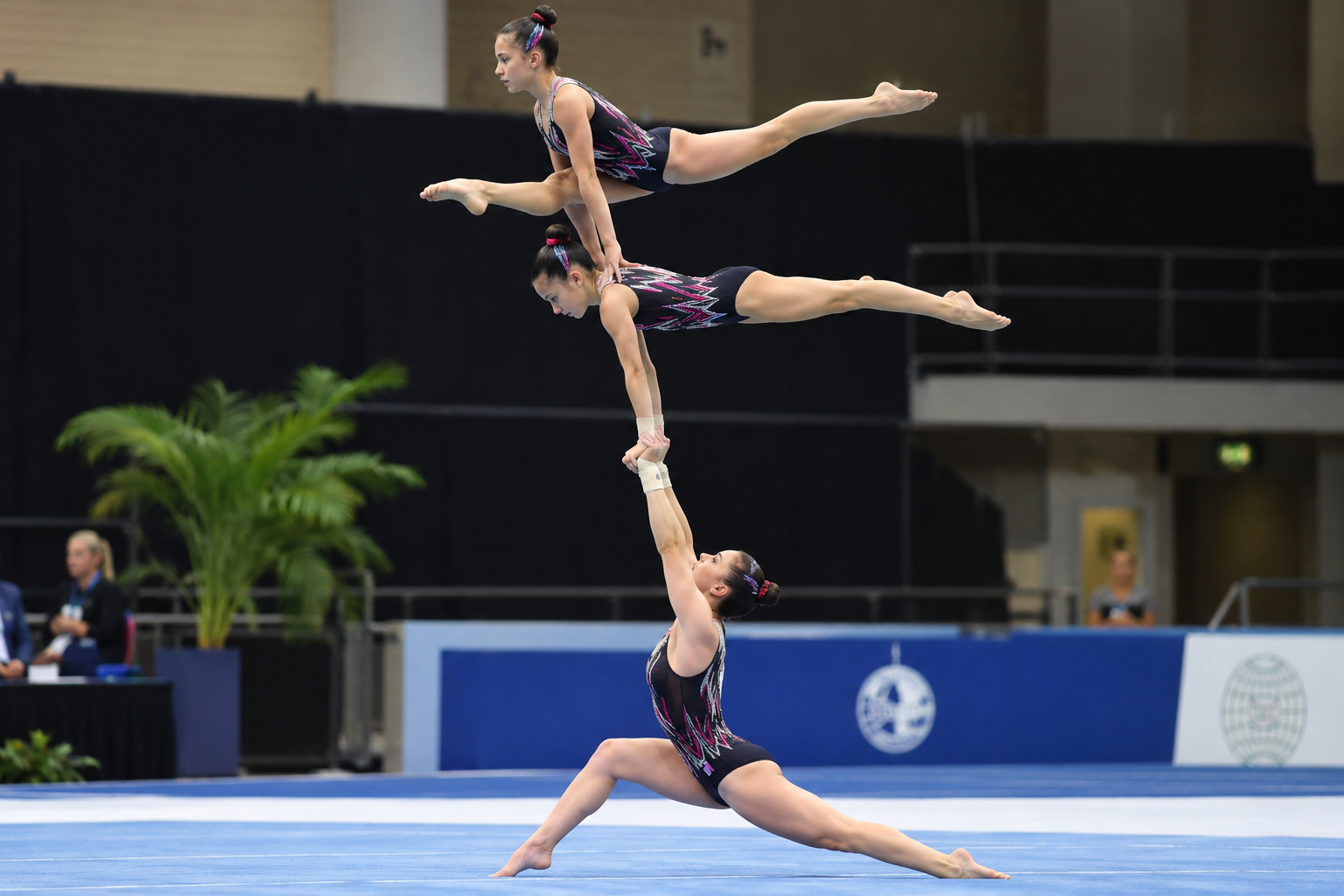
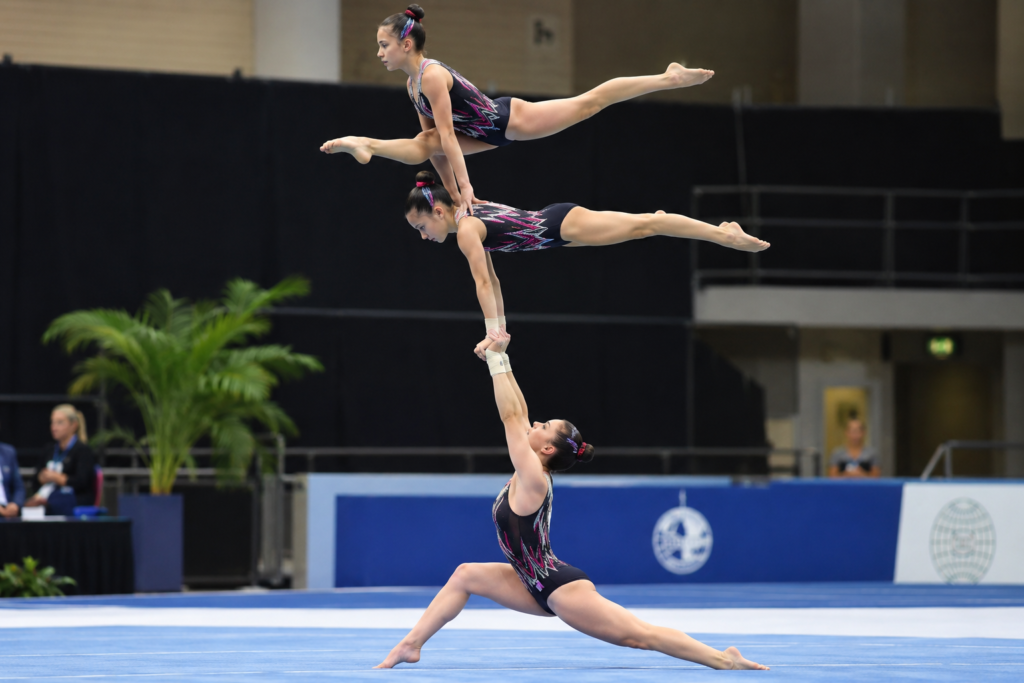
Some gymnasts act as bases. Bases are usually responsible for supporting, lifting, or throwing their partners. Others perform as tops, meaning they are lifted, balanced, or thrown into the air. In some groups, middle gymnasts may also help support the top gymnast while being supported by the base.
Successful acrobatic gymnastics depends on everyone performing their role correctly.
The History of Acrobatic Gymnastics
Acrobatic performances have existed for centuries. Different cultures have included balancing, human pyramids, tumbling, and partner acrobatics in festivals, entertainment, and physical training.
Modern competitive acrobatic gymnastics developed into a more structured sport during the twentieth century. Rules were created to standardize competitions, routines, scoring, and safety requirements.
Over time, the sport became more organized internationally, and acrobatic gymnastics competitions began attracting athletes from many countries. Today, the discipline is recognized for both its athletic difficulty and its artistic presentation.
Although it may not receive as much television coverage as artistic gymnastics, acrobatic gymnastics has a strong international community and continues to attract new participants.
Main Types of Acrobatic Gymnastics Routines
Competitive acrobatic gymnastics commonly includes different types of routines. Each type focuses on particular skills and challenges.
Balance Routines
Balance routines emphasize controlled positions, strength, stability, and flexibility.
Athletes may create human towers, handstands, supported balances, or complex shapes where one gymnast holds another above the floor. Some balance elements must be held for a required period so judges can clearly see control and stability.
These routines require excellent body tension and concentration.
Even a small movement by one gymnast can affect the entire structure.
Dynamic Routines
Dynamic routines focus more on movement, flight, throwing, catching, and rotation.
A base may launch a top gymnast into the air, allowing the top to perform a somersault or twist before being caught or landing safely.
Timing is extremely important in dynamic routines. The throw must happen at the correct moment, and the gymnast in the air must complete the skill before the catch or landing.
These routines are often fast and exciting to watch.
Combined Routines
Combined routines include both balance and dynamic elements.
Athletes must demonstrate strength and stability while also performing throws, catches, and aerial skills. Combined routines require well rounded ability because gymnasts must move smoothly between different types of elements.
Important Roles in Acrobatic Gymnastics
Different athletes have different responsibilities within a partnership.
The Base
The base provides strength, stability, and support.
Bases may hold another gymnast on their hands, shoulders, feet, or body. They may also perform throws and catches.
Strong legs, shoulders, arms, and core muscles are especially important for bases.
A good base must remain stable even while another gymnast is moving above them.
The Top
The top gymnast is usually lighter and often performs balances or aerial movements above the base.
Tops need excellent flexibility, body control, confidence, and spatial awareness. They must understand where their body is while moving through the air.
A top gymnast also needs strong core muscles because maintaining tight body positions improves balance and safety.
The Middle
In group routines, a middle gymnast may have responsibilities from both roles.
The middle may support the top gymnast while also standing or balancing on another gymnast.
This requires both strength and excellent balance.
Strength in Acrobatic Gymnastics
Strength is one of the most important physical qualities in acrobatic gymnastics.
Bases require strength for lifting, holding, throwing, and catching. Tops also need strength to maintain controlled positions and complete aerial skills.
Common strength exercises may include push ups, squats, lunges, pull ups, planks, leg raises, handstand exercises, and partner resistance drills.
Core strength is particularly important.
The abdominal muscles, lower back, hips, and surrounding muscles help gymnasts maintain stable positions and control body movement.
Training is usually progressive. Athletes should first develop basic strength before attempting advanced partner elements.
Flexibility and Mobility
Flexibility is another major part of acrobatic gymnastics.
Many routines include splits, back bends, leg holds, and extended body positions. Greater flexibility can help gymnasts create cleaner shapes and more impressive lines.
However, flexibility training should be done carefully.
Athletes often begin with a warm up before stretching. Stretching cold muscles aggressively can increase discomfort or injury risk.
Regular stretching may focus on the hamstrings, hips, shoulders, back, ankles, and legs.
Mobility is also important because gymnasts need movement through a joint while still maintaining strength and control.
Balance and Body Control
Balance skills are essential because many acrobatic positions involve one gymnast supporting another above the floor.
Good balance starts with understanding body position.
Gymnasts learn how to distribute weight, keep the core active, control breathing, and make small corrections without causing large movements.
Basic training may include standing balances, handstands, partner holds, supported balances, and gradual progressions toward more difficult positions.
The goal is not simply to reach a position. The gymnast must be able to hold it with confidence and control.
Timing and Coordination
A successful acrobatic skill depends heavily on timing.
During a throw, the base and top must move together. If one gymnast starts too early or too late, the height and direction of the skill can change.
Athletes therefore repeat movements many times during training.
Coaches may break a complicated skill into smaller sections before combining them.
For example, gymnasts might first practice the lifting action, then body shape, then rotation, and finally the complete skill.
This gradual method allows athletes to understand their responsibilities before increasing difficulty.
The Importance of Trust
Trust is one of the defining features of acrobatic gymnastics.
A gymnast performing above the floor must trust the base to provide stable support. At the same time, the base must trust the top to maintain the correct body position.
Trust develops through consistent training.
Athletes learn each other’s movement patterns, strengths, weaknesses, and timing. They also communicate about discomfort, mistakes, and adjustments.
Good communication can improve both performance and safety.
Partnerships often become stronger when athletes respect one another and take responsibility for their own role.
Safety in Acrobatic Gymnastics
Safety should always be a major priority.
Advanced acrobatic elements involve height, rotation, and physical support. Attempting difficult movements without proper preparation can increase injury risk.
Beginners should learn under the supervision of qualified gymnastics coaches.
Training facilities usually use appropriate mats and equipment to reduce the impact of falls. Coaches may also use spotting techniques while gymnasts are learning new movements.
Athletes should progress gradually.
Basic strength, handstands, body shapes, balance, and tumbling should normally be developed before attempting advanced partner skills.
Proper warm ups and recovery are also important.
Basic Skills for Beginners
New acrobatic gymnasts usually begin with fundamental skills.
These may include forward rolls, backward rolls, cartwheels, bridges, handstands, basic jumps, balance drills, and simple partner positions.
Beginners may also learn correct body shapes such as straight, tuck, pike, straddle, and arch positions.
Understanding these shapes is important because they appear repeatedly in more advanced gymnastics skills.
Partner exercises can begin close to the floor before progressing to higher positions.
This gradual approach allows athletes to develop confidence.
Tumbling in Acrobatic Gymnastics
Tumbling is often included in acrobatic routines.
Gymnasts may perform skills such as cartwheels, round offs, walkovers, handsprings, and somersaults depending on their level.
Tumbling improves power, body control, and coordination.
It also helps create smooth transitions between partner elements.
A strong tumbling background can be especially useful for top gymnasts because aerial awareness is important during dynamic skills.
Choreography and Artistic Performance
Acrobatic gymnastics is not only about completing difficult skills.
Presentation is also important.
Athletes perform routines to music and use choreography to connect acrobatic elements. Movements should appear smooth rather than looking like separate tricks placed together.
Good choreography may include dance movements, changes in direction, expressive gestures, synchronization, and creative transitions.
Athletes often try to match their movement style with the rhythm and mood of the music.
Facial expression and confidence can also improve the overall performance.
What Judges Look For
Competitive routines are evaluated using established judging systems.
Although detailed scoring rules can vary by event and competition level, judges generally consider factors such as difficulty, execution, artistry, balance quality, synchronization, body position, landings, and overall presentation.
Execution is particularly important.
A very difficult skill performed poorly may lose points because of unstable positions, bent knees, incorrect body shapes, steps on landing, or mistakes during catches.
This is why coaches often focus on quality before increasing difficulty.
Training for Acrobatic Gymnastics
Training may include several different areas in one session.
Athletes commonly work on strength, flexibility, tumbling, balance, partner skills, choreography, and routine practice.
Warm ups often include light cardio movements and joint preparation.
Strength and technical exercises may follow.
Partner elements usually require careful repetition because small adjustments can make a large difference.
Routine training becomes especially important before competitions.
Athletes need enough endurance to maintain technique from the beginning of a routine until the final pose.
Benefits of Acrobatic Gymnastics
Acrobatic gymnastics can offer many physical and personal benefits.
It can improve strength, flexibility, balance, coordination, posture, and overall fitness.
The sport may also help develop discipline and concentration because gymnasts must repeat skills carefully and remember complex routines.
Teamwork is another major benefit.
Athletes learn to cooperate and communicate because individual success depends on the entire partnership.
Training can also increase confidence as athletes gradually master skills that initially seemed difficult.
Mental Skills in Acrobatic Gymnastics
Physical ability alone is not enough.
Gymnasts also need concentration, patience, and emotional control.
Learning an advanced element can take many training sessions.
Mistakes are normal during the learning process, so athletes must be willing to continue practicing while making small improvements.
Competition may also create nervousness.
Breathing techniques, visualization, routine repetition, and mental preparation can help athletes stay focused.
Confidence often develops through preparation rather than simply trying to ignore nervous feelings.
Choosing an Acrobatic Gymnastics Club
Anyone interested in starting acrobatic gymnastics should look for a suitable training environment.
A good club should have qualified coaches, appropriate mats, safe equipment, organized training programs, and clear skill progressions.
Beginners should not be expected to attempt dangerous elements immediately.
Parents may also want to observe whether coaches communicate clearly and encourage safe technique.
A positive training environment should value long term development instead of rushing athletes toward difficult skills before they are ready.
Acrobatic Gymnastics for Children
Children can enjoy acrobatic gymnastics because the sport combines movement, teamwork, music, and creativity.
Beginner classes often focus on basic coordination and simple gymnastics skills before introducing more advanced partner work.
Children may improve body awareness and confidence through regular practice.
However, training should remain appropriate for the child’s age, physical development, and experience.
Progress should be gradual and supervised.
Acrobatic Gymnastics for Adults
Acrobatic gymnastics is not limited to children.
Adults can also participate recreationally.
Adult beginners may start with conditioning, flexibility exercises, basic tumbling, handstands, and simple partner balances.
Progress may vary depending on fitness level and previous sports experience.
Adults should avoid comparing their progress too closely with younger gymnasts who may have trained for many years.
Consistency is usually more useful than rushing toward advanced skills.
Common Challenges
Acrobatic gymnastics can be demanding.
Athletes may struggle with flexibility, fear, balance, strength differences, or communication within a partnership.
Growth can also affect partnerships because children’s height and weight can change over time.
A position that once felt easy may require adjustment.
Training plateaus are also normal.
Sometimes an athlete may practice for weeks without seeing obvious improvement. Coaches can help by adjusting exercises or returning to simpler progressions.
Patience is an important part of gymnastics development.
Conclusion
Acrobatic gymnastics is a unique sport that combines athletic strength with artistic expression and teamwork. Athletes perform balances, lifts, throws, catches, tumbling skills, and carefully choreographed movements while depending heavily on their partners.
The sport requires strength, flexibility, timing, coordination, trust, and concentration. Beginners usually start with fundamental gymnastics movements before progressing to more complex partner elements.
Safety and proper coaching should remain priorities at every level.
Whether someone trains for competition or simply wants to enjoy gymnastics recreationally, acrobatic gymnastics can provide a challenging and rewarding experience. Its combination of teamwork and individual skill makes it different from many other sports.
With consistent practice, good coaching, and patience, gymnasts can gradually build the confidence and physical ability needed to perform impressive acrobatic routines.