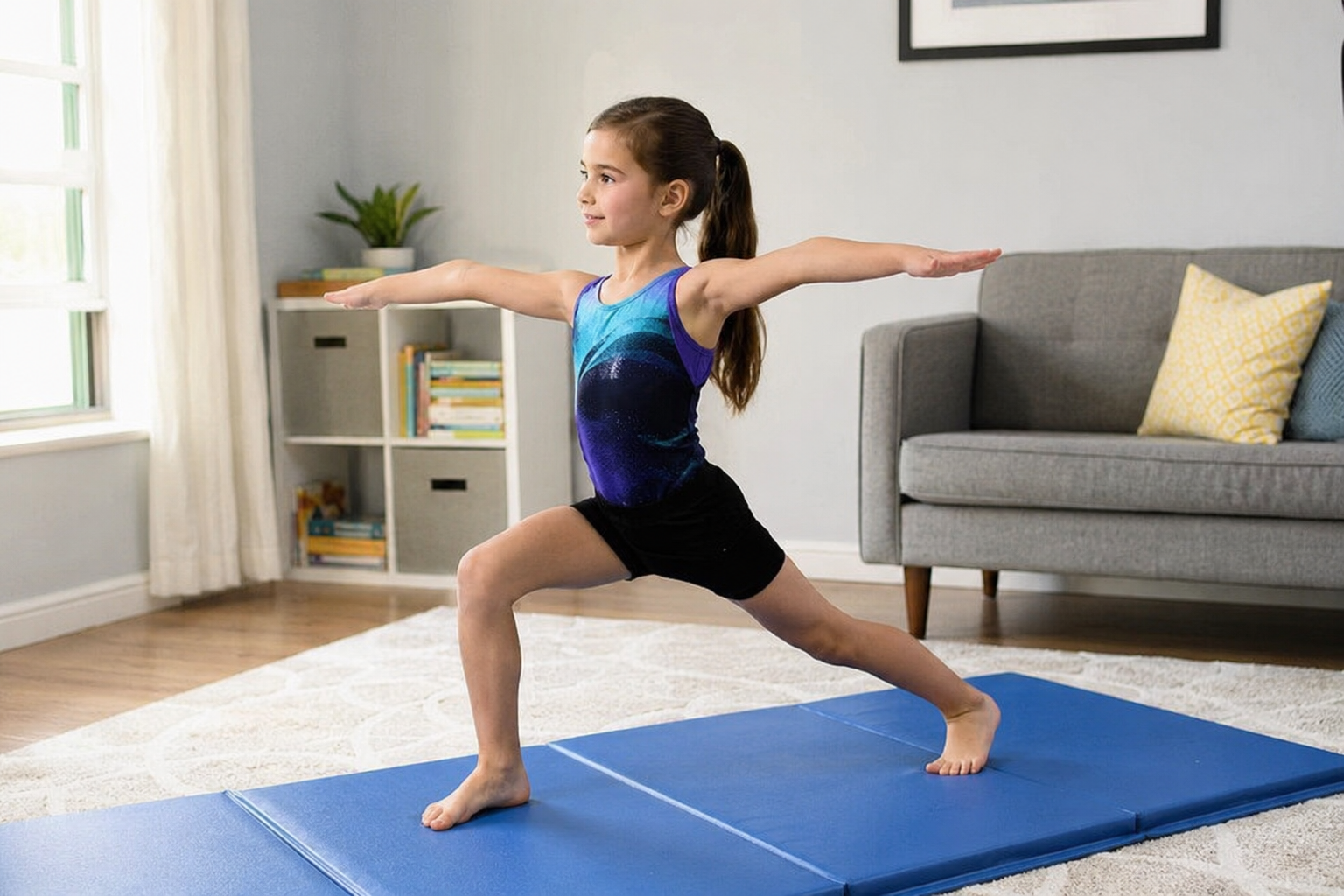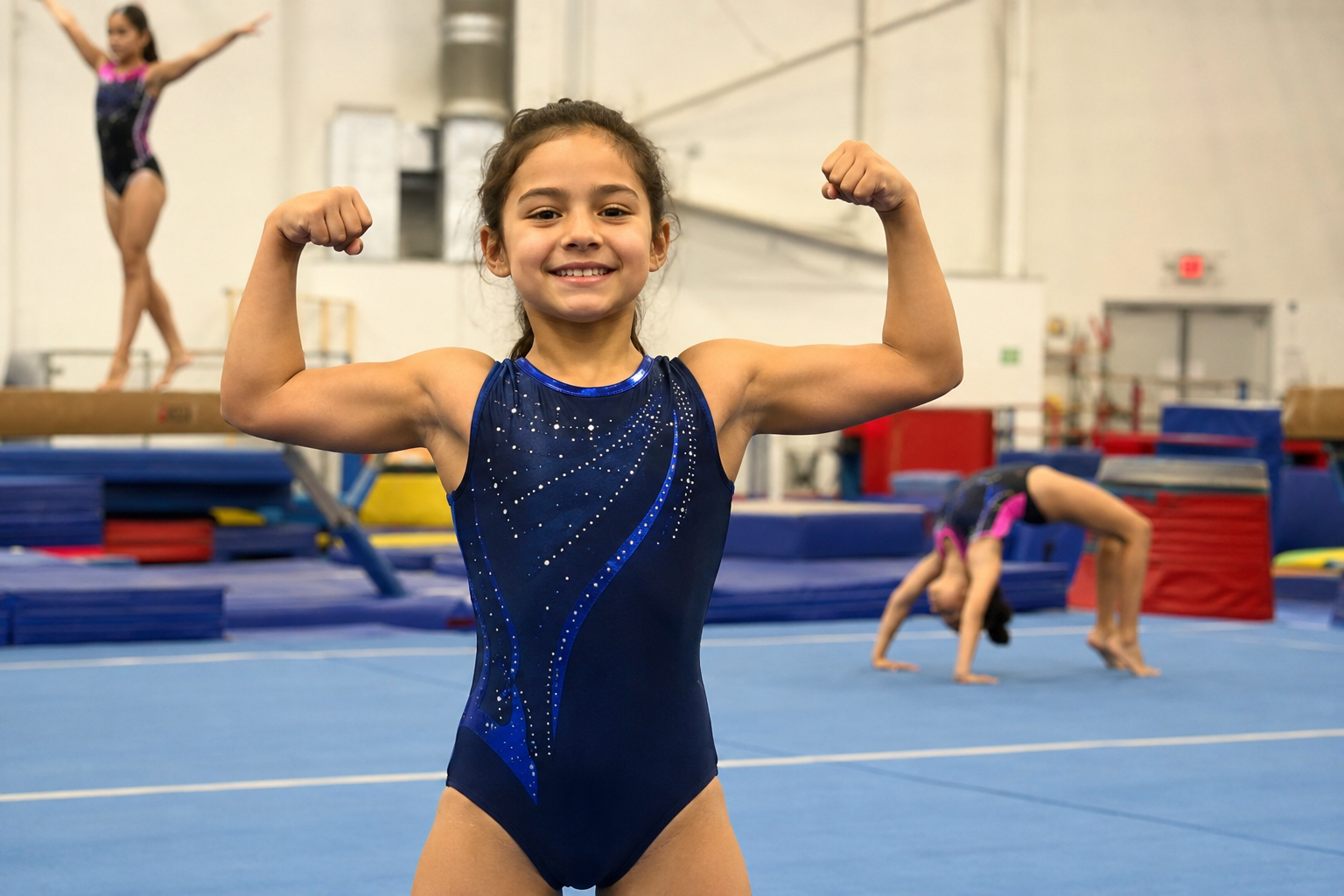
Gymnastics is a fun and exciting activity for children. It helps kids become stronger, more flexible, active, and confident. Many children enjoy learning new skills such as rolls, handstands, cartwheels, jumps, and balance exercises. However, gymnastics also requires proper movement, body control, and attention to safety. Since children are still developing their strength and coordination, parents and coaches need to make safety a priority during every training session.
Knowing how to keep kids safe during gymnastics training can help reduce injuries and create a positive environment where children can learn without unnecessary risks. With proper supervision, suitable equipment, good warm up habits, and age appropriate exercises, gymnastics can be both enjoyable and safe for children.
Why Gymnastics Safety Is Important for Kids
Children are naturally energetic and often want to try difficult movements before they are ready. They may see another gymnast performing an advanced skill and try to copy it without understanding the correct technique. This can increase the chance of falls, muscle strains, or other injuries.
Gymnastics safety is important because children need time to develop the strength, flexibility, balance, and coordination required for different skills. A safe training program allows children to progress gradually instead of rushing into advanced movements.
Parents should also understand that safety does not mean preventing children from trying new things. Instead, it means giving them the right environment and guidance to learn new skills correctly.
Choose a Qualified Gymnastics Coach
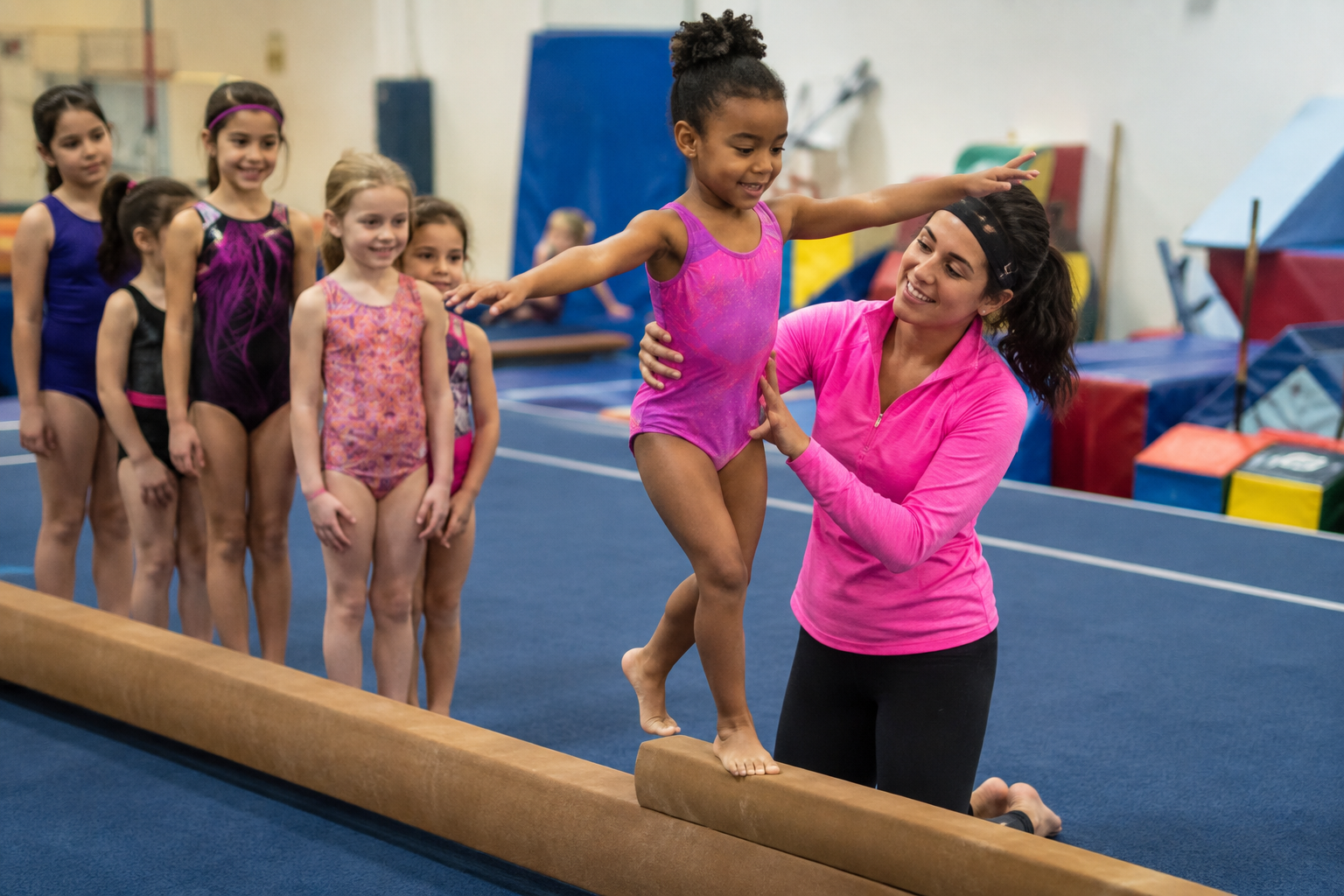
One of the most important steps for keeping kids safe during gymnastics training is choosing a qualified coach. A good coach should understand child development, gymnastics techniques, injury prevention, and proper training methods.
The coach should know how to teach skills according to the child’s age and ability. Beginners should not be pushed into advanced movements simply because they are excited to try them.
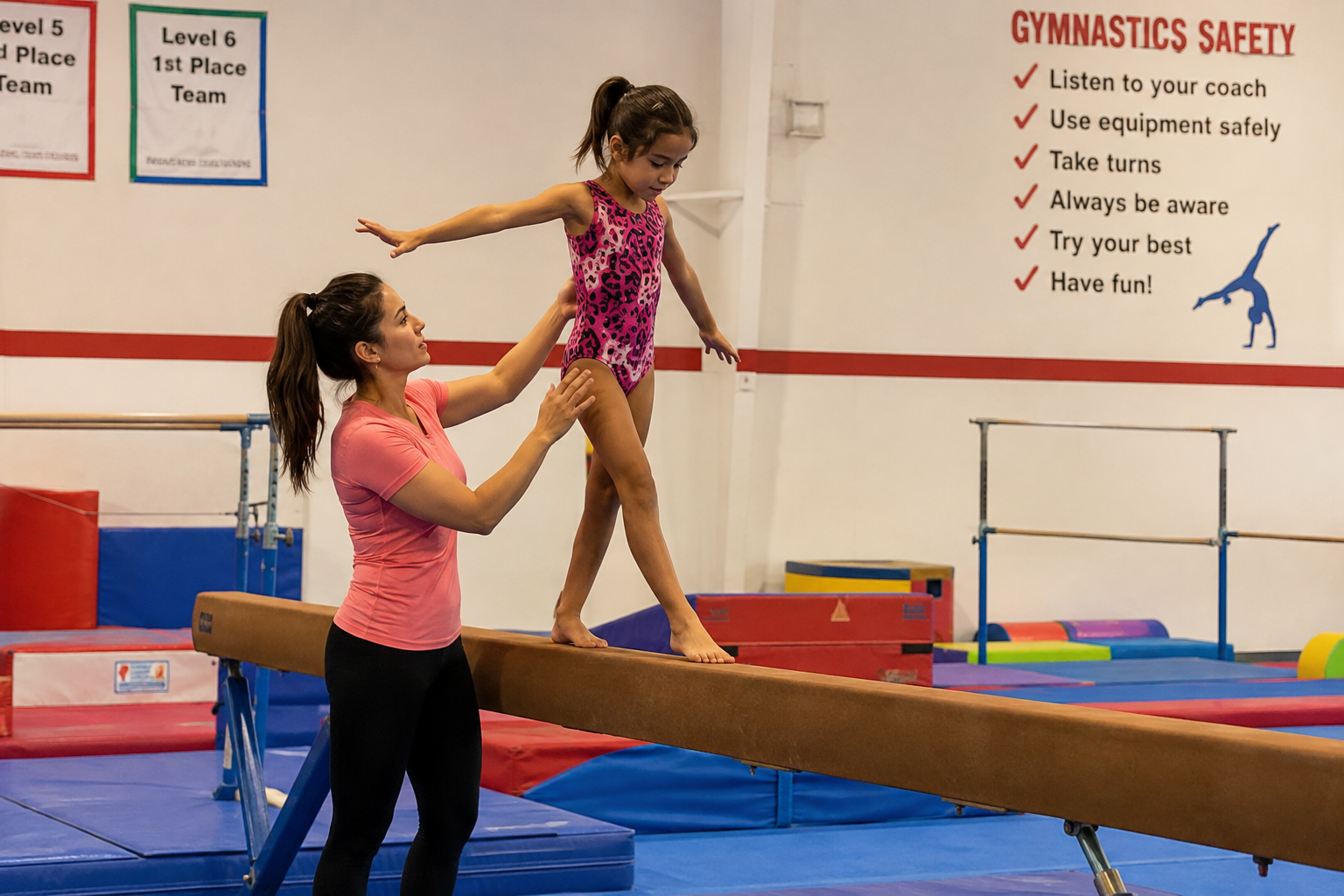
A responsible coach should also pay attention to every child during training. They should correct poor technique and explain how to perform movements safely. Parents should feel comfortable asking about the coach’s experience and approach to child safety.
Always Start With a Proper Warm Up
A proper warm up prepares the body for physical activity. Children should not immediately start performing difficult gymnastics skills after entering the training area.
A warm up can include light jogging, arm movements, gentle jumping, controlled stretching, and simple mobility exercises. The goal is to gradually increase body temperature and prepare the muscles and joints for movement.
A good warm up can also help children become mentally focused. When children understand that warm up is an important part of gymnastics training, they are more likely to develop healthy exercise habits.
Use Safe and Suitable Equipment
Gymnastics equipment should always be appropriate for children. Mats should be placed correctly around areas where children are practicing skills that involve falling or landing.
Equipment such as balance beams, bars, vaulting equipment, and trampolines should be used according to the child’s age, size, experience, and ability.
Parents should avoid allowing children to practice advanced gymnastics skills at home using unsuitable furniture or equipment. A sofa, bed, table, or other household item cannot replace professional gymnastics equipment.
The training area should also be clean and organized. Equipment should not be left in walking paths where children could trip.
Teach Children the Correct Technique
Learning correct technique is one of the best ways to prevent gymnastics injuries. Children should understand how to land safely, control their movements, and use their bodies correctly.
For example, when learning jumping skills, children should be taught how to bend their knees during landing instead of landing with stiff legs. When practicing rolls, they should learn the correct body position before attempting more complicated movements.
Coaches should break difficult skills into smaller steps. This makes learning easier and allows children to build confidence while developing the required physical abilities.
Do Not Rush Advanced Skills
Every child develops at a different speed. One child may learn a handstand quickly while another child may need more time to build enough upper body strength and balance.
Parents and coaches should never pressure children to perform skills they are not ready for. Rushing can lead to poor technique and unnecessary injuries.
Children should master basic movements before moving to more difficult skills. Basic strength exercises, balance activities, flexibility work, and controlled movements provide a strong foundation for future gymnastics training.
Supervision Is Essential
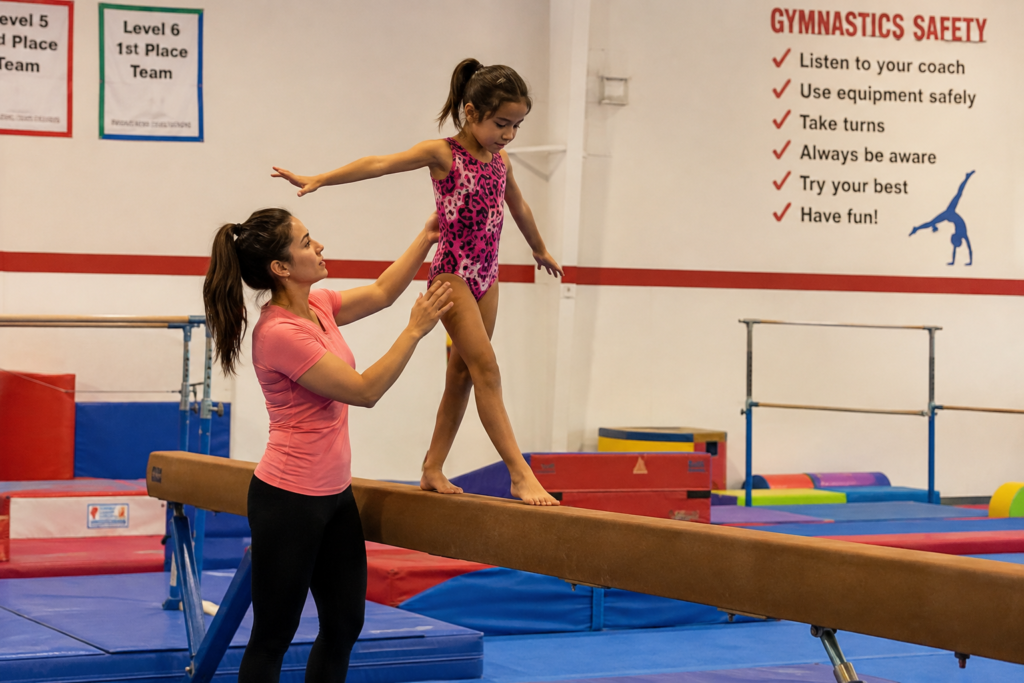
Children should always have proper adult supervision during gymnastics training. Even simple movements can become dangerous when children practice without guidance.
A coach should be present when children are learning new skills or using gymnastics equipment. Parents should also avoid leaving young children alone while they practice gymnastics at home.
Supervision allows adults to identify unsafe behavior quickly. If a child is tired, distracted, or using equipment incorrectly, the adult can stop the activity before an injury happens.
Teach Kids to Listen to Their Bodies
Children should learn that pain is not something they should simply ignore. Normal muscle tiredness can happen during exercise, but sharp pain, unusual discomfort, dizziness, or weakness should be taken seriously.
Teach children to tell their coach or parent when something does not feel right. They should never feel embarrassed about stopping an exercise because they are uncomfortable.
Rest is an important part of gymnastics training. Children need enough time between training sessions to recover and maintain healthy physical development.
Encourage Proper Hydration
Children can lose fluids while exercising, especially during longer gymnastics sessions or when training in warm environments. Drinking enough water helps children stay hydrated during physical activity.
Parents should make sure children have access to water before, during, and after training. Coaches should also provide appropriate breaks when necessary.
A child who becomes unusually tired, dizzy, or weak should stop exercising and inform an adult.
Wear Appropriate Gymnastics Clothing
Proper clothing can also improve gymnastics safety. Children should wear comfortable clothing that allows free movement without creating unnecessary hazards.
Loose clothing, jewelry, watches, or accessories can become caught on equipment. Hair should be tied back if it is long.
Children should also follow the gym’s rules regarding footwear. Many gymnastics activities are performed barefoot or with appropriate gymnastics footwear depending on the facility and activity.
Keep the Training Area Clean
A clean and organized gymnastics area reduces unnecessary risks. Floors should be free from objects that could cause children to slip or trip.
Mats and equipment should be checked regularly for damage. If a mat is damaged or equipment appears unsafe, it should not be used until it has been properly inspected or repaired.
Children should also be taught to keep their belongings away from the training area. Shoes, bags, bottles, and toys should be stored in designated places.
Teach Safe Landing Skills
Landing is an important part of gymnastics safety. Many gymnastics movements involve jumping, flipping, or changing direction, so children need to understand how to land with control.
Coaches should teach children to land with proper body alignment and bent knees when appropriate. Children should also learn to maintain balance after landing instead of immediately running or jumping again.
Safe landing techniques should be practiced regularly because good habits can help children protect their joints and muscles.
Avoid Training When a Child Is Extremely Tired
Fatigue can affect balance, concentration, coordination, and reaction time. A child who is extremely tired may have difficulty performing skills correctly.
Parents and coaches should pay attention to signs of excessive tiredness. If a child is struggling to concentrate or repeatedly making mistakes, it may be better to take a break.
Quality training is more important than spending a long time in the gym. Children should enjoy gymnastics rather than feeling pressured to train beyond their limits.
Create a Positive Safety Culture
Gymnastics should be a positive experience for children. Coaches and parents should praise effort, patience, improvement, and good habits instead of only celebrating difficult skills.
Children should understand that making mistakes is a normal part of learning. They should also know that asking for help is a sign of responsibility.
When children feel comfortable communicating with adults, they are more likely to report pain, fear, or unsafe situations.
What Parents Should Watch For
Parents can support gymnastics safety by paying attention to the training environment. They should notice whether coaches supervise children properly, whether equipment is maintained, and whether exercises appear suitable for the children’s abilities.
Parents should also talk to their children after training. Simple questions such as how training went or whether anything hurt can encourage children to communicate openly.
If a child experiences a serious injury or persistent pain, parents should seek appropriate professional medical advice before allowing the child to return to demanding physical activity.
Final Thoughts
Keeping kids safe during gymnastics training requires teamwork between children, parents, and coaches. Proper supervision, safe equipment, correct technique, gradual skill development, warm up exercises, hydration, rest, and good communication all play an important role in gymnastics safety.
Children should be encouraged to enjoy gymnastics while learning to respect their bodies and understand their limits. The goal is not simply to perform difficult skills as quickly as possible. The real goal is to help children develop strength, flexibility, coordination, confidence, and healthy movement habits in a safe environment.
When safety becomes part of every training session, children can enjoy gymnastics with greater confidence and fewer unnecessary risks. With the right guidance and support, gymnastics can become a rewarding activity that helps children stay active, learn discipline, and develop skills that can benefit them for many years.