Gymnastics is a sport that requires flexibility, balance, coordination, control, and strength. Among all these skills, strength plays an important role because it helps gymnasts perform movements with better control and confidence. Whether you are a beginner or an experienced gymnast, improving your strength can make many gymnastics skills easier to learn and perform.
Gymnastics strength is not only about having big muscles. It is about developing useful strength that allows you to control your body during handstands, swings, jumps, holds, and other movements. A good strength training routine can also help improve body control and reduce the risk of injuries.
In this article, we will discuss how to improve strength for gymnastics and which exercises can help you become stronger, more stable, and more confident.
Why Strength Is Important in Gymnastics
Strength is one of the basic foundations of gymnastics. Many gymnastics skills require the athlete to support and move their own body weight. For example, a handstand requires strong shoulders, arms, wrists, and core muscles. A pull up requires upper body and back strength, while jumps and landings require strong legs.
Good strength also helps gymnasts maintain proper body positions. When your muscles are strong, you can hold positions for longer periods without losing control. This is especially useful for skills such as handstands, L sits, hollow body holds, and support positions.
Strength can also improve performance. A stronger gymnast can usually generate more power during jumps and explosive movements while maintaining better control during difficult skills.
Start With Your Body Weight
One of the best ways to improve strength for gymnastics is to begin with bodyweight exercises. You do not always need heavy weights or expensive gym equipment. Your own body weight can provide enough resistance for many useful exercises.
Bodyweight exercises allow you to develop strength while practicing movements similar to gymnastics skills. They also help improve coordination and body awareness.
Some useful bodyweight exercises include push ups, squats, lunges, planks, pull ups, dips, and leg raises. Beginners should focus on learning correct technique before increasing the number of repetitions.
Build Strong Shoulders and Arms
Strong shoulders and arms are essential for gymnastics. They help support your body during handstands, cartwheels, bridges, swings, and other movements.
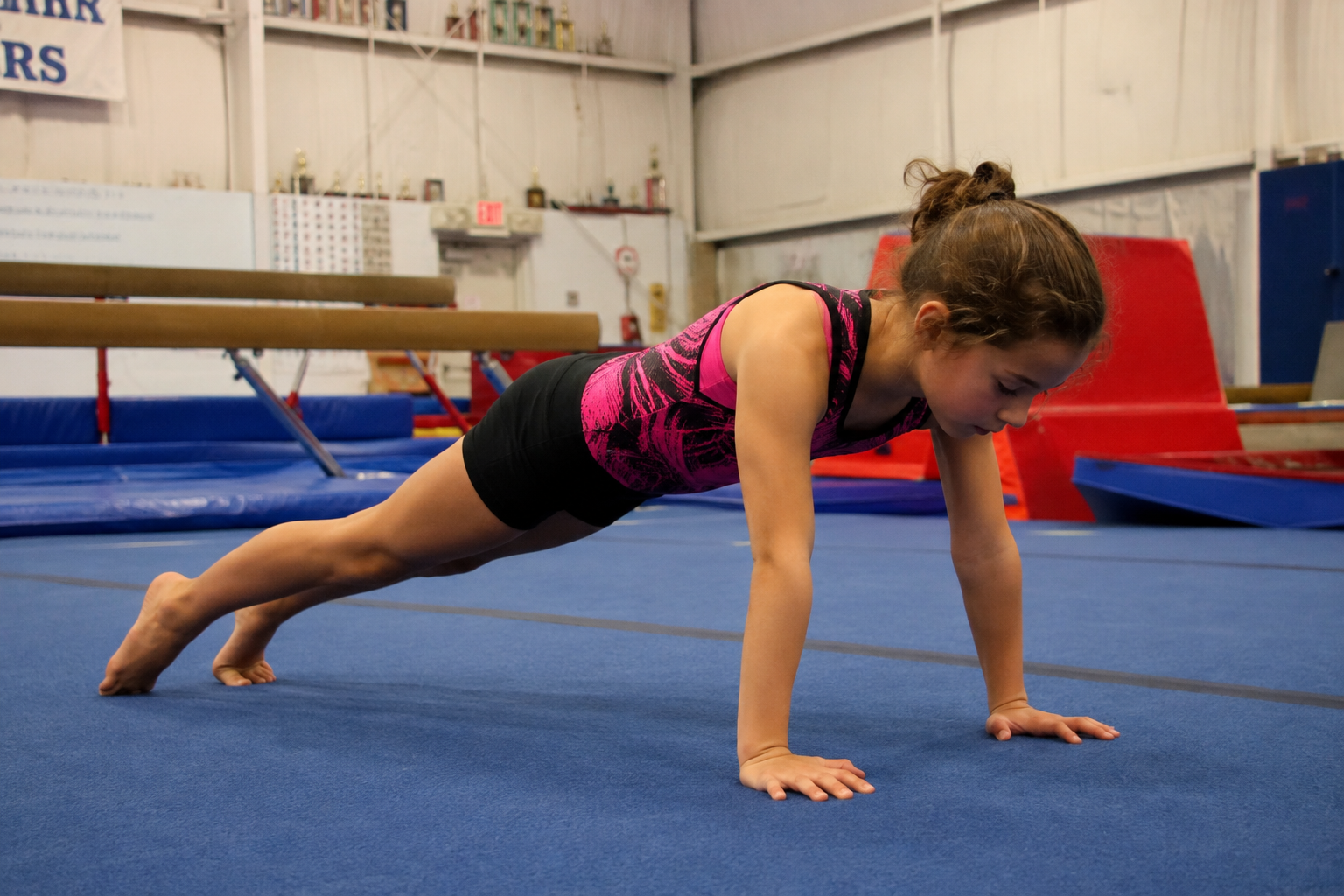
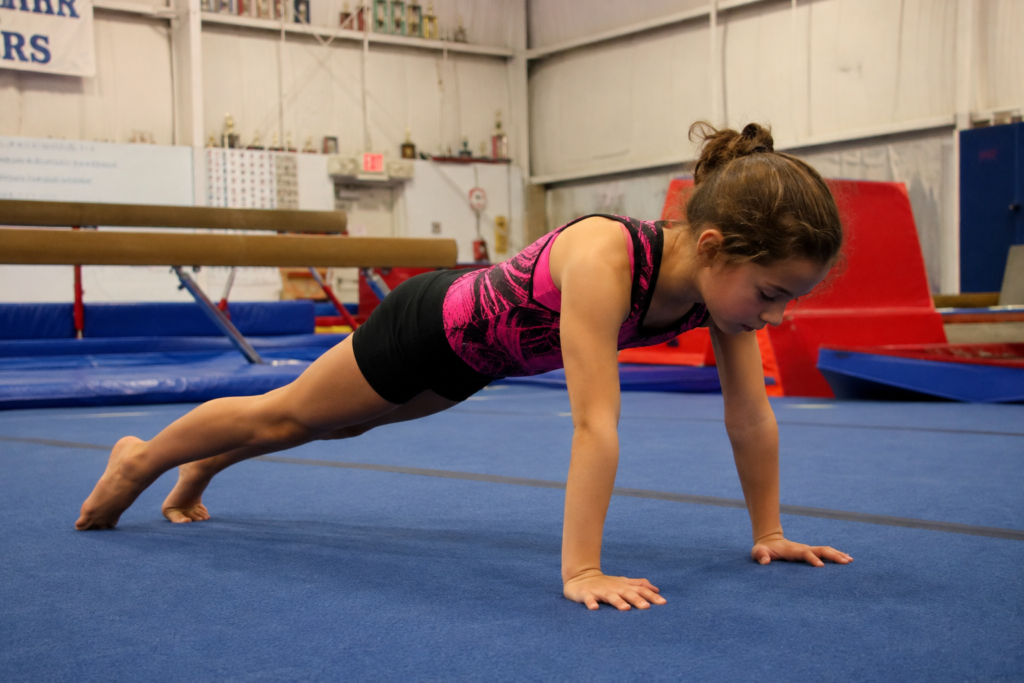
Push ups are a simple exercise for developing upper body strength. Start with a comfortable number of repetitions and gradually increase them as your strength improves. Keep your body straight and avoid allowing your hips to drop during the movement.
Pike push ups are another useful exercise because they place more focus on the shoulders. They can be especially helpful for developing strength needed for handstands.
Pull ups are excellent for building the back, shoulders, and arms. If you cannot perform a full pull up yet, you can begin with assisted pull ups or controlled hanging exercises.
Develop a Strong Core
Core strength is extremely important for gymnastics because the core connects the upper and lower parts of the body. A strong core helps you maintain body position and control during almost every gymnastics movement.
Planks are one of the easiest exercises for beginners. Hold a straight body position while keeping your abdominal muscles tight. As you become stronger, increase the holding time gradually.
Hollow body holds are especially useful for gymnasts. Lie on your back and lift your shoulders and legs slightly from the floor while keeping your lower back close to the ground. This exercise teaches you how to maintain a strong body shape.
Leg raises can also improve abdominal and hip strength. Perform them slowly and focus on controlling the movement rather than simply completing many repetitions.
Strengthen Your Legs
Strong legs are important for jumping, running, landing, and powerful gymnastics movements. Squats are one of the best basic exercises for developing lower body strength.
Bodyweight squats can be performed almost anywhere. Keep your chest controlled, bend your knees, and lower your body while keeping your feet stable. As you improve, you can add jumping squats to develop more explosive power.
Lunges are another useful exercise for gymnasts. They help develop strength in each leg separately and can also improve balance.
Calf raises can strengthen the lower legs and ankles. Strong ankles are helpful for jumping and landing safely.
Do Not Ignore Wrist Strength
Wrist strength is often overlooked by beginners, but it is very important in gymnastics. Gymnasts place a lot of pressure on their hands and wrists during handstands, cartwheels, and other skills.
Wrist exercises should be introduced gradually. Simple wrist movements, controlled weight bearing, and gentle strengthening exercises can help prepare the wrists for gymnastics training.
Always warm up your wrists before putting significant pressure on them. If you experience pain rather than normal muscle tiredness, stop the exercise and allow your body to recover.
Practice Handstand Strength
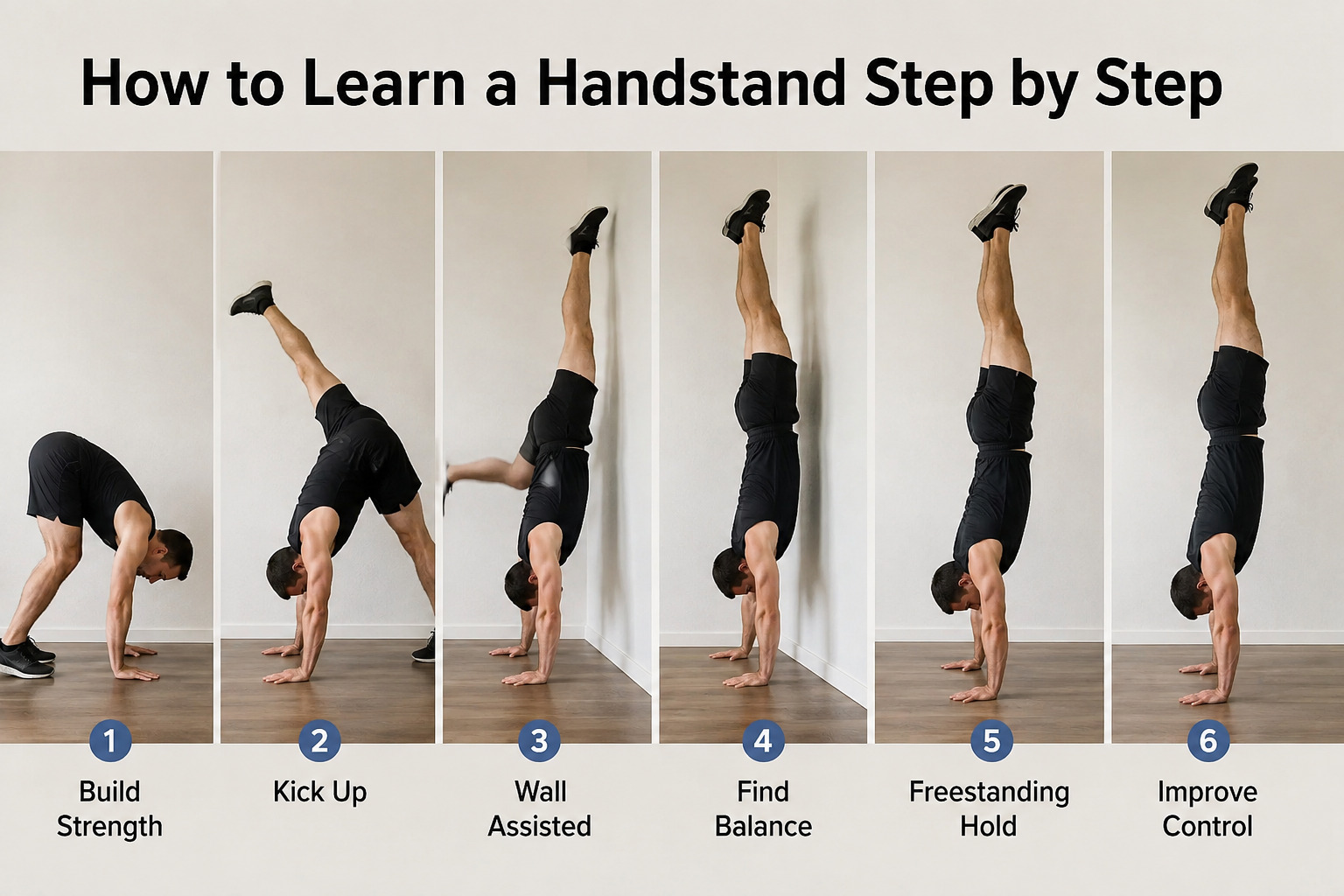
A handstand requires much more than balance. It requires strong shoulders, arms, wrists, and core muscles.
You can prepare for handstands by practicing wall handstands. Start with short holds and focus on keeping your body straight. Push actively through your shoulders and keep your core engaged.
Shoulder taps against a wall can also be useful when you have developed enough control. The goal is not simply to stay upside down but to develop the strength and stability needed to control your body.
Use Progressive Training
One important principle of strength training is progressive overload. This means gradually making your exercises more challenging as your body becomes stronger.
For example, if you can comfortably perform ten push ups, you can slowly work toward fifteen. Later, you might progress to a more difficult variation.
The same idea applies to holds. If you can hold a plank for twenty seconds with good technique, gradually work toward thirty or forty seconds.
Progress should be slow and controlled. Increasing difficulty too quickly can lead to poor technique and unnecessary strain.
Train Consistently
Consistency is more important than doing extremely difficult workouts occasionally. Gymnasts should create a regular strength training routine that fits their level and schedule.
For beginners, two or three strength sessions per week can be a good starting point. Give your muscles enough time to recover between challenging sessions.
A simple workout could include squats, push ups, planks, lunges, pull ups, and hollow body holds. You can adjust the exercises according to your current ability.
Focus on Technique
Correct technique should always come before the number of repetitions. Performing an exercise incorrectly can reduce its benefits and increase the risk of injury.
For example, during push ups, keep your body controlled instead of rushing through each repetition. During squats, focus on stable feet and controlled movement.
In gymnastics, strength and technique work together. Strong muscles are useful, but you also need to learn how to use that strength efficiently.
Eat Well and Stay Hydrated
Strength training is only one part of becoming stronger. Your body also needs proper nutrition and enough fluids to support training and recovery.
Include a balanced diet with protein, carbohydrates, healthy fats, fruits, vegetables, and whole foods. Protein helps support muscle recovery, while carbohydrates provide energy for training.
Drinking enough water is also important, especially during long or intense workouts.
There is no need to follow extreme diets. A balanced eating routine can provide the nutrients your body needs for regular gymnastics training.
Get Enough Rest
Rest is an important part of strength development. Muscles need time to recover after training. If you train too hard without enough recovery, your performance may decrease and your risk of injury can increase.
Try to get enough sleep each night and include easier training days when necessary. If your muscles feel unusually tired or your performance suddenly becomes worse, consider taking additional recovery time.
Remember that improvement does not happen only while you are exercising. Recovery allows your body to adapt to training and become stronger.
Common Strength Training Mistakes
One common mistake is trying to progress too quickly. Beginners sometimes increase repetitions or difficulty before they have mastered the basic movement.
Another mistake is ignoring smaller areas such as the wrists, ankles, and shoulders. These areas play an important role in gymnastics and should be strengthened carefully.
Training every day without proper recovery can also be a problem. More exercise does not always mean better results. Quality training combined with proper rest is usually more effective.
Finally, avoid comparing your progress with other gymnasts. Everyone develops strength at a different speed. Focus on improving your own technique, control, and consistency.
Simple Strength Routine for Gymnasts
A beginner gymnastics strength routine can include several basic exercises. Start with a short warm up to prepare your muscles and joints.
You can perform push ups for upper body strength, squats for your legs, planks for your core, lunges for balance and leg strength, hollow body holds for gymnastics body control, and assisted pull ups for your back and arms.
Perform each exercise with controlled technique and take enough rest between sets. As your strength improves, gradually increase repetitions, holding time, or exercise difficulty.
The exact routine should depend on your age, training experience, fitness level, and gymnastics goals. Young athletes should especially train under qualified supervision when learning advanced strength exercises.
Final Thoughts
Improving strength for gymnastics requires patience, consistency, proper technique, and recovery. You do not need to become extremely muscular to become a stronger gymnast. The goal is to develop functional strength that helps you control your body during gymnastics movements.
Focus on building strong shoulders, arms, core, legs, wrists, and ankles. Use bodyweight exercises, practice regularly, increase difficulty gradually, eat balanced meals, and give your body enough time to recover.
With consistent strength training, you can improve your body control, stability, power, and confidence. Whether your goal is to learn a handstand, improve your jumps, perform better on the bars, or become a stronger overall gymnast, developing gymnastics strength is an important step toward better performance.