Balance and coordination are two of the most important skills in gymnastics. A gymnast may have strength, flexibility, and speed, but without good balance and coordination, it can be difficult to perform skills correctly and safely. From standing on one leg to completing a handstand, every gymnastics movement requires the body to work together with control and precision.
Improving balance and coordination in gymnastics takes regular practice, patience, and proper technique. The good news is that these skills can be developed by beginners as well as experienced gymnasts. With the right exercises and training habits, you can become more stable, controlled, and confident in your movements.
Why Balance and Coordination Matter in Gymnastics
Balance allows a gymnast to control the body while staying in a stable position. Coordination helps different parts of the body work together smoothly. These two abilities are connected because many gymnastics skills require the gymnast to control several movements at the same time.
Good balance is important for skills such as handstands, beam routines, turns, jumps, and landing techniques. Coordination is especially important when performing skills that involve the arms, legs, head, and body moving together.
When your balance and coordination improve, your gymnastics movements can become cleaner and more accurate. You may also find it easier to learn new skills because your body becomes better at understanding movement patterns.
Start With Basic Balance Exercises
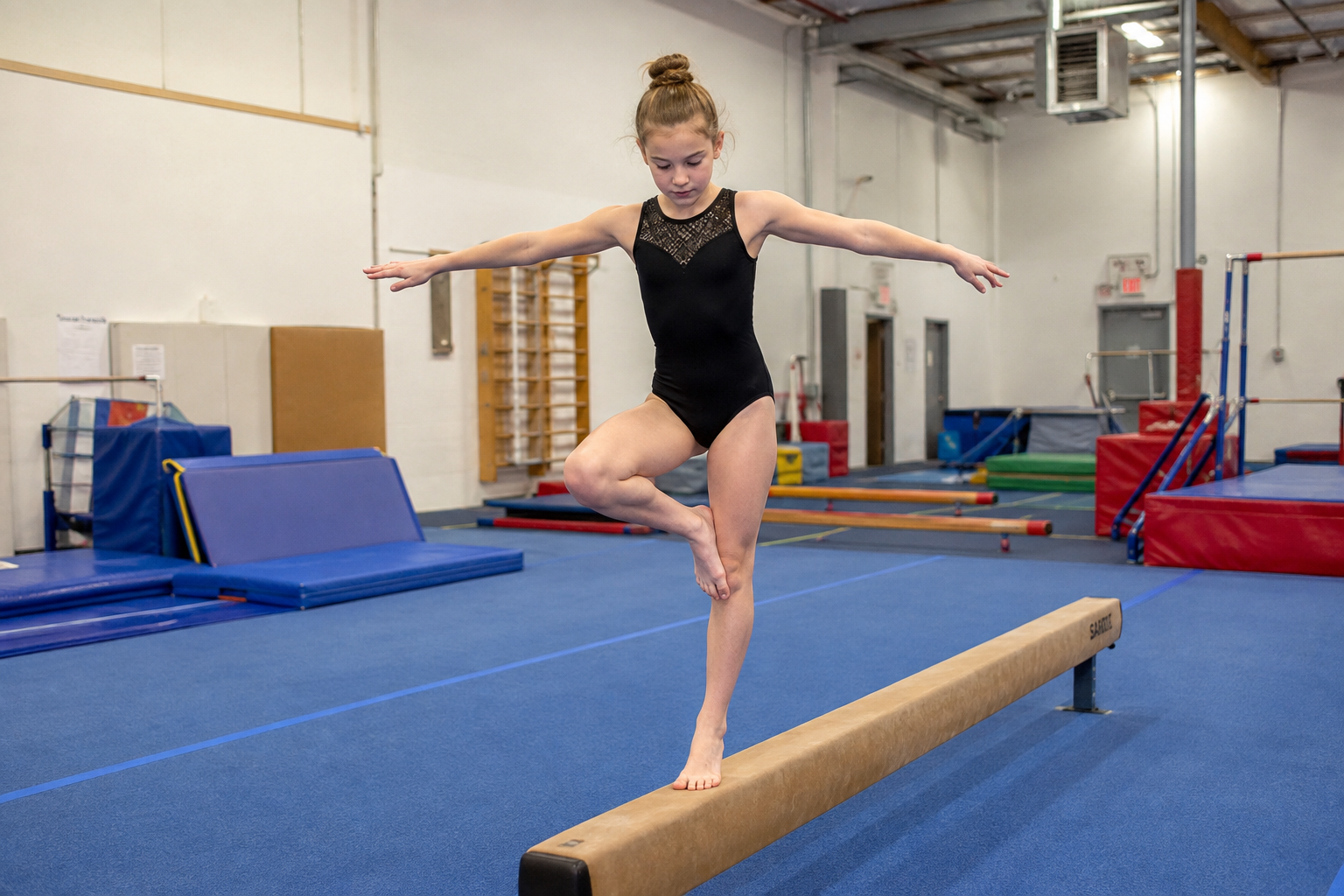
One of the easiest ways to improve balance is to practice simple exercises before moving to advanced gymnastics skills. Standing on one leg is a great starting exercise. Stand straight with your feet together and slowly lift one foot from the floor. Try to stay balanced for twenty to thirty seconds before changing legs.
As your balance improves, make the exercise more challenging. You can raise your arms, move your free leg, or slowly close your eyes for a short period while practicing in a safe environment.
Another useful exercise is walking in a straight line. Place one foot directly in front of the other and walk slowly while keeping your body upright. This exercise teaches your body to maintain control while moving.
Practice Handstand Balance
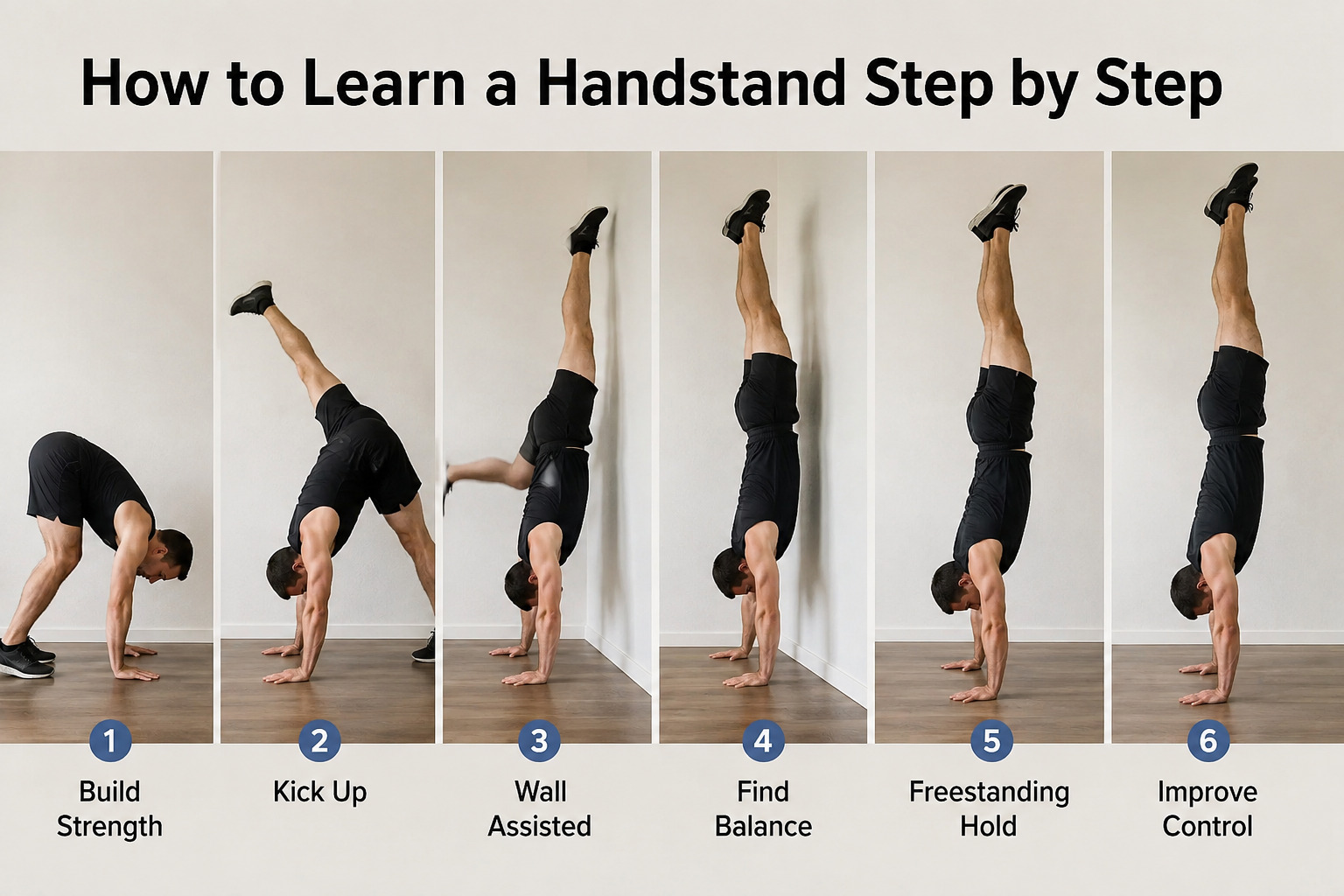
The handstand is one of the most important balance skills in gymnastics. It requires strength, body awareness, coordination, and control. Beginners should start by practicing against a wall under proper supervision.
Place your hands on the floor at shoulder width and carefully kick your legs upward. Keep your arms straight and focus on keeping your body aligned. Avoid bending your elbows because this can make it harder to control your position.
Once you become comfortable with a wall handstand, you can begin practicing short freestanding handstands with guidance from a qualified coach. Focus on small improvements instead of trying to hold the position for a long time immediately.
Improve Core Strength
A strong core plays a major role in balance and coordination. Your abdominal muscles, lower back, hips, and surrounding muscles help stabilize your body during gymnastics movements.
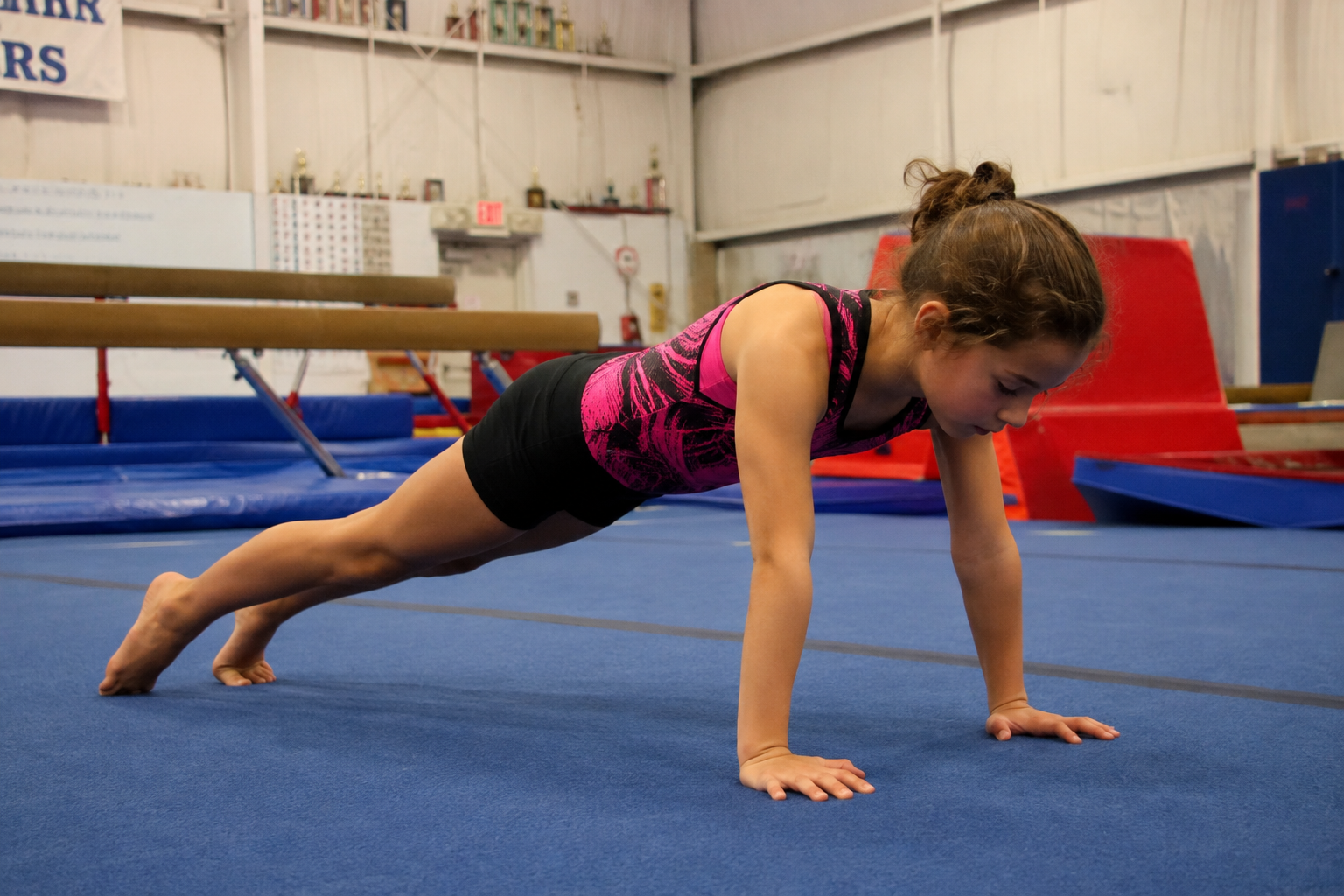
Exercises such as planks, hollow body holds, leg raises, and controlled sit ups can help develop core strength. A strong core makes it easier to maintain proper body position during handstands, jumps, turns, and other skills.
When performing core exercises, focus on quality rather than speed. Controlled movements help develop the stability that gymnasts need during actual routines.
Work on Leg Strength and Stability
Your legs provide the foundation for many gymnastics movements. Strong and stable legs help you jump, land, turn, and maintain balance.
Squats are a simple exercise that can improve leg strength. Start with bodyweight squats and focus on keeping your knees aligned with your feet. Lunges can also help develop strength and stability on each side of the body.
Single leg exercises are particularly useful for balance because they force each leg to work independently. Try single leg squats with support, single leg bridges, or controlled step ups.
Use Balance Equipment
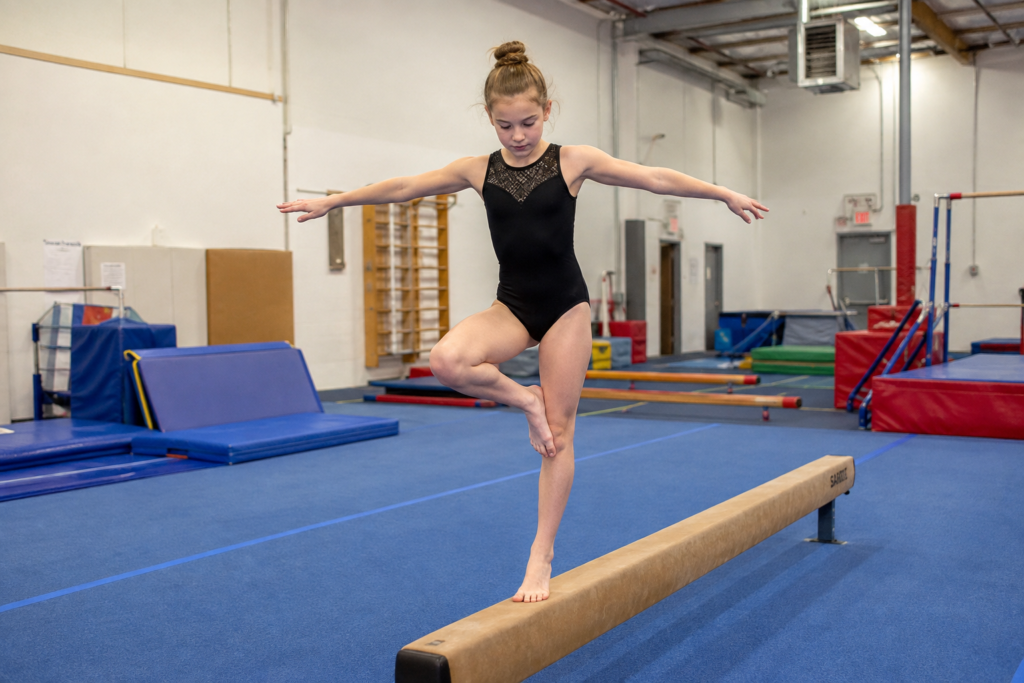
Gymnastics training often includes equipment that challenges balance and body control. A balance beam is one of the best examples. Beginners can start with a low beam or floor line before moving to a higher beam.
Practice walking forward, walking backward, and standing on one foot. Once you become comfortable, you can add simple turns and jumps.
Balance boards and stability equipment can also be useful when used correctly. However, beginners should always use such equipment with supervision to reduce the risk of falling.
Improve Body Awareness
Body awareness means understanding where your body is positioned while you move. Gymnasts need excellent body awareness because many skills are performed quickly and sometimes without looking directly at the body part being moved.
One way to improve body awareness is to practice movements slowly. Instead of rushing through a skill, break it into smaller parts. Pay attention to the position of your arms, legs, head, and hips.
Slow practice allows your brain to learn the correct movement pattern. As the pattern becomes familiar, you can gradually increase your speed.
Practice Coordination Drills
Coordination drills can train your brain and body to work together more efficiently. Simple movements such as opposite arm and leg raises can be useful. For example, raise your right arm while extending your left leg, then switch sides.
You can also practice basic jumps while moving your arms in different directions. Start with simple combinations and gradually make them more complex.
Another helpful drill is catching and throwing a soft ball while standing on one leg. This combines balance, concentration, and hand eye coordination in one exercise.
Focus on Proper Landing Technique
Landing is an important part of gymnastics and requires excellent balance and coordination. A gymnast must control the body immediately after a jump or skill.
Practice landing with your feet about shoulder width apart and your knees slightly bent. Keep your chest controlled and avoid allowing your knees to move inward.
Start with small jumps and focus on landing quietly and steadily. Once you can control basic landings, you can gradually practice more difficult jumps and combinations.
Train Your Flexibility
Flexibility and balance work together in gymnastics. Limited flexibility can make it harder to achieve proper body positions, while good flexibility allows smoother and more controlled movements.
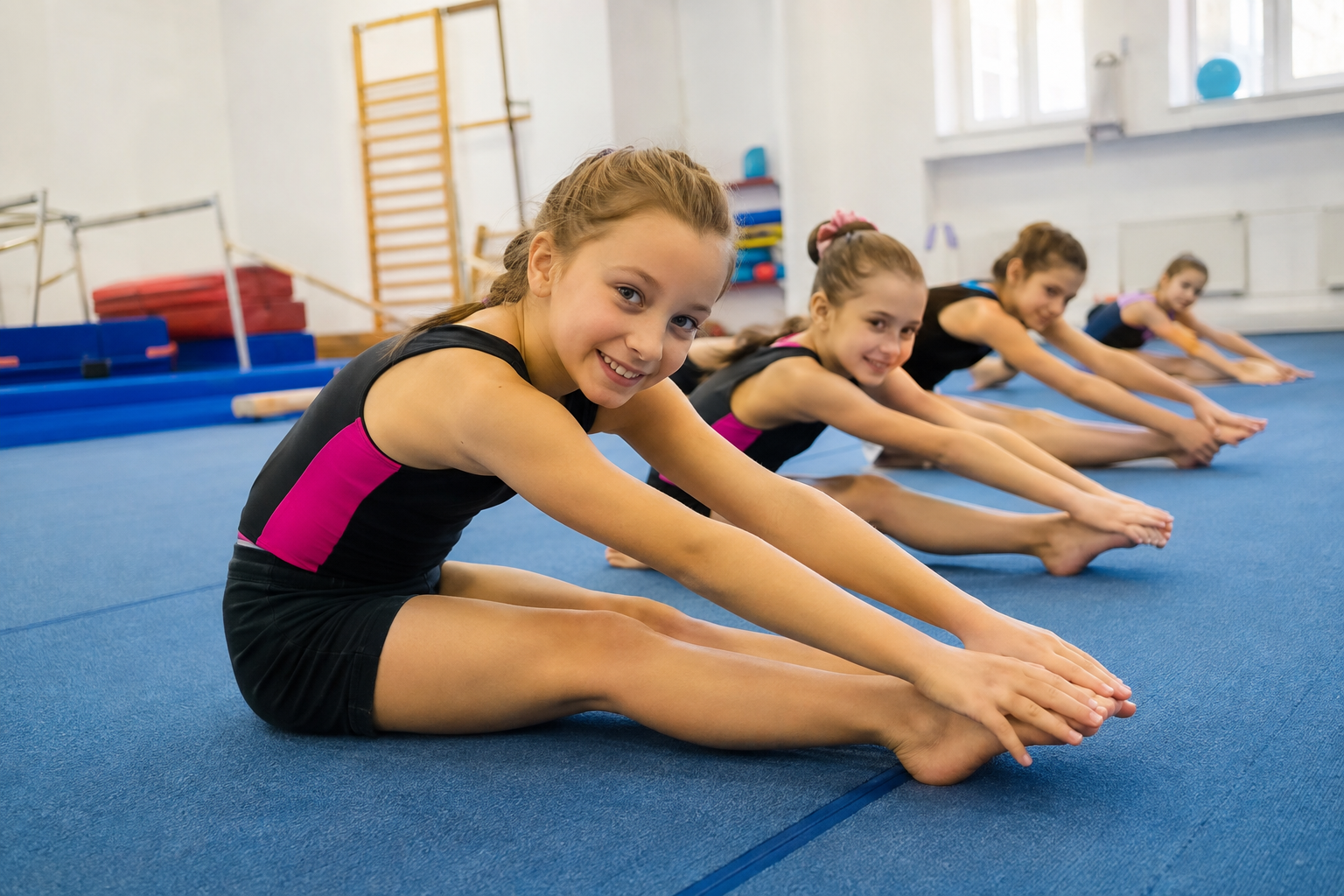
Include regular stretching for the legs, hips, shoulders, and back. Dynamic movements can be useful before training, while gentle static stretching can be included after your main workout.
Do not force a stretch. Flexibility improves gradually through consistent practice, and forcing the body into a position can increase the risk of injury.
Practice Turns and Rotations
Turns are excellent for developing balance and coordination. Start with simple turns on two feet before progressing to one foot. Keep your eyes focused and practice maintaining an upright posture.
A useful technique for turns is spotting. This means keeping your eyes focused on a fixed point for as long as possible before quickly turning your head to find the point again.
Practice turns slowly at first. As your control improves, you can increase your speed and add more complex movements.
Improve Concentration
Balance and coordination are not only physical skills. Concentration is also extremely important. Gymnasts need to remain focused while performing routines because even a small mistake in timing or body position can affect the entire movement.
Before performing a skill, take a moment to think about the movement. Focus on your starting position, body alignment, and finishing position.
Mental preparation can help you stay calm and avoid rushing. Over time, repeated practice will make many movements feel more natural.
Train Both Sides of the Body
Many beginners develop a stronger side of the body. While this is normal, gymnastics requires athletes to develop control on both sides.
Practice skills with both the right and left legs whenever possible. Work on turns in both directions and perform balance exercises on both legs.
Training both sides can improve overall coordination and create better body control. It can also help reduce unnecessary differences between the two sides of the body.
Practice Consistently
Consistency is one of the biggest factors in improving balance and coordination in gymnastics. You do not need extremely long training sessions every day. Short and focused practice sessions can be very effective.
Spend a few minutes on balance exercises, core training, coordination drills, and basic gymnastics movements during each practice session.
Track your progress over time. You may notice that you can stand longer on one leg, hold a handstand for more time, or complete turns with greater control.
Avoid Rushing Your Progress
Gymnastics is a sport that requires patience. Trying to learn advanced skills before developing basic balance and coordination can lead to poor technique and unnecessary risk.
Build your skills step by step. Make sure you can control simple movements before progressing to more difficult ones. Training with a qualified gymnastics coach can help you learn proper technique and choose exercises that match your current ability.
Final Thoughts
Learning how to improve balance and coordination in gymnastics requires regular practice, body awareness, strength, flexibility, and concentration. Simple exercises such as single leg stands, core workouts, handstand practice, coordination drills, turns, and controlled landings can make a major difference over time.
The key is to focus on control instead of speed. Practice both sides of your body, pay attention to technique, and gradually increase the difficulty of your exercises. With patience and consistent training, your balance and coordination can become stronger, helping you perform gymnastics skills with greater confidence, accuracy, and control.
Whether you are a beginner or an experienced gymnast, improving these fundamental skills can create a strong foundation for learning more advanced gymnastics movements and performing routines more effectively.