Gymnastics is a sport that requires strength, flexibility, balance, coordination, and body control. Before starting any gymnastics training session, it is important to prepare the body properly. A good warm up helps increase body temperature, prepare the muscles and joints, improve movement quality, and reduce the risk of injuries. Whether you are a beginner or an experienced gymnast, learning how to warm up before gymnastics training can make your workouts safer and more effective.
A proper gymnastics warm up does not need to be complicated. It should gradually prepare your entire body for the movements you are going to perform. Starting with light activity and then moving into dynamic exercises is usually a good approach. You can also include movements that prepare your wrists, shoulders, hips, ankles, and other areas that are heavily used during gymnastics.
Why Is a Warm Up Important Before Gymnastics?
A warm up prepares your body and mind for physical activity. When you begin exercising without warming up, your muscles may feel stiff and your movements may not be as controlled. This can make certain gymnastics skills more difficult and may increase the chance of strains or other injuries.
During a warm up, your body temperature gradually increases. Blood flow to the working muscles also improves, which helps your body prepare for more demanding movements. A warm up can also help improve flexibility and range of motion when dynamic movements are performed correctly.
Gymnastics involves movements such as jumping, landing, swinging, rolling, handstands, cartwheels, and tumbling. These movements place demands on many parts of the body. A complete warm up helps prepare the body for these activities and allows gymnasts to begin training with better control.
Start With Light Movement
The first part of your gymnastics warm up should involve light movement. The goal is to gradually increase your heart rate and body temperature without becoming tired.
You can begin with easy jogging around the training area. Walking quickly, marching, skipping, or light jumping can also work well. Spend about five minutes performing comfortable movements that make your body feel warmer.
At this stage, you should not try to perform difficult gymnastics skills. Keep your movements simple and controlled. The purpose is to wake up your muscles and prepare them for the exercises that will come later.
Warm Up Your Wrists and Hands
Wrist preparation is especially important in gymnastics because many skills place body weight through the hands. Handstands, cartwheels, round offs, and other skills require strong and mobile wrists.
Start by gently moving your wrists in circles. You can also open and close your hands several times to increase movement. Another useful exercise is placing your hands on the floor and gently shifting your weight forward and backward while keeping the movement controlled.
Avoid forcing your wrists into uncomfortable positions. The goal is to prepare them gradually rather than stretch them aggressively. If you regularly practice skills that place weight on your hands, wrist preparation should be an important part of your warm up routine.
Prepare Your Shoulders and Arms
The shoulders and arms are heavily involved in many gymnastics movements. They need to be ready for pushing, supporting, swinging, and holding the body.
Arm circles are a simple way to warm up the shoulders. Start with small circles and gradually make them larger. Perform circles in both directions. You can also swing your arms gently across the front of your body.
Shoulder movements such as controlled arm raises can also help prepare the upper body. Keep your movements smooth and avoid using excessive force.
If your gymnastics session includes handstands, bars, or other upper body skills, spend extra time preparing your shoulders. Good shoulder movement can help you perform skills with better control.
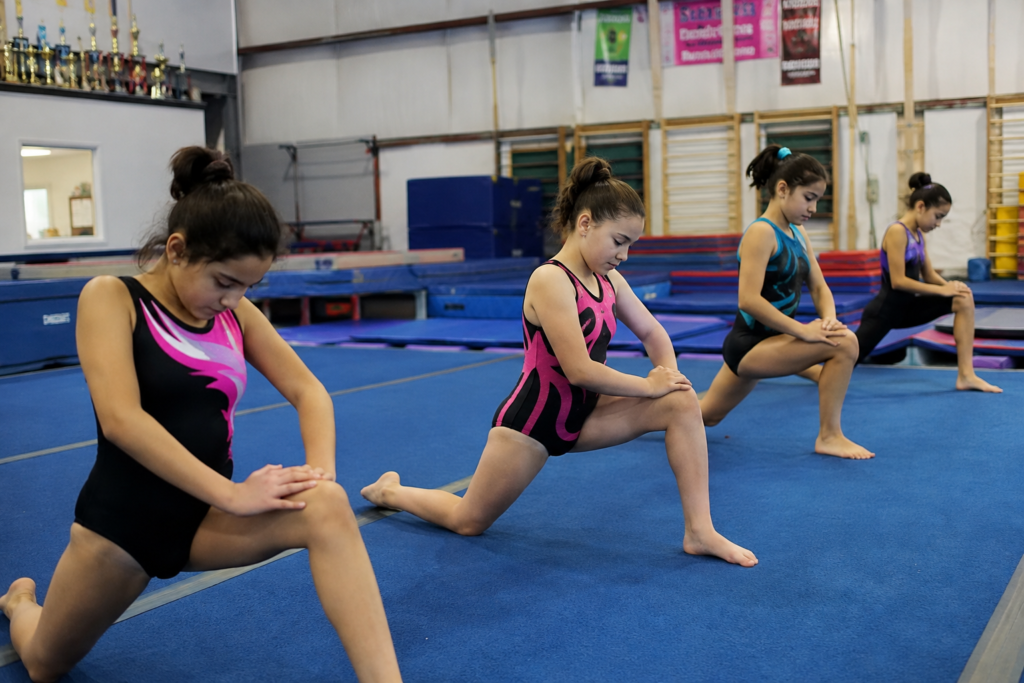
Warm Up the Hips and Legs
Strong and mobile legs are important for jumping, landing, running, and tumbling. The hips also need to move freely during many gymnastics skills.
Dynamic leg movements are useful before training. Try controlled leg swings forward and backward while holding onto a stable surface if necessary. You can also perform gentle side to side leg swings.
Bodyweight squats are another useful warm up exercise. Keep your feet in a comfortable position and lower your body under control. Stand back up and repeat several times.
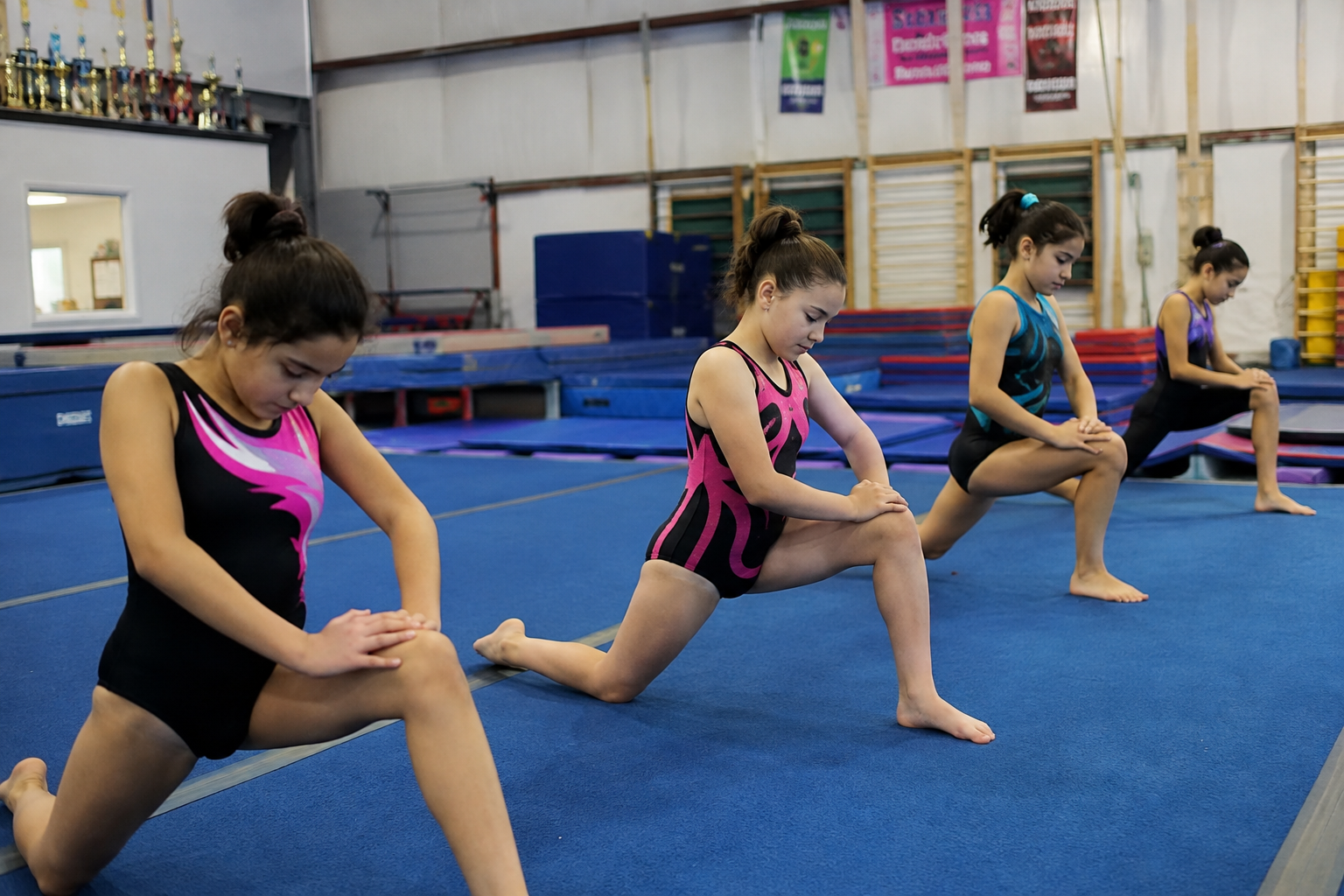
Walking lunges can also prepare the legs and hips. Keep your upper body upright and take controlled steps. These exercises increase movement and prepare the muscles without making them overly tired.
Prepare Your Ankles and Knees
Ankle and knee preparation is important because gymnasts often jump and land repeatedly. Good control around these joints can help you move more safely.
Begin with gentle ankle circles. Move each ankle slowly in both directions. You can then perform controlled calf raises by rising onto your toes and lowering your heels back down.
You can also practice small controlled jumps. Focus on landing softly with your knees slightly bent. This helps prepare your body for the impact that can occur during gymnastics training.
Never rush through landing preparation. Learning to land with control is one of the most important parts of gymnastics training.
Use Dynamic Stretching
Dynamic stretching involves moving through a controlled range of motion instead of holding a stretch for a long period. It can be useful during a gymnastics warm up because gymnastics requires active movement and body control.
Examples include walking lunges, leg swings, arm circles, controlled kicks, torso rotations, and gentle jumping movements.
Dynamic stretching should feel controlled and comfortable. Do not bounce aggressively or force your body into extreme positions. The purpose is to prepare your muscles and joints for movement.
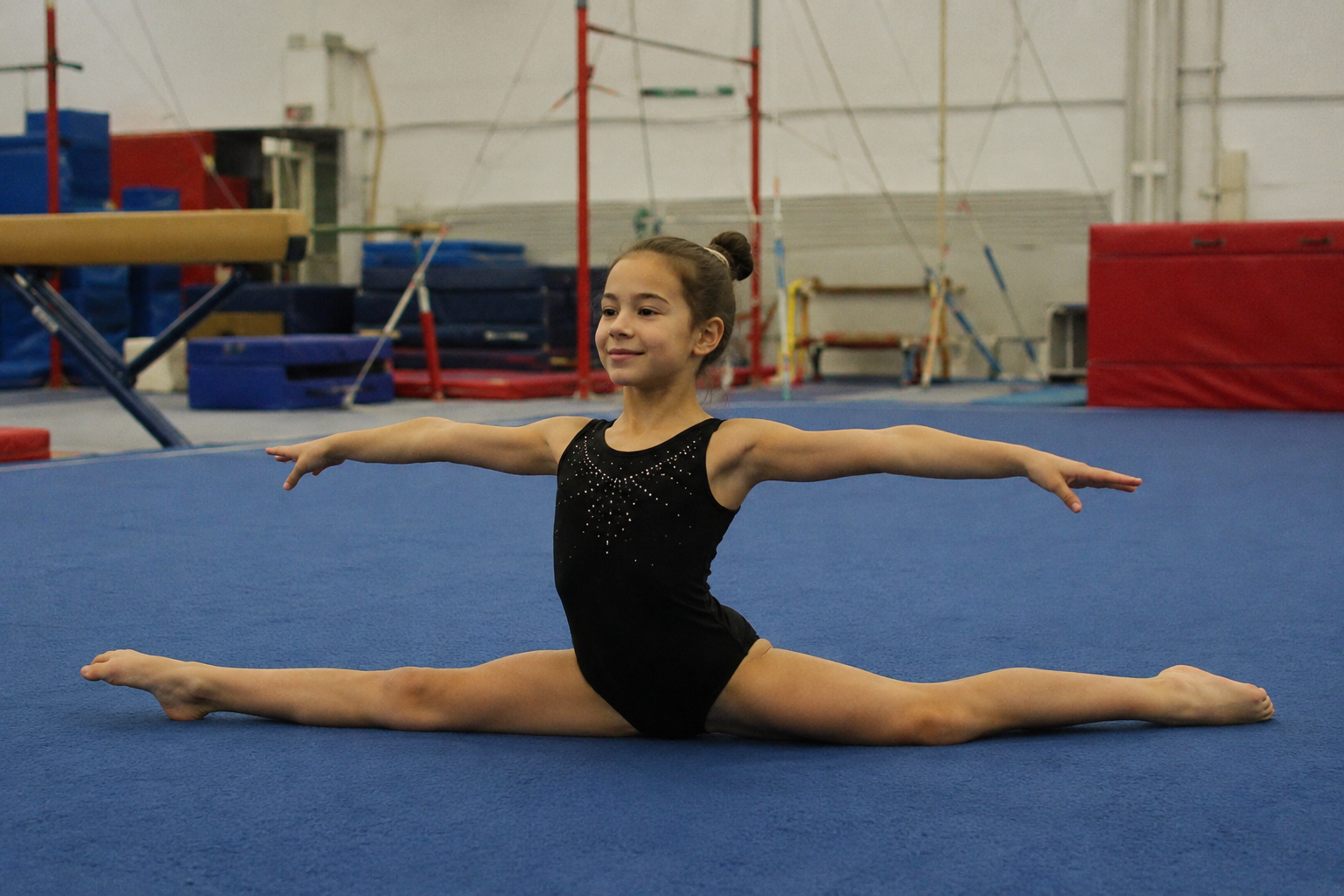
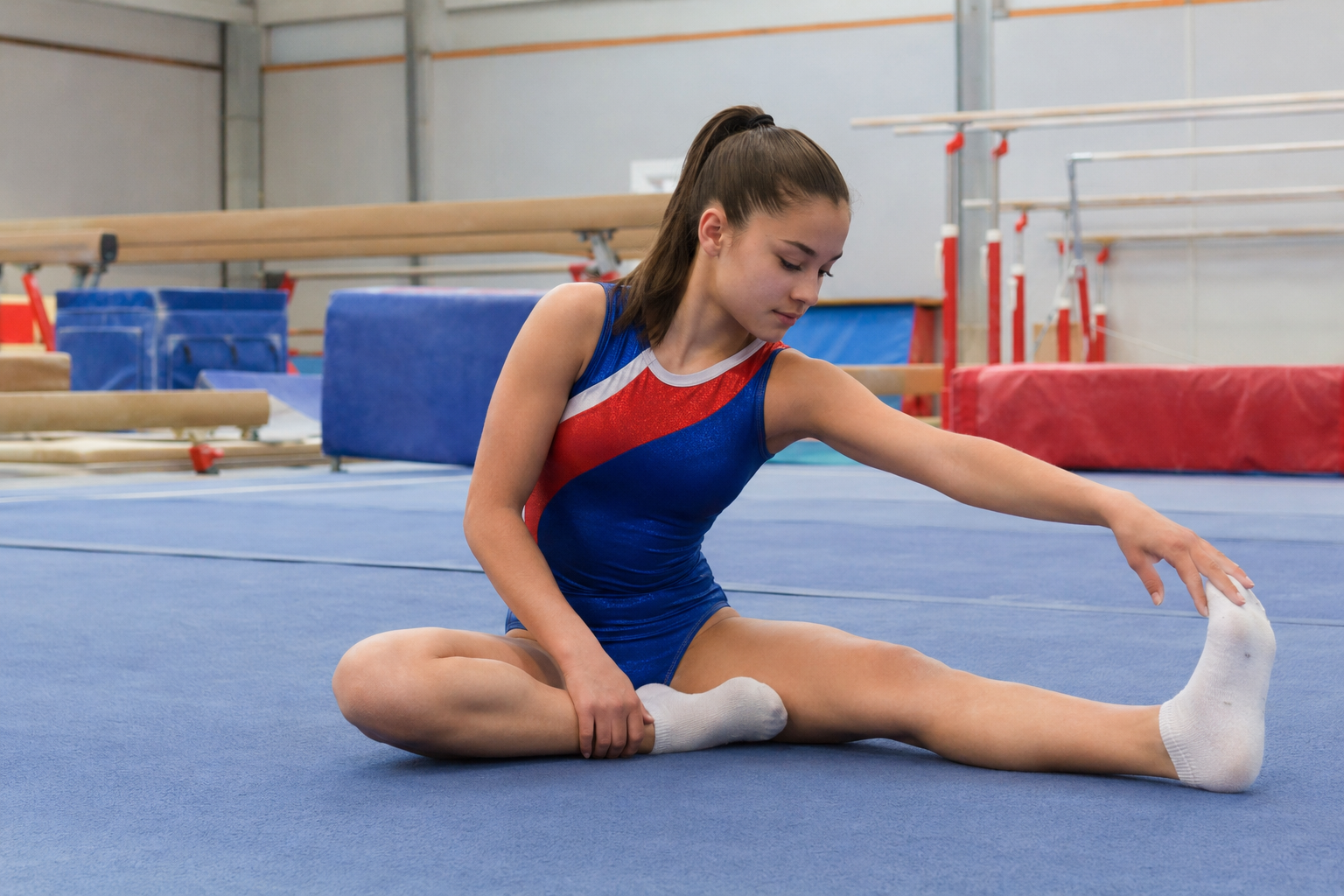
Deep static stretching is usually better saved for after training or a separate flexibility session. Before demanding gymnastics skills, focus on movements that gradually prepare your body for the activity ahead.
Include Gymnastics Specific Movements
After your general warm up, you can begin movements that are similar to the skills you will practice during the session. This helps your body transition from basic preparation to gymnastics specific activity.
For example, if you are practicing handstands, you can perform easier handstand preparation drills. If your session includes tumbling, you can practice basic rolls and controlled movement patterns before attempting more advanced skills.
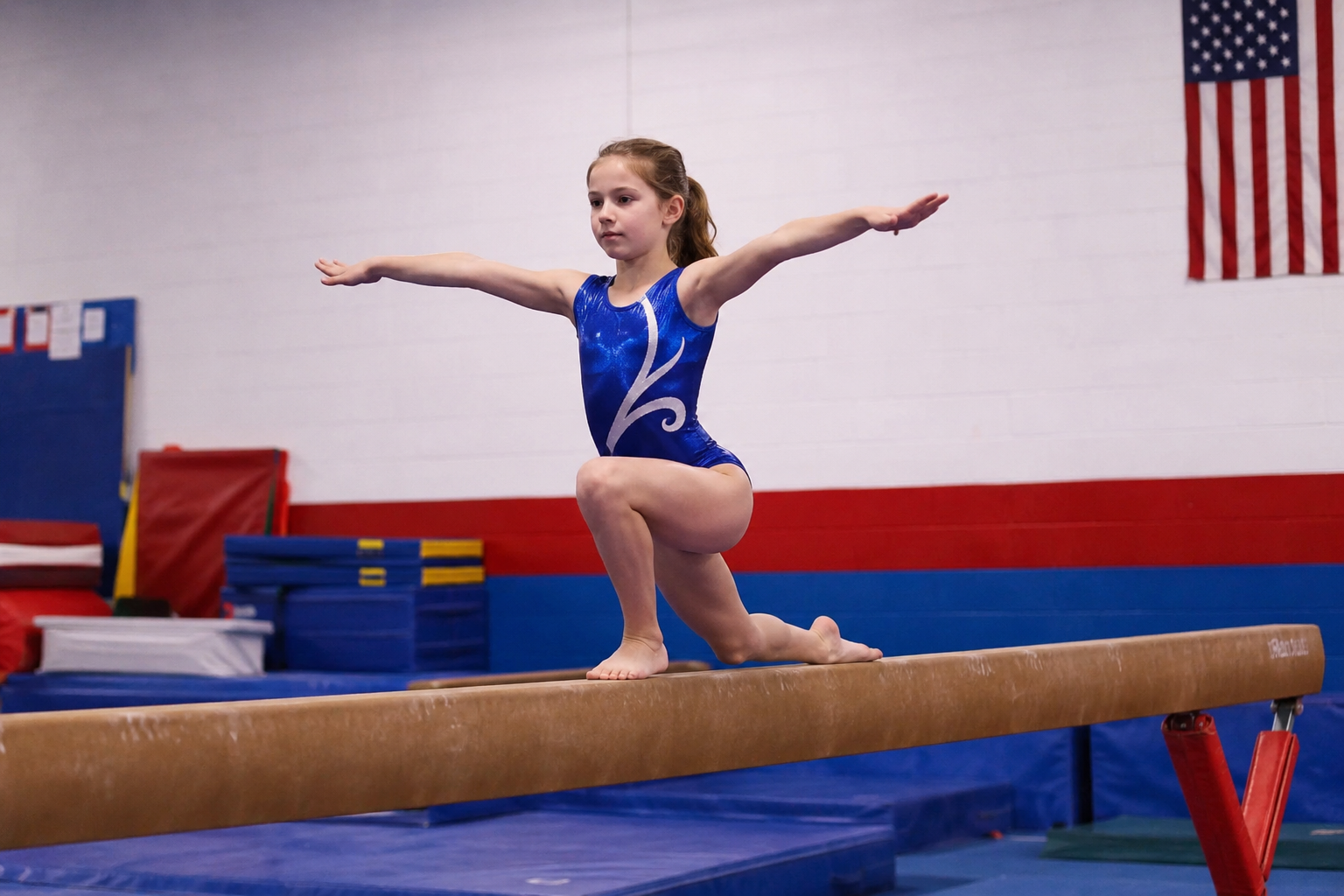
A gymnast preparing for jumps can perform small jumps before moving to larger jumps. Someone working on balance skills can begin with simple balance exercises before progressing to more difficult movements.
The key is to start with easier versions of the skills and gradually increase the difficulty.
A Simple Gymnastics Warm Up Routine
A beginner friendly gymnastics warm up can take around ten to fifteen minutes. Start with about three to five minutes of light jogging, skipping, or marching.
Next, spend a few minutes moving the wrists, shoulders, arms, hips, knees, and ankles. Perform controlled circles and dynamic movements for each area.
After that, perform exercises such as bodyweight squats, lunges, calf raises, and small jumps. Finish the general warm up with dynamic stretches such as leg swings and controlled kicks.
Finally, spend several minutes practicing easy gymnastics movements related to your training session. This could include rolls, balance drills, basic jumps, handstand preparation, or other beginner level skills.
Your warm up should leave you feeling ready to train rather than exhausted.
Common Warm Up Mistakes to Avoid
One common mistake is skipping the warm up because you are short on time. Even a short warm up is better than suddenly starting intense gymnastics skills.
Another mistake is stretching too aggressively. Flexibility is important in gymnastics, but forcing a stretch can cause discomfort or injury. Warm up gradually and respect your body’s limits.
Some gymnasts also make the mistake of doing only general exercises and ignoring areas that are important for their specific training. Your warm up should match the skills you plan to practice.
Another problem is becoming tired during the warm up. A warm up should prepare your body, not use up all your energy before the actual workout. Keep the intensity moderate and increase it gradually.
How Long Should a Gymnastics Warm Up Be?
The ideal warm up time depends on your age, fitness level, training intensity, and the type of gymnastics session. For many gymnasts, around ten to fifteen minutes can provide enough time for general movement, joint preparation, dynamic stretching, and gymnastics specific drills.
A more demanding training session may require additional preparation. For example, a session focused on tumbling or advanced skills may require more time to prepare the shoulders, wrists, hips, legs, and ankles.
Pay attention to how your body feels. You should feel warmer, more mobile, and mentally prepared before beginning difficult skills.
Listen to Your Body
A good gymnastics warm up should never be a competition. Everyone has different levels of flexibility, strength, and mobility. Some people may need more time to prepare certain areas of the body.
If you feel sharp pain during a warm up exercise, stop the movement rather than trying to push through it. Normal muscle effort is different from pain. If discomfort continues, speak with a qualified gymnastics coach or appropriate healthcare professional.
Your goal should always be safe and controlled movement.
Final Thoughts
Knowing how to warm up before gymnastics training is an important part of becoming a better gymnast. A proper warm up gradually increases body temperature, prepares the muscles and joints, improves movement quality, and helps you feel mentally ready for training.
Start with light movement and then prepare important areas such as the wrists, shoulders, hips, legs, knees, and ankles. Use dynamic stretching and finish with simple gymnastics specific movements related to your workout.
A consistent gymnastics warm up can help you train with better control and confidence. It also creates a good habit that can support your progress over time. Instead of rushing directly into difficult skills, give your body the preparation it needs. A few extra minutes of smart preparation can make your gymnastics training more comfortable, productive, and enjoyable.