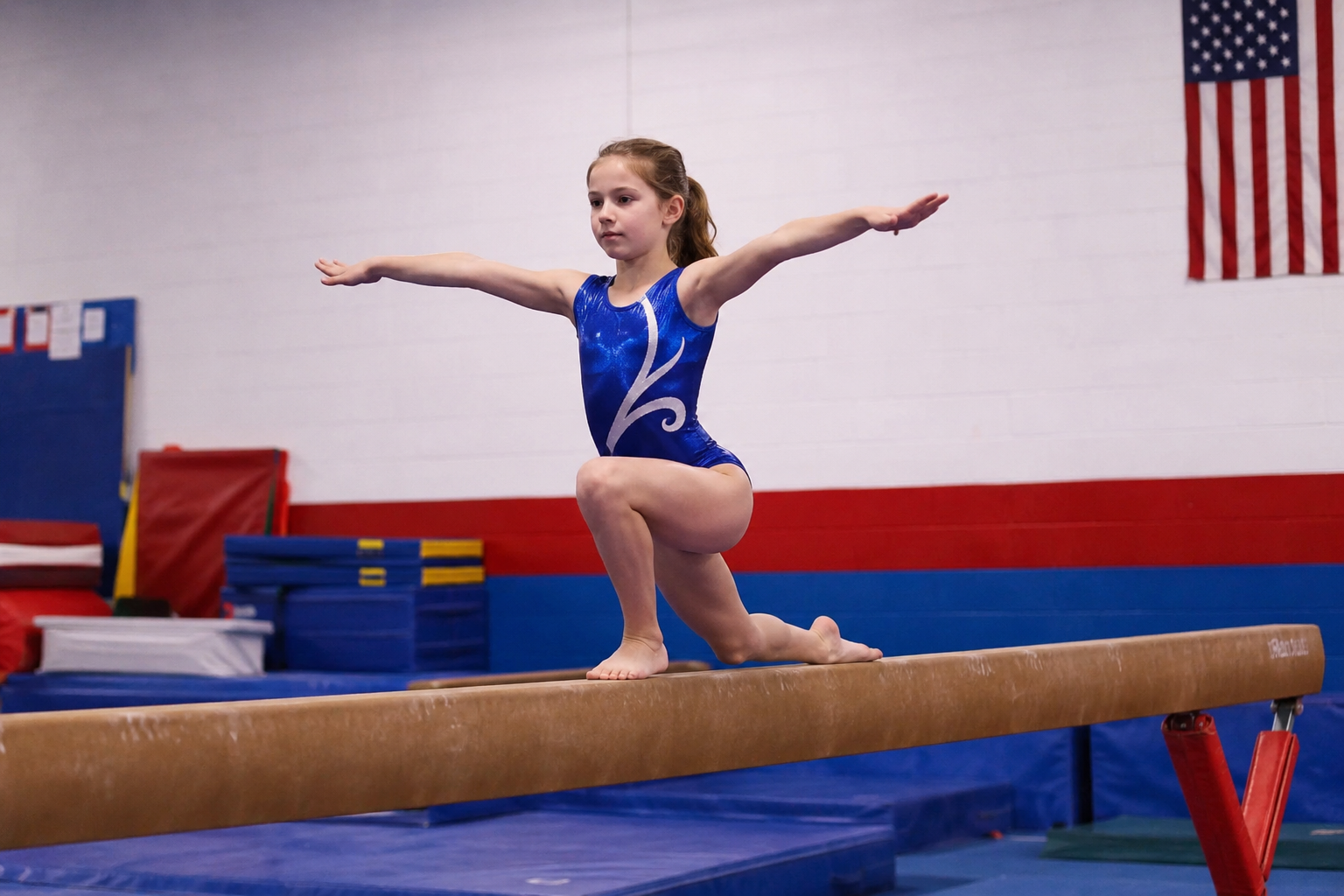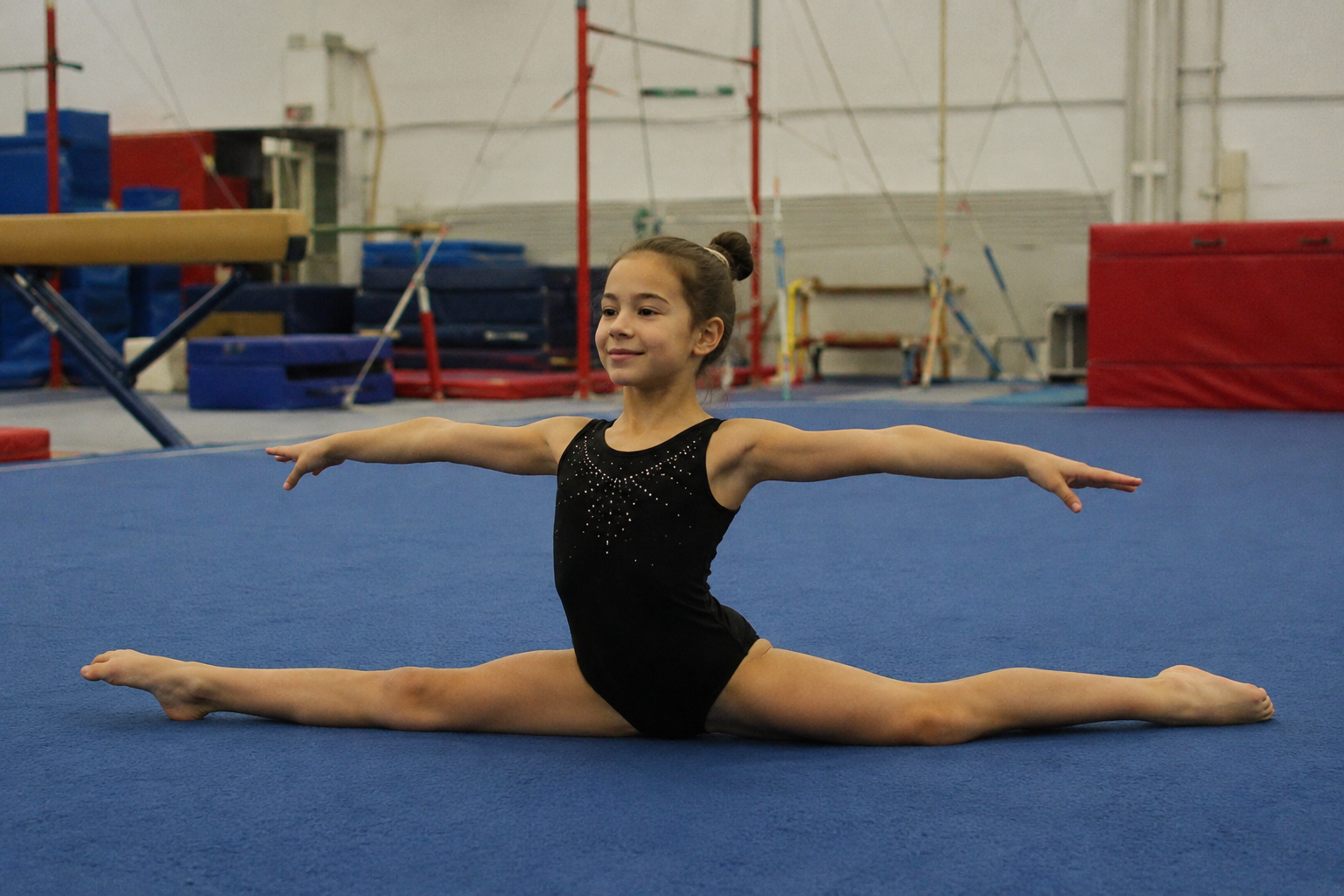
Gymnastics is an exciting sport that combines strength, flexibility, balance, coordination, and body control. It can improve physical fitness and help athletes develop discipline and confidence. However, gymnastics also places a lot of stress on the muscles, joints, bones, and ligaments. Repeated movements, difficult skills, landings, and falls can sometimes lead to injuries.
Understanding common gymnastics injuries and learning how to prevent them is important for beginners, children, recreational gymnasts, and competitive athletes. With proper training, good technique, enough rest, and suitable safety equipment, many gymnastics injuries can be avoided.
Why Do Gymnastics Injuries Happen?
Gymnastics requires athletes to perform movements that may place significant pressure on different parts of the body. Injuries can happen because of poor technique, lack of preparation, overtraining, unsafe landings, or performing skills before the body is ready.
Another common reason is doing too much training without enough recovery. Muscles and joints need time to recover after demanding workouts. When an athlete continues training while tired or in pain, the risk of injury can increase.
A proper gymnastics training program should gradually develop strength, flexibility, balance, and technical skills. Athletes should not rush into advanced movements simply because they want to learn them quickly.
Common Gymnastics Injuries
1. Ankle Sprains
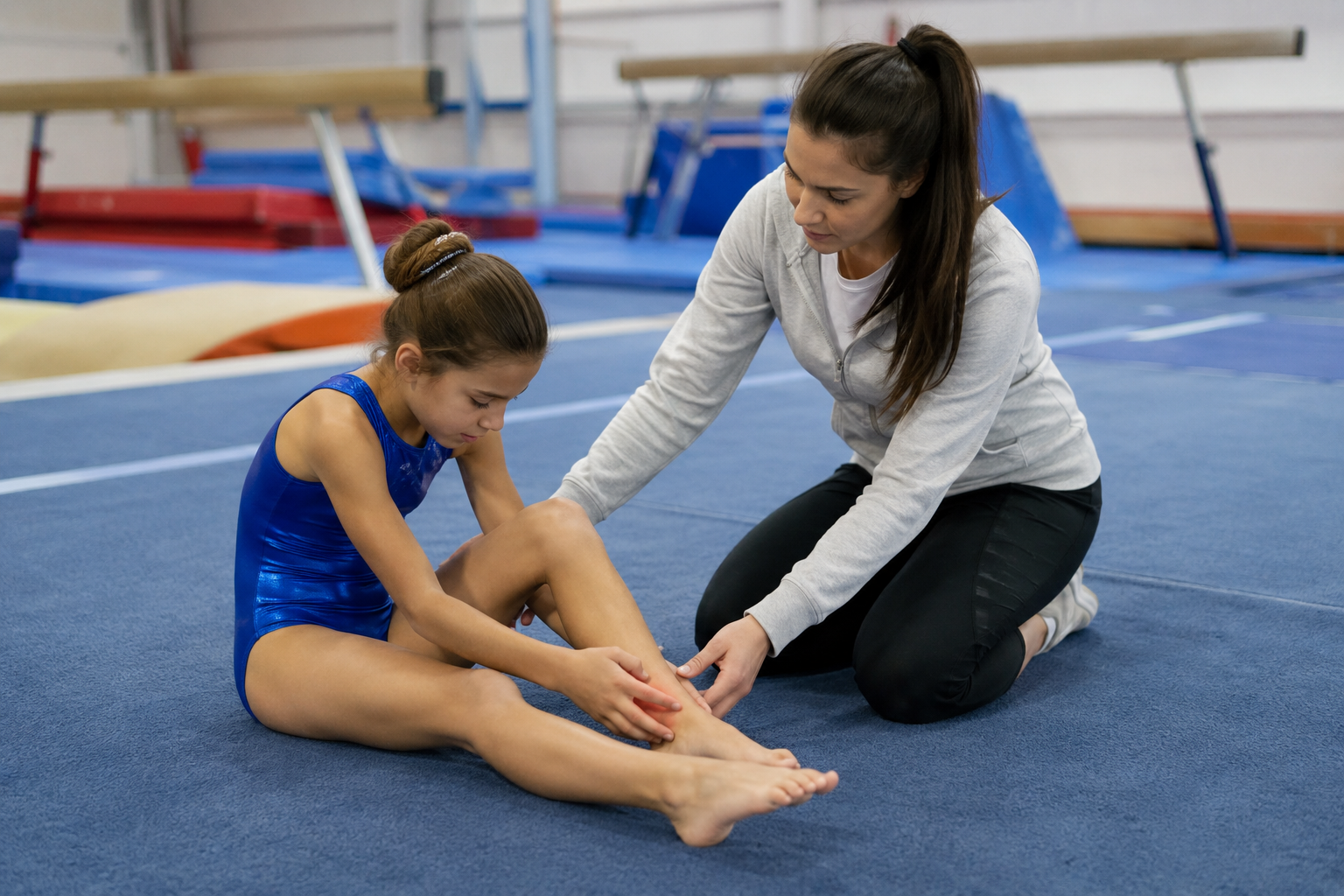
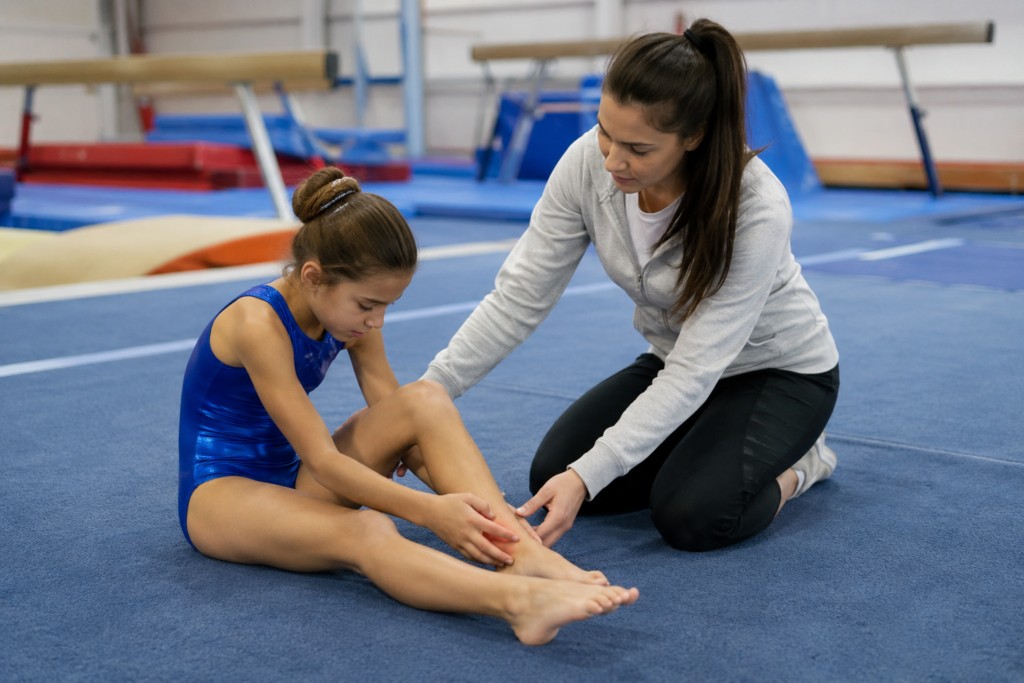
Ankle sprains are common in gymnastics because athletes frequently jump, turn, and land on their feet. A poor landing can cause the ankle to roll or twist, stretching or damaging the ligaments.
Symptoms may include pain, swelling, bruising, and difficulty putting weight on the foot.
To prevent ankle injuries, gymnasts should strengthen the muscles around the ankle and practice proper landing techniques. Balance exercises can also improve ankle stability. Wearing appropriate gymnastics footwear when required and training on suitable surfaces can provide additional support.
2. Wrist Injuries
The wrists carry a significant amount of body weight during skills such as handstands, cartwheels, round offs, and handsprings. Repeated pressure can cause wrist pain or overuse injuries.
Wrist injuries are especially common when athletes increase training volume too quickly.
Gymnasts can protect their wrists by performing a proper warm up before training and gradually building wrist strength. Wrist mobility exercises may also help prepare the joints for gymnastics movements. If persistent wrist pain develops, athletes should stop painful activities and seek advice from a qualified healthcare professional.
3. Knee Injuries
The knees absorb a lot of force during jumps and landings. Poor landing technique, weak muscles, repetitive training, and sudden increases in activity can contribute to knee problems.
Some gymnasts experience pain around the kneecap, while others may develop ligament or cartilage injuries after a serious landing or twisting movement.
Good landing technique is one of the best ways to reduce knee injury risk. Athletes should learn to land with controlled movement and avoid allowing the knees to collapse inward. Strengthening the legs, hips, and core can also improve stability during landings.
4. Back Injuries
Gymnastics involves repeated bending, twisting, arching, and extending the spine. These movements can place stress on the back, especially when performed incorrectly or too frequently.
Lower back pain can develop from poor technique, muscle fatigue, limited mobility, or excessive training. More serious injuries can also occur in athletes who repeatedly perform extreme spinal extension.
Gymnasts should develop strong core muscles and learn correct body positioning. Coaches should carefully monitor athletes who experience back pain. Training should not continue through significant or persistent pain.
5. Shoulder Injuries
The shoulders are heavily involved in gymnastics skills that require pushing, supporting, swinging, and holding the body. Repetitive movements can sometimes cause shoulder irritation or instability.
Proper shoulder strength is essential for gymnasts. Exercises that strengthen the shoulders, upper back, and surrounding muscles can help improve joint stability.
Athletes should also focus on proper technique instead of relying only on flexibility or strength. Adequate recovery between demanding sessions is important because tired muscles may not provide the same level of joint support.
6. Muscle Strains
Muscle strains occur when a muscle is stretched beyond its comfortable capacity or placed under excessive force. Gymnasts may experience strains in the hamstrings, thighs, shoulders, back, or other muscle groups.
A good warm up can prepare the muscles for physical activity. Athletes should also improve flexibility gradually rather than forcing a stretch. Strength training can help muscles handle the demands of gymnastics more effectively.
If a muscle becomes painful during training, the athlete should not ignore the problem and continue performing difficult skills.
7. Stress Fractures
Stress fractures are small cracks in bones that can develop from repeated stress. They are more likely to occur when the body does not receive enough recovery between training sessions.
Feet, legs, and other weight bearing areas may be affected. Pain from a stress injury can become worse with activity and may improve with rest during the early stages.
Preventing stress fractures requires sensible training progression, adequate rest, proper nutrition, and attention to pain. Athletes should tell their coach or parent about unusual or persistent pain rather than trying to hide it.
How to Prevent Gymnastics Injuries
Warm Up Before Training
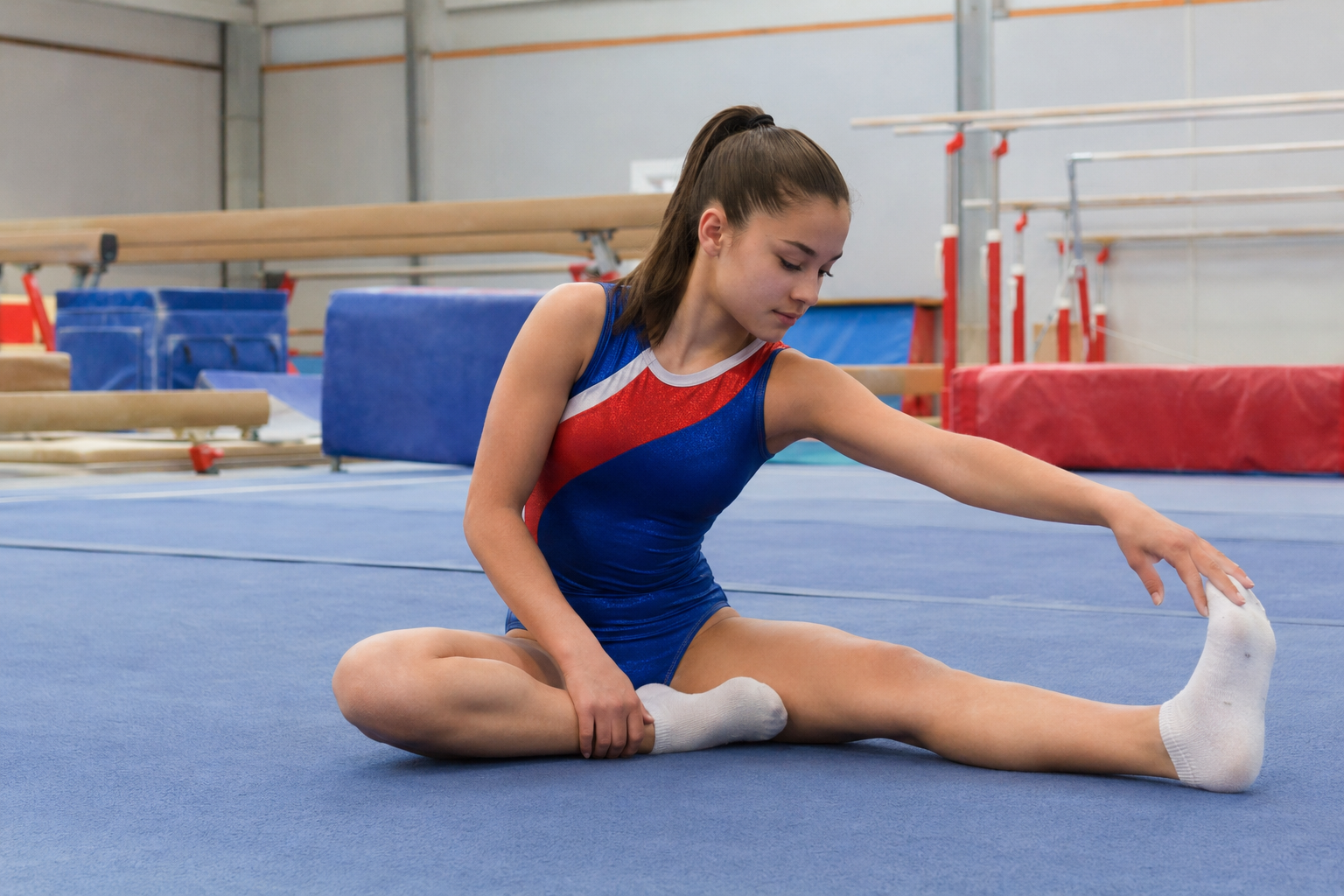
A proper warm up prepares the body for gymnastics. Light movement can gradually increase body temperature, while dynamic exercises can prepare the muscles and joints for activity.
A gymnastics warm up may include light jogging, controlled movements, arm circles, leg movements, balance exercises, and sport specific preparation.
Improve Strength Gradually
Strength is an important part of gymnastics injury prevention. Strong muscles help support joints and improve control during skills and landings.
Gymnasts should develop strength gradually through exercises appropriate for their age and experience. Core exercises, leg strengthening, upper body exercises, and controlled bodyweight movements can all support gymnastics performance.
Practice Proper Technique
Good technique is one of the most effective ways to prevent gymnastics injuries. Coaches should teach athletes how to perform movements correctly before increasing difficulty.
Landing technique is especially important. Gymnasts should learn how to control their body when landing instead of allowing excessive force to move through the joints.
Do Not Ignore Pain
Some muscle tiredness after training can be normal, but sharp pain, swelling, unusual weakness, or persistent discomfort should not be ignored.
Training through an injury can make a small problem worse and may increase recovery time. Athletes should communicate honestly with coaches and parents when something does not feel right.
Take Enough Rest
Rest is an important part of gymnastics training. The body needs time to repair muscles, recover from physical stress, and adapt to exercise.
A balanced training schedule should include recovery periods. Sleep is also important because poor sleep can affect physical performance, concentration, and recovery.
Use Proper Equipment
Safe gymnastics equipment can reduce the impact of falls and landings. Mats should be placed correctly around training areas, and equipment should be inspected regularly.
Athletes should also train under proper supervision, especially when learning advanced skills. Coaches can provide spotting and guidance when necessary.
Maintain Good Nutrition and Hydration
Proper nutrition supports energy, muscle function, bone health, and recovery. Gymnasts need a balanced diet that provides carbohydrates, protein, healthy fats, vitamins, minerals, and enough fluids.
Hydration is also important during training. Drinking enough water can help athletes maintain performance and reduce problems associated with dehydration.
The Importance of Coaching
A qualified gymnastics coach plays an important role in injury prevention. Coaches can observe technique, identify unsafe movement patterns, control training volume, and decide when an athlete is ready for more difficult skills.
Young gymnasts should learn skills in a progressive way. They should develop basic strength, flexibility, balance, and coordination before attempting advanced movements.
A supportive coach should also create an environment where athletes feel comfortable reporting pain or fear. Gymnasts should never feel pressured to hide an injury simply to continue training.
What Should You Do After a Gymnastics Injury?
If an injury occurs, the athlete should stop the activity that caused pain and assess the situation. Minor discomfort may improve with appropriate rest, but serious symptoms require professional evaluation.
Severe pain, significant swelling, inability to bear weight, deformity, loss of movement, or symptoms that do not improve should be assessed by a healthcare professional.
Returning to gymnastics should happen gradually after recovery. Athletes should not immediately return to full intensity after an injury. A gradual return allows the body to regain strength, mobility, confidence, and control.
Final Thoughts
Common gymnastics injuries include ankle sprains, wrist injuries, knee problems, back pain, shoulder injuries, muscle strains, and stress fractures. Although gymnastics can involve demanding movements, many injuries can be reduced through proper preparation and responsible training.
A good warm up, strong muscles, proper technique, safe equipment, adequate rest, healthy nutrition, and good coaching all play important roles in gymnastics injury prevention. Most importantly, athletes should listen to their bodies and report pain instead of trying to push through it.
Gymnastics should challenge the body while still respecting its limits. By training patiently and safely, gymnasts can improve their skills, stay active, and enjoy the sport for many years.