Gymnastics is a fun and active sport that can help children develop strength, flexibility, balance, coordination, and confidence. Many parents become interested in gymnastics when their child starts showing energy, enjoys climbing and jumping, or simply wants to try a new activity. One of the most common questions parents ask is about the best age to start gymnastics for children.
There is no single perfect age for every child. Children develop at different speeds, and their interests, physical abilities, confidence, and attention span can vary. However, gymnastics can be introduced at a very young age through simple activities and age appropriate classes. The important thing is to choose a program that matches the child’s development and focuses on safety and enjoyment.
What Is the Best Age to Start Gymnastics?
For many children, gymnastics can begin around the age of 3 or 4 through beginner classes designed for young children. These classes usually focus on basic movement skills rather than advanced gymnastics techniques. Children may learn how to roll, jump, balance, crawl, climb, and move safely around different types of equipment.
Children between 5 and 7 years old can often participate in more structured gymnastics programs. At this age, many children have better coordination and can follow simple instructions for longer periods. They may begin learning basic skills such as forward rolls, handstands, cartwheels, jumps, and simple balance exercises.
Older children can also start gymnastics successfully. Starting at age 8, 10, or even later does not mean a child cannot enjoy gymnastics or develop strong skills. Competitive gymnastics may require earlier training for children who want to reach a high level, but recreational gymnastics is suitable for children of many different ages.
Gymnastics for Toddlers
Some gymnastics programs offer classes for toddlers as young as 18 months to 3 years. These classes are usually parent and child sessions where an adult stays nearby and helps the child participate.
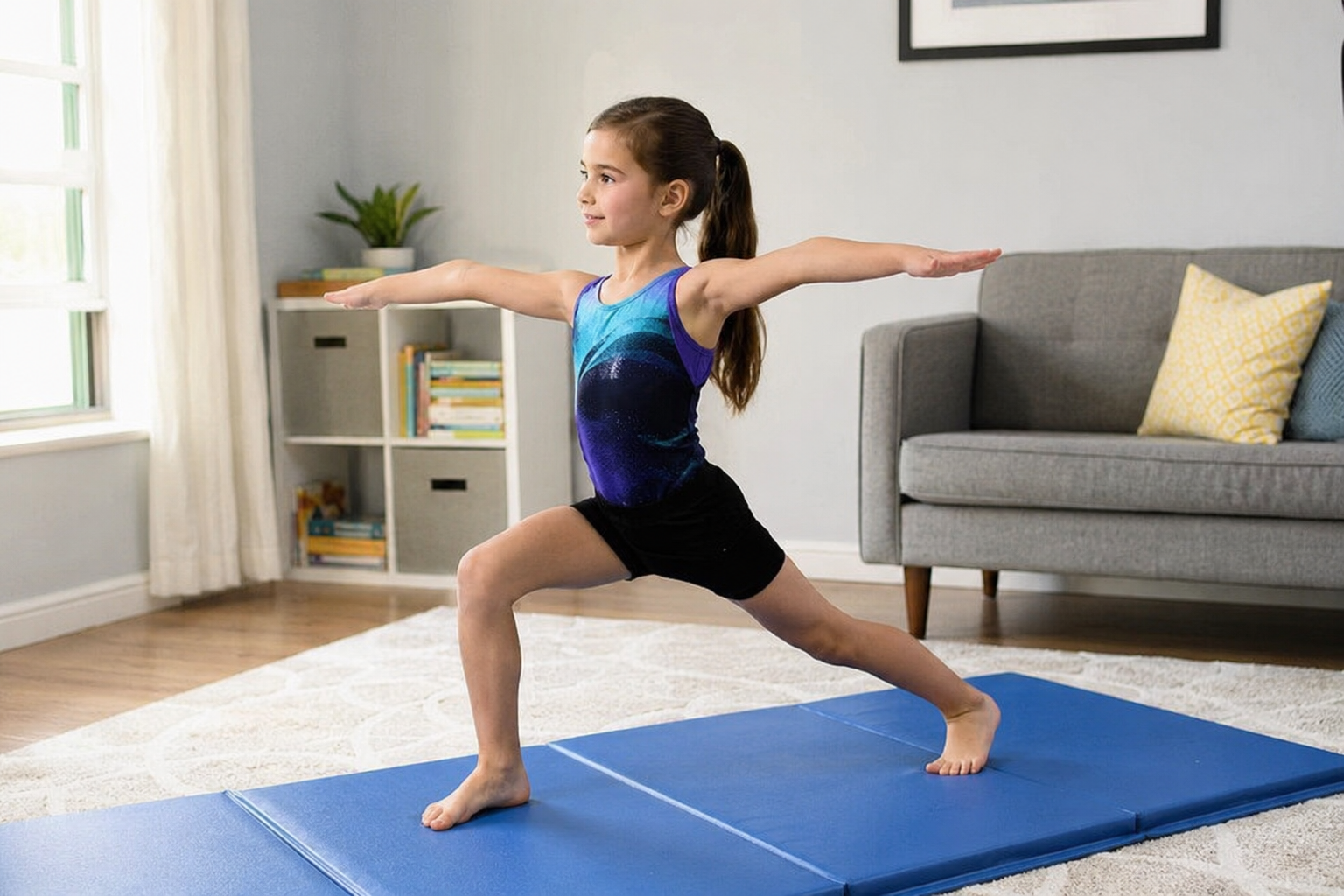
The goal at this age is not to teach difficult gymnastics skills. Instead, children explore movement in a safe environment. They may walk across soft balance equipment, jump onto mats, crawl through tunnels, or practice simple movements with assistance.
Toddler gymnastics can help children become comfortable with physical activity. It may also support basic coordination and body awareness. Parents should choose programs with qualified instructors, appropriate equipment, and activities designed specifically for young children.
Gymnastics for Children Ages 3 to 4
The age of 3 to 4 can be a good time to introduce children to beginner gymnastics. At this stage, children are becoming more independent and may be able to participate in a class without a parent directly helping them.
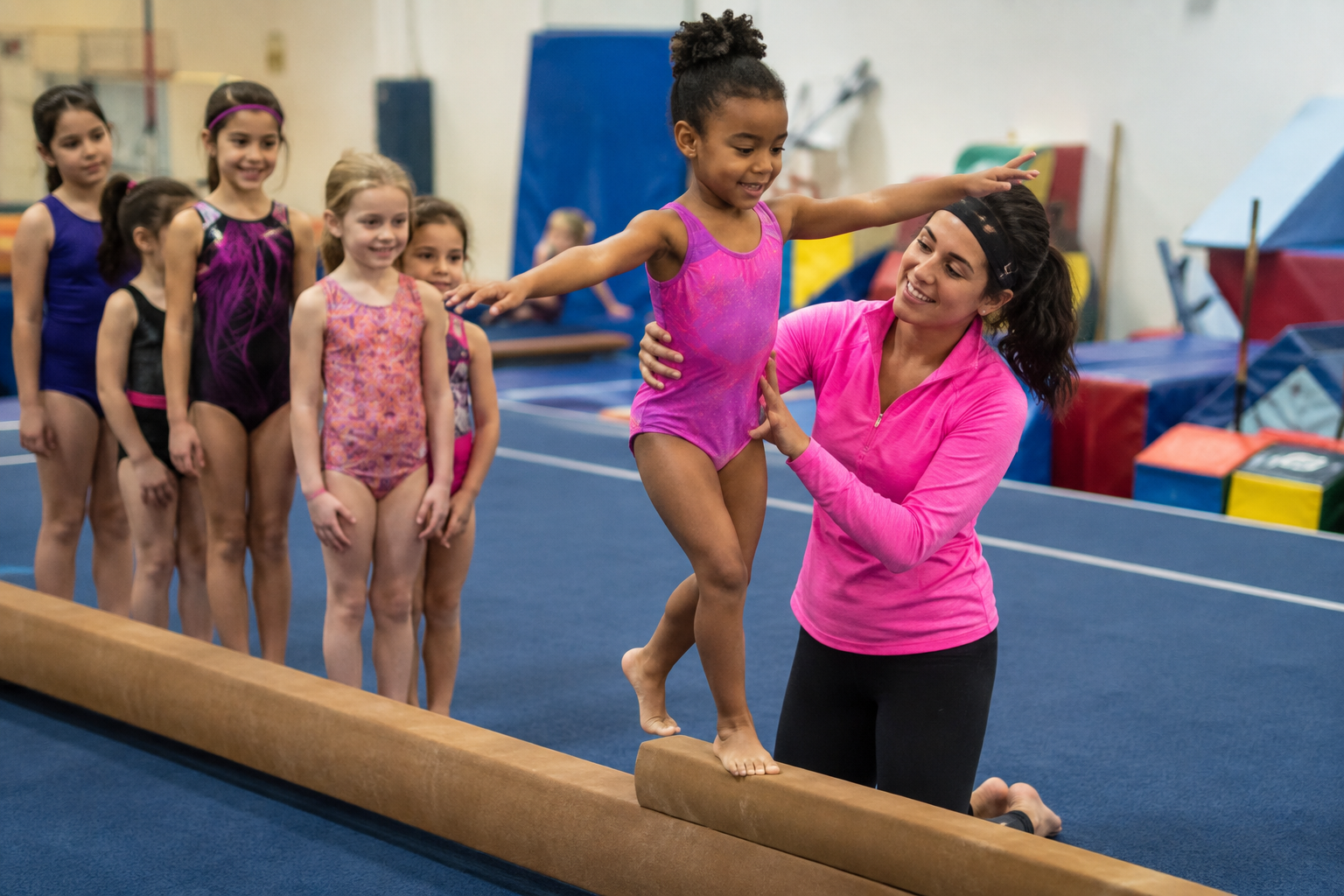
A gymnastics class for this age group should be playful and simple. Children can practice jumping, rolling, balancing, stretching, climbing, and basic body positions. Coaches may use games and fun activities to keep children interested.
Parents should not expect perfect technique at this age. The main purpose is to help children enjoy movement and become comfortable following basic instructions.
Gymnastics for Children Ages 5 to 7
The age range from 5 to 7 is often an excellent time for more structured gymnastics training. Children are usually developing better balance, coordination, strength, and concentration.
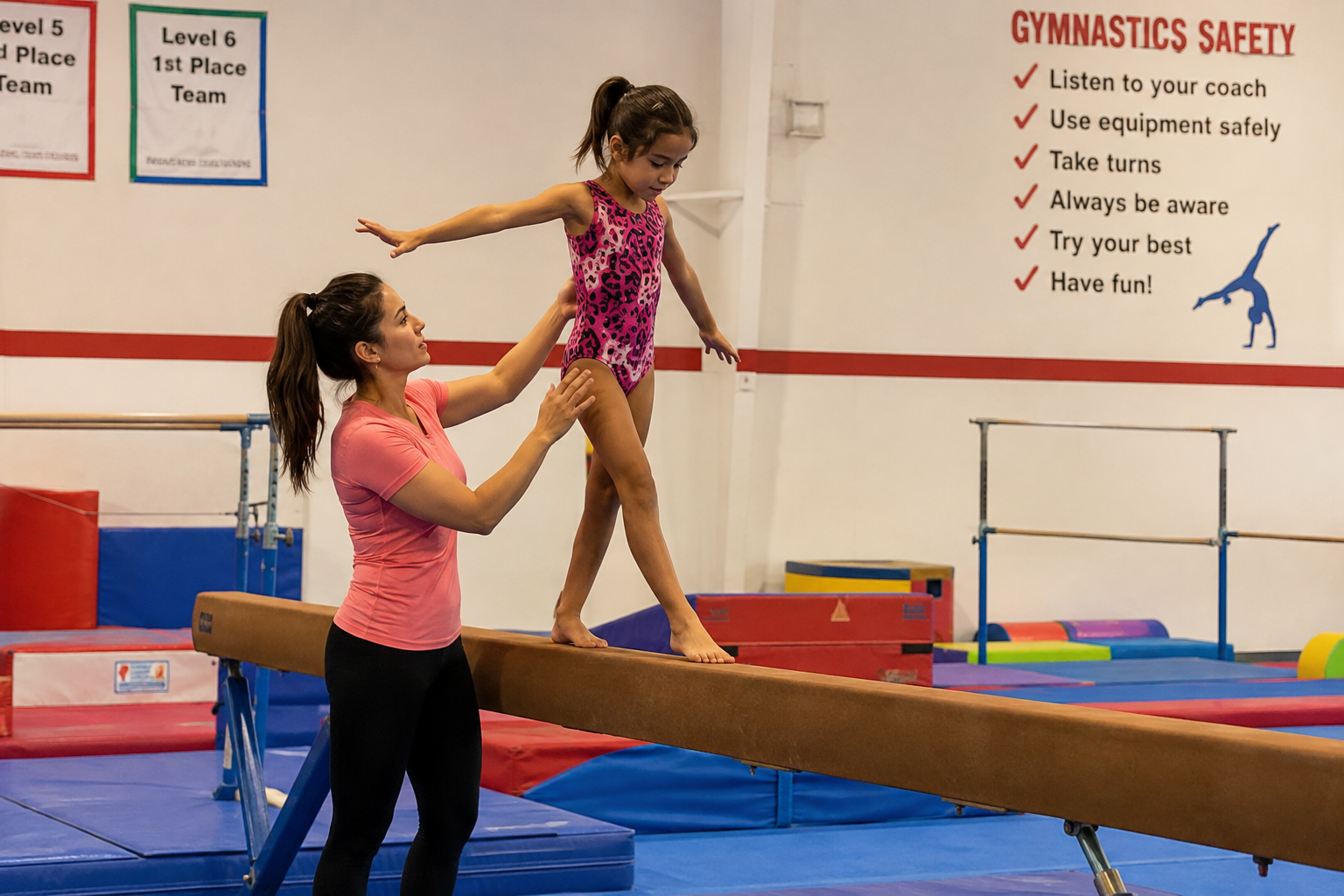
At this stage, children can begin learning fundamental gymnastics skills in a more organized way. They may practice forward rolls, backward rolls, cartwheels, handstands, bridges, jumps, and basic beam movements.
Regular gymnastics classes can also teach children how to listen to their coach, wait for their turn, follow safety rules, and work toward small goals. These habits can be useful both inside and outside the gym.
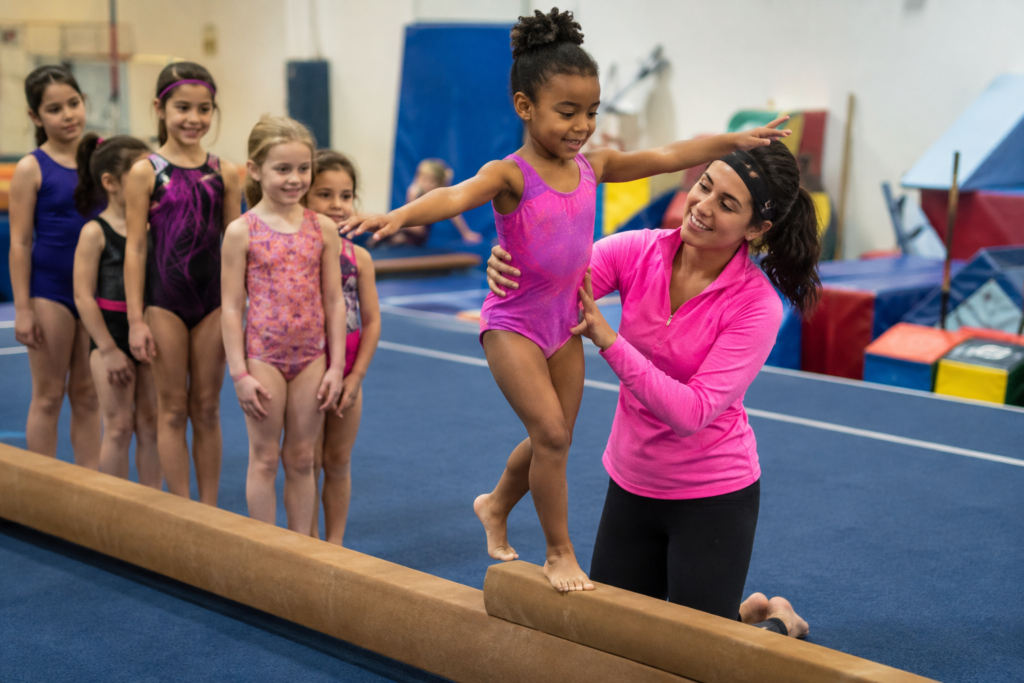
Gymnastics for Children Ages 8 and Older
Starting gymnastics at age 8 or older is completely possible. Some children discover the sport later because they see friends participating or develop an interest after watching gymnastics competitions.
Older beginners may learn certain skills more quickly because they can understand instructions and concentrate on technique. They may also have greater body awareness and strength compared with younger children.
However, children should not compare themselves with gymnasts who have been training for several years. Every gymnast has a different starting point. Progress should be measured according to individual improvement rather than comparison with others.
Benefits of Starting Gymnastics at a Young Age
Starting gymnastics at an appropriate age can provide many physical and mental benefits for children. One major benefit is improved coordination. Gymnastics requires children to control different parts of their bodies while moving, jumping, rolling, and balancing.
Strength is another important benefit. Basic gymnastics movements can strengthen the arms, legs, shoulders, back, and abdominal muscles. Children can develop strength through age appropriate exercises without needing heavy weights.
Flexibility is also an important part of gymnastics. Regular stretching and movement can help children develop flexibility while they are learning proper body positions.
Gymnastics can also improve balance and body awareness. Children learn how to control their movements and understand where their body is in space.
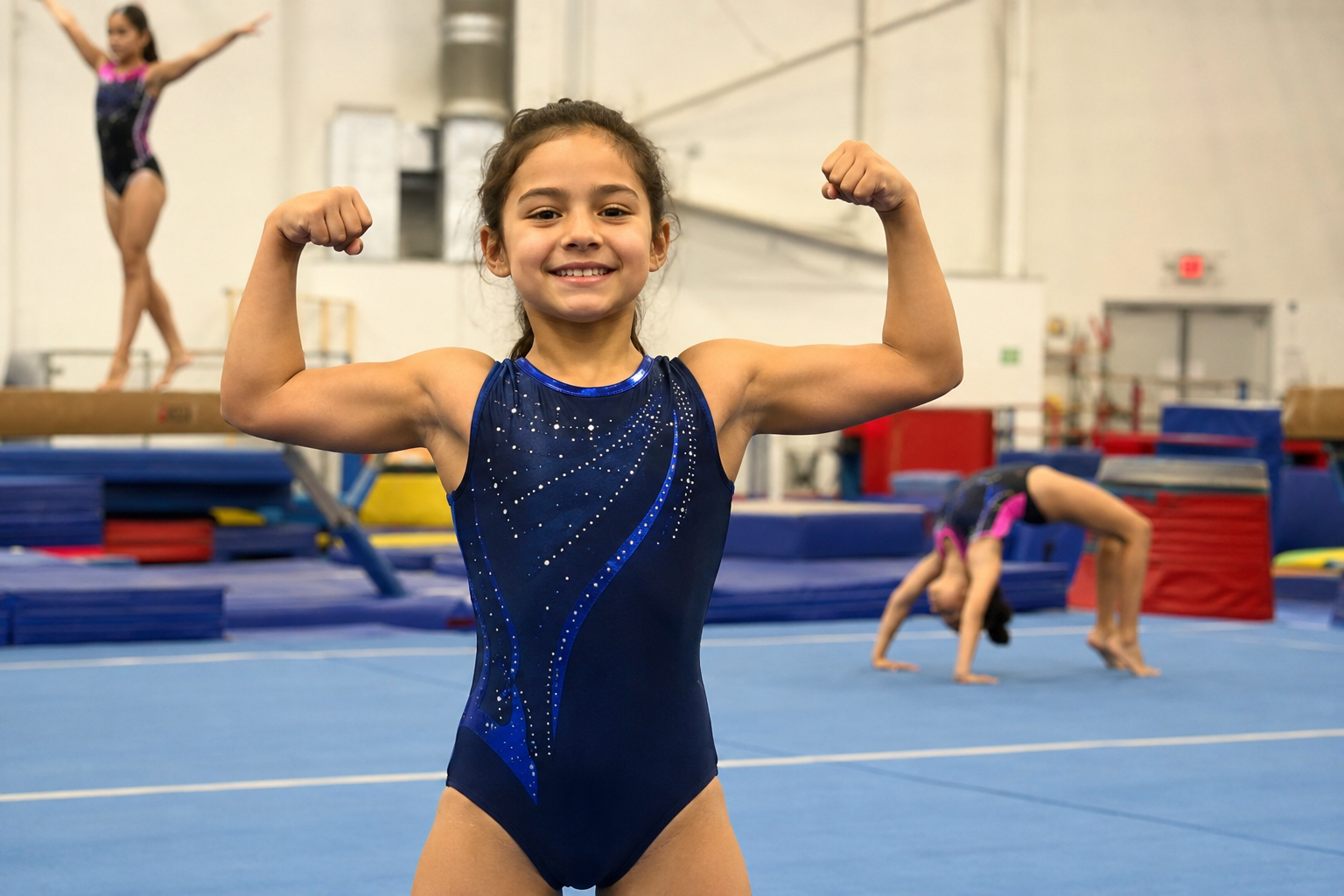
Another important benefit is confidence. Learning a new skill can give a child a strong sense of achievement. Even a simple skill such as completing a forward roll can make a young gymnast feel proud.
How to Know if Your Child Is Ready
Age is only one factor when deciding whether a child is ready for gymnastics. Parents should also consider the child’s behavior and interest.
A child may be ready if they can follow simple instructions, participate in a group activity, and feel comfortable trying new movements. Interest is also important. If a child enjoys jumping, climbing, balancing, or physical games, gymnastics may be a good activity.
Some children may need more time before joining a structured class. That is completely normal. Parents should avoid forcing children into gymnastics if they are uncomfortable or strongly unwilling to participate.
A positive first experience can make a big difference. Children are more likely to continue a sport when they associate it with fun, encouragement, and achievement.
Choosing the Right Gymnastics Class
Finding the right gymnastics program is just as important as choosing the right age. Parents should look for classes that are divided according to age and ability.
A good beginner program should have trained coaches who understand children’s physical and emotional development. The equipment should be suitable for young gymnasts and properly maintained.
Class size can also matter. Smaller groups may allow coaches to provide more individual attention. Parents should also ask about safety procedures, supervision, class structure, and instructor qualifications.
The best gymnastics class for a child is not necessarily the most competitive one. For beginners, a supportive recreational program may be a better choice than an intense training environment.
Safety Should Always Come First
Gymnastics can be a safe and enjoyable sport when children are properly supervised and taught age appropriate skills. Parents should never encourage young children to attempt advanced skills without proper coaching.
Children should learn basic movements before progressing to more difficult skills. Proper warm ups, suitable mats, qualified instruction, and safe equipment are important parts of gymnastics training.
Coaches should also teach children how to use equipment correctly. Parents can support safety by making sure children attend appropriate classes and follow the instructions of their coaches.
Does Starting Earlier Mean Better Results?
Starting gymnastics earlier can give children more time to develop basic movement skills, but earlier does not always mean better. A child who starts at 4 may have more years of experience than a child who starts at 9, but natural development and individual motivation also matter.
Children should be encouraged to enjoy the learning process rather than worry about becoming perfect. A positive relationship with sport can be more valuable than starting at the earliest possible age.
For children interested in competitive gymnastics, parents may want to discuss long term goals with a qualified coach. Competitive pathways can have different training expectations depending on the child’s age, ability, and goals.
How Often Should Children Practice Gymnastics?
The ideal training schedule depends on the child’s age and level. Young beginners usually benefit from shorter sessions that focus on fun and basic movement. As children become older and more experienced, they may be able to handle longer or more frequent sessions.
Rest is also important. Children need enough time for sleep, school, free play, and recovery. Gymnastics should be part of a balanced lifestyle rather than the only physical activity a child does.
Parents should watch for signs of excessive tiredness, loss of interest, or discomfort and communicate with the coach when necessary.
Final Thoughts
The best age to start gymnastics for children depends on the individual child rather than one specific number. Some children can enjoy simple gymnastics activities as toddlers, while ages 3 to 4 can be a good time for beginner classes. Children between 5 and 7 can often begin more structured training, while older children can still learn and enjoy gymnastics successfully.
The most important factors are safety, enjoyment, proper instruction, and age appropriate training. Parents should choose a gymnastics program that supports the child’s development and allows them to progress at their own pace.
Whether a child starts gymnastics at 3, 5, 8, or later, the experience can provide valuable physical skills, confidence, discipline, and a lifelong appreciation for movement. Instead of focusing only on the perfect starting age, parents should focus on finding a safe and positive environment where their child can learn, have fun, and grow.