Gymnastics floor exercise is one of the most exciting events in artistic gymnastics. It combines strength, flexibility, balance, tumbling, coordination, and artistic performance on a large spring floor. Unlike events that require apparatus such as bars, rings, or a balance beam, floor exercise gives gymnasts an open space where they can demonstrate a wide range of athletic skills.
A floor routine may include powerful tumbling passes, controlled leaps, turns, jumps, handstands, and dance movements. In women’s artistic gymnastics, routines are normally performed to music, while men’s floor routines focus more heavily on strength, tumbling, balance, and controlled transitions.
Floor exercise looks entertaining to spectators, but it requires years of careful training. Gymnasts must learn how to generate power, maintain body control, land safely, connect skills smoothly, and perform consistently under pressure.
This guide explains how gymnastics floor exercise works, the main skills involved, how routines are structured, how scoring generally works, and how gymnasts can improve their performance safely.
What Is Gymnastics Floor Exercise?
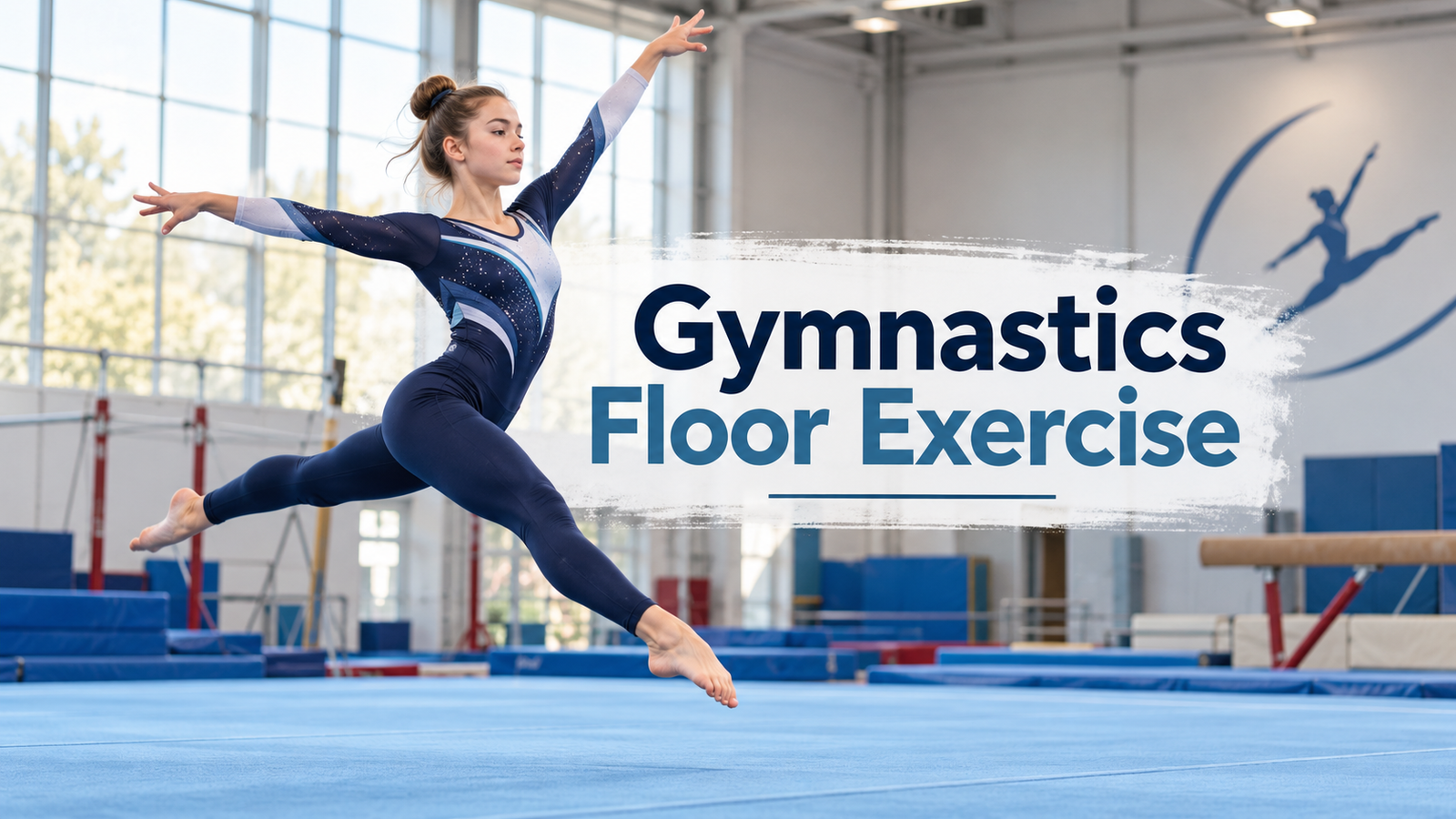
Floor exercise is an artistic gymnastics event performed on a specially designed square floor area. The surface contains layers that provide some spring and cushioning, allowing gymnasts to perform jumps, flips, twists, and other dynamic movements.
The gymnast travels across different parts of the floor during a routine instead of remaining in one location. A well designed routine uses the available space effectively while combining difficult skills with controlled movement.
Floor exercise is included in both men’s and women’s artistic gymnastics.
Women’s floor routines usually combine tumbling with dance, leaps, turns, expressive choreography, and music.
Men’s floor routines normally include tumbling, strength elements, balance positions, circles, handstands, and controlled movements without musical accompaniment.
Although both versions share many basic principles, their presentation and skill requirements are different.
The Importance of the Floor Exercise
Floor exercise gives gymnasts an opportunity to demonstrate many different abilities in a single routine.
A gymnast may need explosive power for tumbling, flexibility for leaps, balance for turns, core strength for handstands, coordination for combinations, and confidence for performance.
Because so many qualities are required, floor training is often an important part of overall gymnastics development.
Basic floor skills also support progress on other apparatus. For example, learning a strong handstand can help with bars, beam, rings, and vault preparation. Understanding body position during tumbling can also help gymnasts develop better aerial awareness.
The Gymnastics Floor Area
Competitive artistic gymnastics uses a large square floor area that gives athletes enough room to complete tumbling passes safely.
The surface is designed to provide controlled rebound. This allows gymnasts to generate height and rotation while reducing some of the impact compared with performing the same skills on a hard floor.
A competition floor normally has marked boundaries. Gymnasts are expected to remain within those boundaries while performing.
Stepping outside the marked area may result in a deduction depending on the competition rules.
Because the space is limited, gymnasts must carefully calculate their approach, speed, tumbling direction, and landing position.
Basic Skills Used in Floor Exercise
Gymnastics floor exercise includes skills ranging from very simple beginner movements to extremely difficult elite level combinations.
Beginners usually start by developing strong fundamental positions and movements before attempting advanced tumbling.
Common beginner floor skills include forward rolls, backward rolls, cartwheels, round offs, bridges, handstands, jumps, split positions, and basic turns.
These skills teach body control and help gymnasts understand how their weight moves through different positions.
More experienced gymnasts may progress toward handsprings, aerial skills, saltos, twisting skills, combination tumbling, and advanced dance elements.
Skill progression should always be gradual.
Tumbling Passes
Tumbling is one of the most recognizable parts of floor exercise.
A tumbling pass usually involves a sequence of connected skills performed while traveling across the floor. Gymnasts use running speed, rebounds, round offs, handsprings, flips, and twists to create powerful combinations.
A basic tumbling sequence might begin with a round off followed by a back handspring.
More advanced gymnasts may connect multiple skills and finish with difficult saltos or twisting elements.
Good tumbling requires more than simply rotating in the air. The gymnast must control takeoff, body position, height, direction, and landing.
Poor technique can make advanced skills unsafe, which is why coaches usually emphasize basics before adding difficulty.
Handstands and Body Control
The handstand is one of the most important fundamental skills in gymnastics.
During a strong handstand, the gymnast supports the body through the hands while maintaining a straight and controlled position.
Handstands help develop shoulder strength, balance, core stability, and body awareness.
These qualities are useful throughout gymnastics.
Young gymnasts often spend significant time practicing handstands because strong handstand technique supports many future skills.
Correct alignment is important. Ideally, the shoulders, hips, knees, and ankles remain controlled rather than allowing the body to bend excessively.
Leaps and Jumps
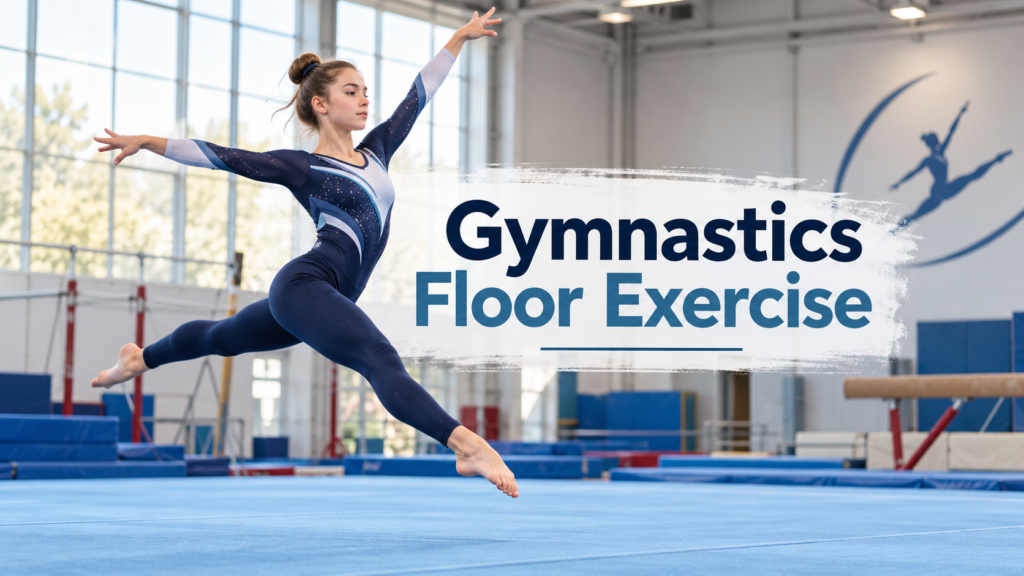
Leaps and jumps are important parts of floor exercise, especially in women’s artistic gymnastics.
These movements help demonstrate flexibility, control, height, and artistic quality.
Examples include split leaps, switch leaps, straddle jumps, tuck jumps, straight jumps, and turning jumps.
A good leap should show clear body position in the air. For example, a split leap should demonstrate strong leg extension and controlled posture.
Gymnasts also need to prepare the landing carefully.
Landing with poor alignment can affect both performance quality and safety.
Turns and Pirouettes
Turns add variety and control to floor choreography.
A gymnast may perform a turn while standing on one foot, often using the free leg in a specific position.
Turns require balance, posture, spotting awareness, and strong core control.
Even a simple turn can become difficult when performed during a demanding routine because the gymnast may already be tired from tumbling.
Advanced gymnasts can perform multiple rotations or combine turns with different body positions.
The goal is to complete the rotation while maintaining control and finishing cleanly.
Dance and Choreography
Dance plays a major role in women’s floor exercise.
The routine should not look like a collection of unrelated tricks. Instead, the gymnast attempts to connect skills with purposeful movement.
Choreography may include steps, poses, turns, leaps, arm movements, rhythm changes, and transitions.
Music helps shape the mood and pacing of the routine.
Some routines are energetic and powerful, while others are more elegant or dramatic.
Good choreography should suit the gymnast’s strengths and allow difficult skills to fit naturally into the performance.
Expression is also important. Confidence, timing, posture, and movement quality can make a routine more engaging.
Strength Skills in Men’s Floor Exercise
Men’s floor exercise includes several strength and balance elements in addition to tumbling.
Gymnasts may demonstrate handstands, press movements, controlled holds, circles, and strength positions.
These skills require excellent shoulder stability, core strength, flexibility, and control.
The challenge is not only reaching the position but also making the movement look smooth and deliberate.
A strong men’s floor routine balances explosive tumbling with slower controlled elements.
How Floor Routines Are Structured
Competitive routines are designed according to the rules used by the gymnast’s organization and level.
A routine normally contains several required types of skills.
These may include tumbling elements, jumps, leaps, turns, strength skills, or specific movement combinations.
Coaches build routines around the gymnast’s abilities.
A strong routine should contain enough difficulty to be competitive while remaining reliable enough to perform consistently.
Including skills that are too difficult can lead to falls, poor landings, or large execution deductions.
Consistency is therefore extremely important.
Understanding Floor Exercise Scoring
Gymnastics scoring systems vary depending on the competition level and governing organization.
At higher levels of artistic gymnastics, scoring generally considers both difficulty and execution.
Difficulty relates to the value of the skills and combinations included in the routine.
Execution evaluates how accurately and cleanly the gymnast performs those skills.
Judges may consider factors such as body position, landing control, balance, technique, form, rhythm, and overall presentation.
Errors may lead to deductions.
Examples can include steps on landing, bent legs, poor body alignment, falls, uncontrolled movements, or going outside the floor boundary.
In women’s floor exercise, artistic presentation and choreography can also be important parts of the overall evaluation.
Gymnasts therefore need both difficult skills and clean performance.
The Importance of Landings
Landings are one of the most important parts of floor exercise.
A gymnast can perform an impressive tumbling skill but still lose quality if the landing is uncontrolled.
Good landings require the gymnast to absorb force through the legs while keeping the body balanced.
The knees should generally remain aligned with the direction of the feet, and the athlete must avoid collapsing through the body.
Gymnasts spend a great deal of time practicing landing drills because proper technique can improve consistency and reduce unnecessary impact.
Landing practice may begin with small jumps before progressing to more difficult skills.
Flexibility for Floor Gymnastics
Flexibility helps gymnasts create better shapes and move through skills efficiently.
Important areas include the hips, hamstrings, shoulders, back, ankles, and legs.
Floor skills such as splits, leaps, bridges, and certain turns can require significant range of motion.
However, flexibility should be developed gradually.
Forcing stretches beyond a comfortable range can increase the risk of strain.
Many gymnastics programs combine flexibility work with strength training because flexible joints also need muscular control.
A gymnast who is flexible but lacks strength may have difficulty maintaining stable positions.
Strength and Conditioning
Floor exercise requires strength throughout the whole body.
The legs generate power for running, jumping, and tumbling.
The core helps control rotation and maintain alignment.
The shoulders and arms support handstands, handsprings, and other weight bearing skills.
Conditioning exercises may include squats, lunges, calf raises, hollow body holds, planks, push ups, leg lifts, and controlled jumping drills.
Gymnastics specific conditioning should be appropriate for the athlete’s age, level, and training experience.
Good physical preparation can help gymnasts perform skills with better technique.
Training Floor Exercise Safely
Safety is essential in gymnastics.
Advanced skills should be learned under qualified coaching supervision with suitable equipment.
Gymnasts normally progress through drills that teach each part of a skill before attempting the complete movement.
For example, before learning an advanced backward tumbling skill, a gymnast may practice body shapes, jumping drills, hand support positions, landing mechanics, and simpler related movements.
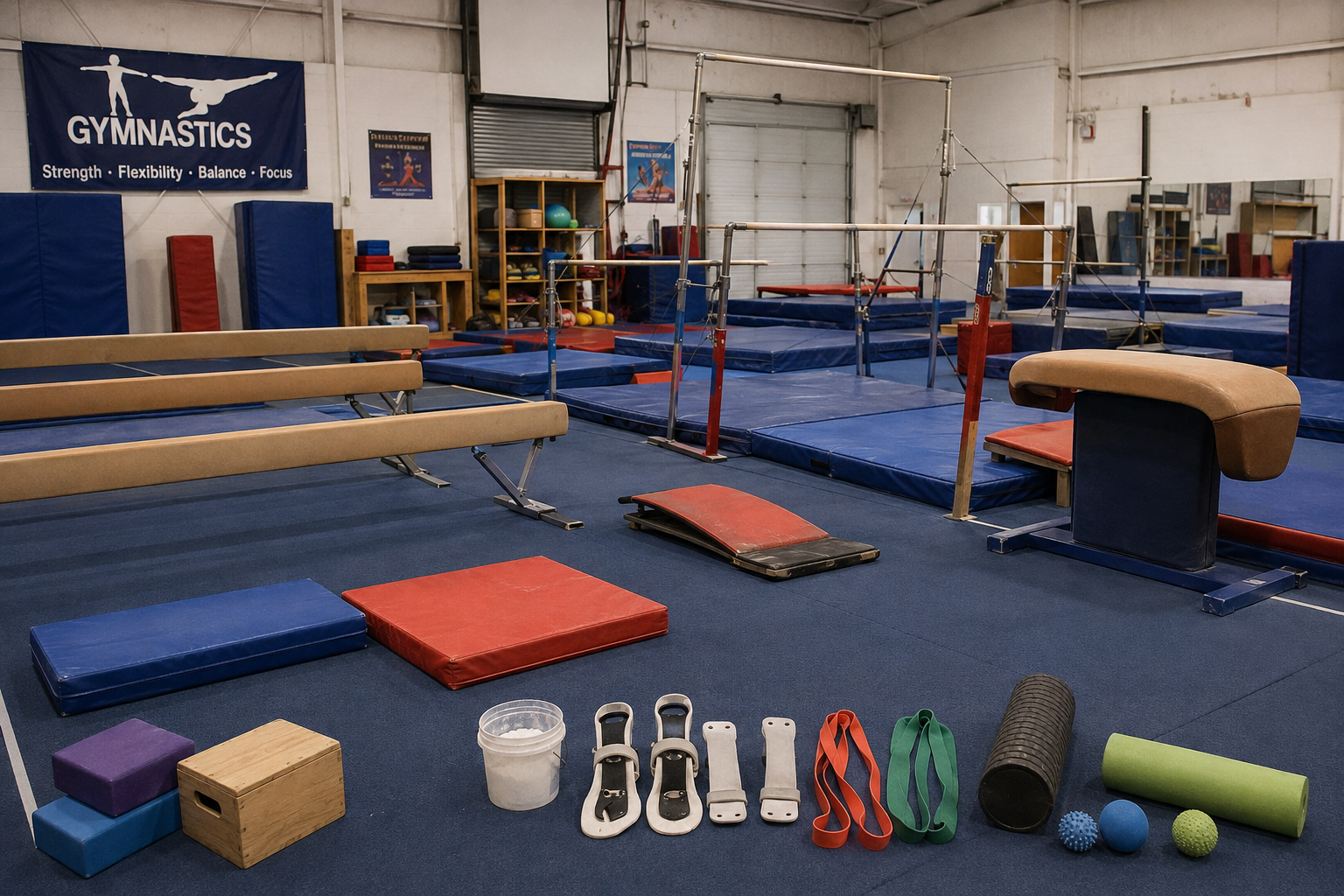
Mats, spotting techniques, foam pits, tumble tracks, or other training equipment may also be used when appropriate.
Gymnasts should avoid attempting unfamiliar advanced skills without professional guidance.
Common Floor Exercise Mistakes
Several common mistakes can reduce the quality of a floor routine.
One is rushing through skills without finishing each position.
Another is losing body tension during tumbling.
Poor posture can also affect leaps, turns, handstands, and dance movements.
Landings may become unstable when the gymnast lacks sufficient height or body control.
Some gymnasts also focus so heavily on difficult skills that transitions and choreography appear disconnected.
Coaches usually correct these problems by returning to basic technique and practicing individual sections of the routine.
How to Improve Floor Exercise Performance
Improvement usually comes from consistent practice rather than simply attempting harder skills.
Gymnasts should develop strong basics first.
Improving handstands, jumps, body positions, landings, and round offs can make advanced tumbling easier later.
Video review can also help gymnasts notice technical details that may be difficult to feel during movement.
Strength and flexibility work should support the skill training rather than replace it.
Routine sections can be practiced separately before performing the entire routine.
This allows the gymnast to focus on specific areas such as tumbling, dance, turns, or landings.
Confidence and Mental Preparation
Floor exercise also requires mental confidence.
Gymnasts often perform difficult skills while judges and spectators are watching.
This can create pressure even when the athlete performs the skills successfully during normal training.
Routine repetition helps build familiarity.
Mental rehearsal can also be useful. A gymnast may visualize the routine from beginning to end, including successful landings and transitions.
Breathing and concentration techniques can help athletes remain focused before competition.
Confidence usually grows when preparation is consistent and realistic.
Floor Exercise for Beginners
Beginners do not need advanced tumbling to enjoy floor gymnastics.
Simple movements can provide an excellent foundation.
A beginner program may focus on rolls, cartwheels, handstands, bridges, jumps, basic dance positions, and balance exercises.
These activities help develop coordination and body awareness.
Young gymnasts should focus on correct technique rather than trying to progress too quickly.
Strong basics create better long term development.
Why Floor Exercise Is Popular
Floor exercise is popular because it combines athletic power with creativity.
Spectators can easily appreciate large tumbling skills, high jumps, controlled landings, and expressive movement.
For gymnasts, the event provides an opportunity to show individual style.
Two athletes may perform similar skills but create very different routines because of choreography, music, rhythm, and presentation.
This combination of sport and performance makes floor exercise unique.
Final Thoughts
Gymnastics floor exercise is much more than performing flips on a spring floor. It combines tumbling, strength, flexibility, balance, coordination, artistry, and mental control.
Successful gymnasts spend years developing basic skills before progressing to advanced combinations.
Strong technique, safe training, good conditioning, and consistent practice are essential at every level.
Whether someone is watching an international competition or learning a first cartwheel in a local gym, floor exercise demonstrates many of the qualities that make gymnastics such an impressive sport.
The most important principle is steady progression. When gymnasts develop strong fundamentals, practice under suitable supervision, and focus on quality rather than rushing toward difficulty, they can build safer skills and more confident performances.