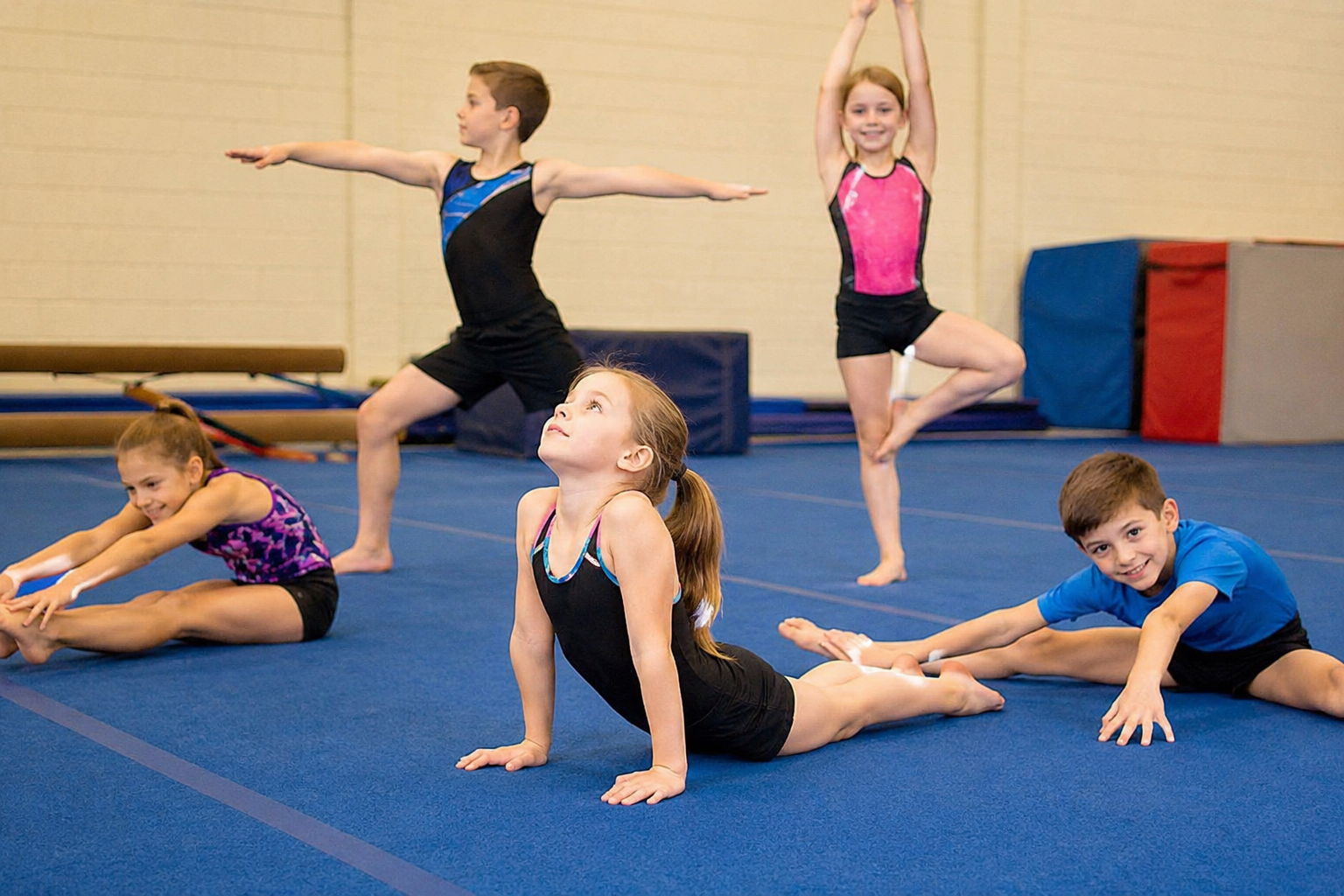
Gymnastics is an exciting sport that helps improve strength, flexibility, balance, coordination, and body control. Many people think gymnastics is only for professional athletes, but beginners can also enjoy its many benefits by starting with simple and safe exercises. The best gymnastics exercises for beginners are designed to build basic strength and movement skills before moving toward more difficult gymnastics techniques.
If you are new to gymnastics, you do not need advanced equipment or complicated routines. Simple bodyweight exercises can help you develop the foundation needed for rolls, handstands, jumps, and other gymnastics movements. Regular practice can also improve your confidence and make your body more comfortable with different positions.
Why Beginners Should Start With Basic Gymnastics Exercises
Starting with basic gymnastics exercises is important because gymnastics requires good body control. Beginners need to learn how to move safely before attempting advanced skills. Basic exercises can strengthen the arms, legs, stomach, back, and shoulders while improving flexibility and balance.
A beginner gymnastics routine should focus on quality rather than speed. Performing an exercise correctly is more important than doing many repetitions. With regular practice, simple movements can become easier and prepare you for more challenging skills.
1. Bodyweight Squats
Bodyweight squats are one of the best gymnastics exercises for beginners because they strengthen the legs and improve lower body control. Strong legs are useful for jumping, landing, running, and many other gymnastics movements.
Stand with your feet about shoulder width apart. Keep your chest up and slowly bend your knees while pushing your hips backward. Lower your body as far as you can comfortably go while keeping your feet flat on the floor. Then return to the starting position.
Beginners can start with 10 to 15 repetitions and gradually increase the number as their strength improves.
2. Planks
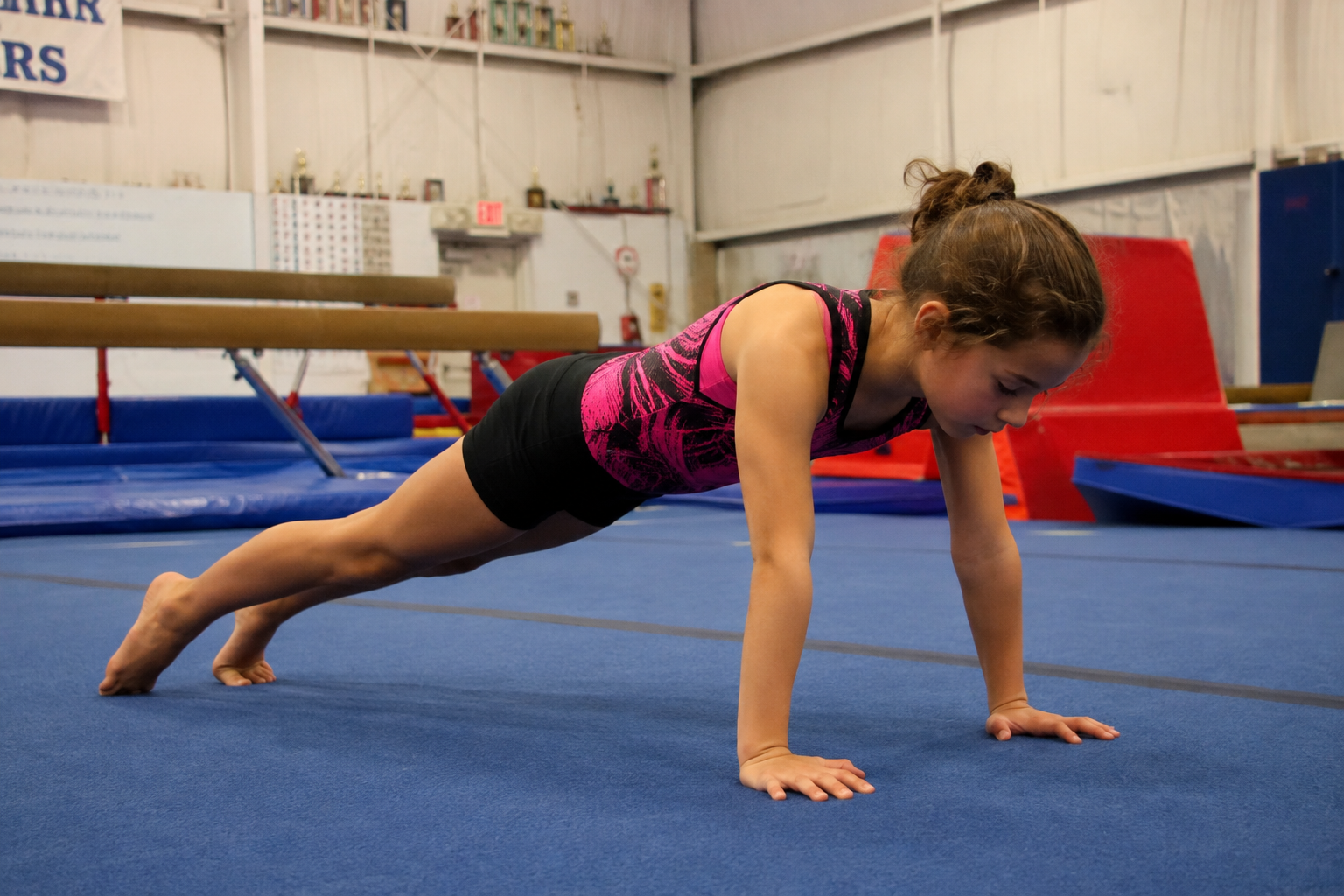
Planks are excellent for developing core strength. A strong core helps gymnasts maintain control during handstands, rolls, jumps, and other movements.
Start by placing your forearms on the floor and extending your legs behind you. Keep your body in a straight line from your shoulders to your feet. Tighten your stomach and avoid letting your hips drop or rise too much.
Hold the position for 15 to 30 seconds when starting. As you become stronger, you can gradually increase the holding time.
3. Push Ups
Push ups help strengthen the chest, shoulders, arms, and core. These muscles are important for many gymnastics skills that require upper body strength.
Place your hands on the floor slightly wider than your shoulders. Extend your legs behind you and keep your body straight. Lower your chest toward the floor and then push yourself back up.
If regular push ups are difficult, beginners can start with knee push ups or wall push ups. The goal is to maintain good form throughout every repetition.
4. Lunges
Lunges are useful for improving leg strength, balance, and coordination. They can also help beginners become more comfortable controlling their body while moving.
Stand upright and take one step forward. Bend both knees until your front leg forms a comfortable angle. Push through your front foot to return to the starting position. Repeat with the other leg.
Start with 8 to 12 repetitions on each side. Keep your upper body upright and move slowly.
5. Hollow Body Hold
The hollow body hold is an important gymnastics exercise for developing core control. It teaches beginners how to keep the body tight during different gymnastics movements.
Lie on your back with your legs extended. Lift your shoulders and legs slightly from the floor while keeping your lower back close to the ground. Extend your arms beside your head if you can maintain the position comfortably.
Beginners can keep their knees bent to make the exercise easier. Hold the position for 10 to 20 seconds and gradually increase the time.
6. Arch Body Hold
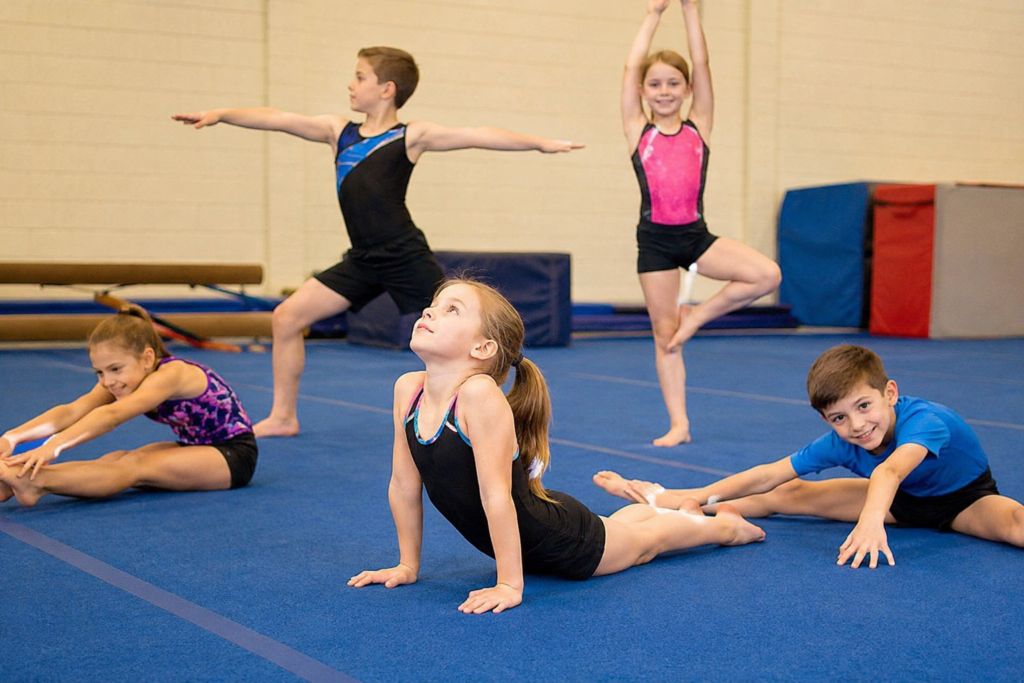
The arch body hold strengthens the back and teaches body awareness. It is often useful when learning gymnastics movements that require the body to maintain an extended position.
Lie on your stomach with your arms extended forward. Slowly lift your arms, chest, and legs slightly from the floor. Keep the movement controlled and avoid forcing your body into an uncomfortable position.
Hold for 10 to 20 seconds and rest. Beginners should focus on maintaining a comfortable position rather than lifting as high as possible.
7. Glute Bridges
Glute bridges are simple but effective exercises for strengthening the hips, glutes, and lower back. Strong hips can help improve jumping, landing, and overall body control.
Lie on your back with your knees bent and your feet flat on the floor. Keep your arms beside your body. Push through your feet and lift your hips toward the ceiling. Pause briefly at the top and slowly lower your hips.
Try 10 to 15 repetitions. Keep the movement controlled throughout the exercise.
8. Wall Handstand Practice
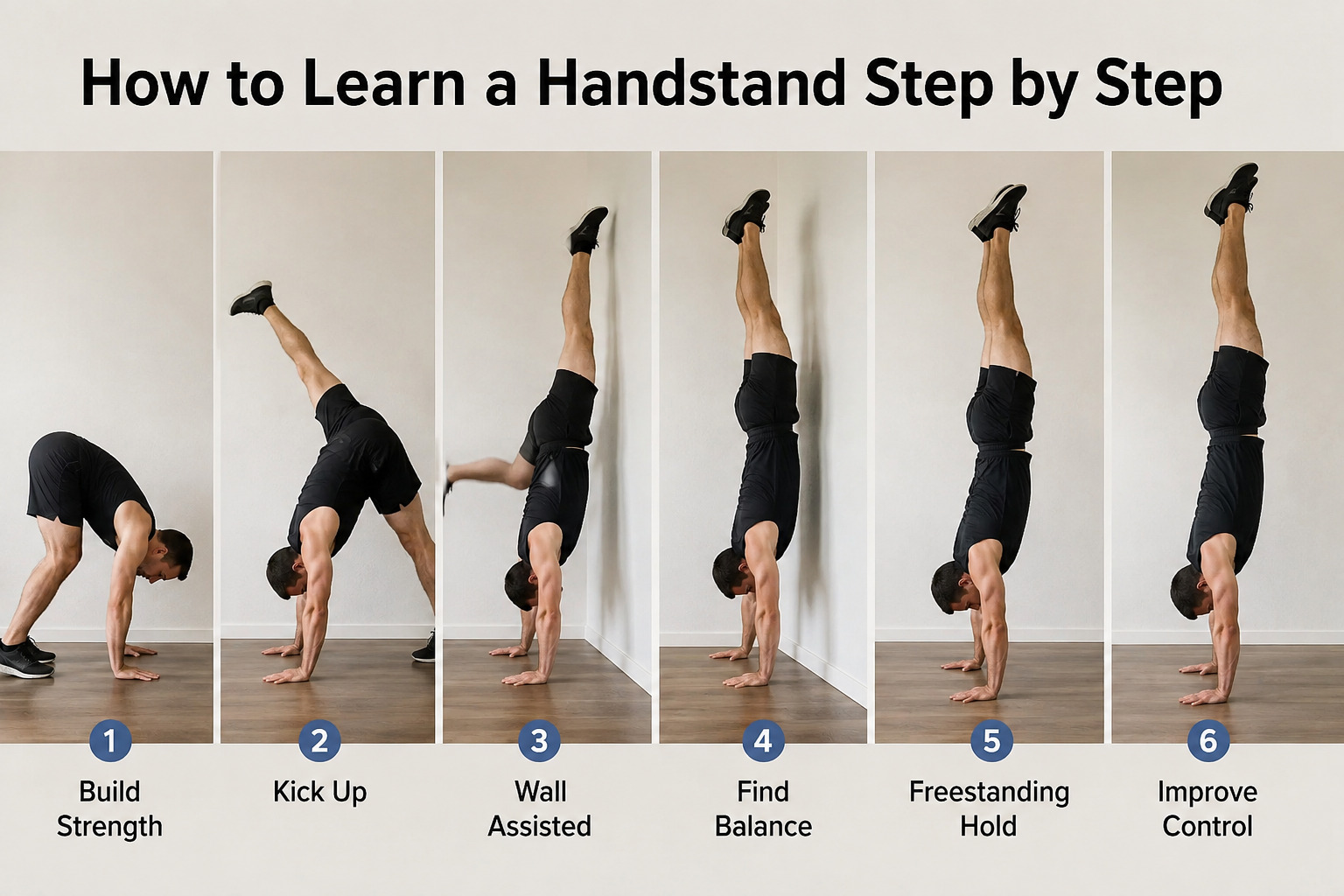
A handstand is one of the most recognizable gymnastics skills. Beginners should not immediately attempt a free standing handstand. Practicing against a wall can provide support while helping develop balance and shoulder strength.
Place your hands on the floor a short distance from a wall. Carefully bring your legs upward until your feet reach the wall. Keep your arms straight and focus on maintaining control.
If you are completely new to handstands, practice with a qualified gymnastics coach. Never rush this skill because falling incorrectly can cause injuries.
9. Forward Rolls
Forward rolls are a basic gymnastics skill that teaches body control and safe movement. They can also help beginners become more comfortable moving through different body positions.
Start in a low squat with your hands on the floor. Tuck your chin toward your chest and gently roll forward over your upper back. Avoid putting pressure directly on your head or neck. Finish in a squat or standing position.
Practice forward rolls on a suitable soft gymnastics surface with enough space around you.
10. Balance Exercises
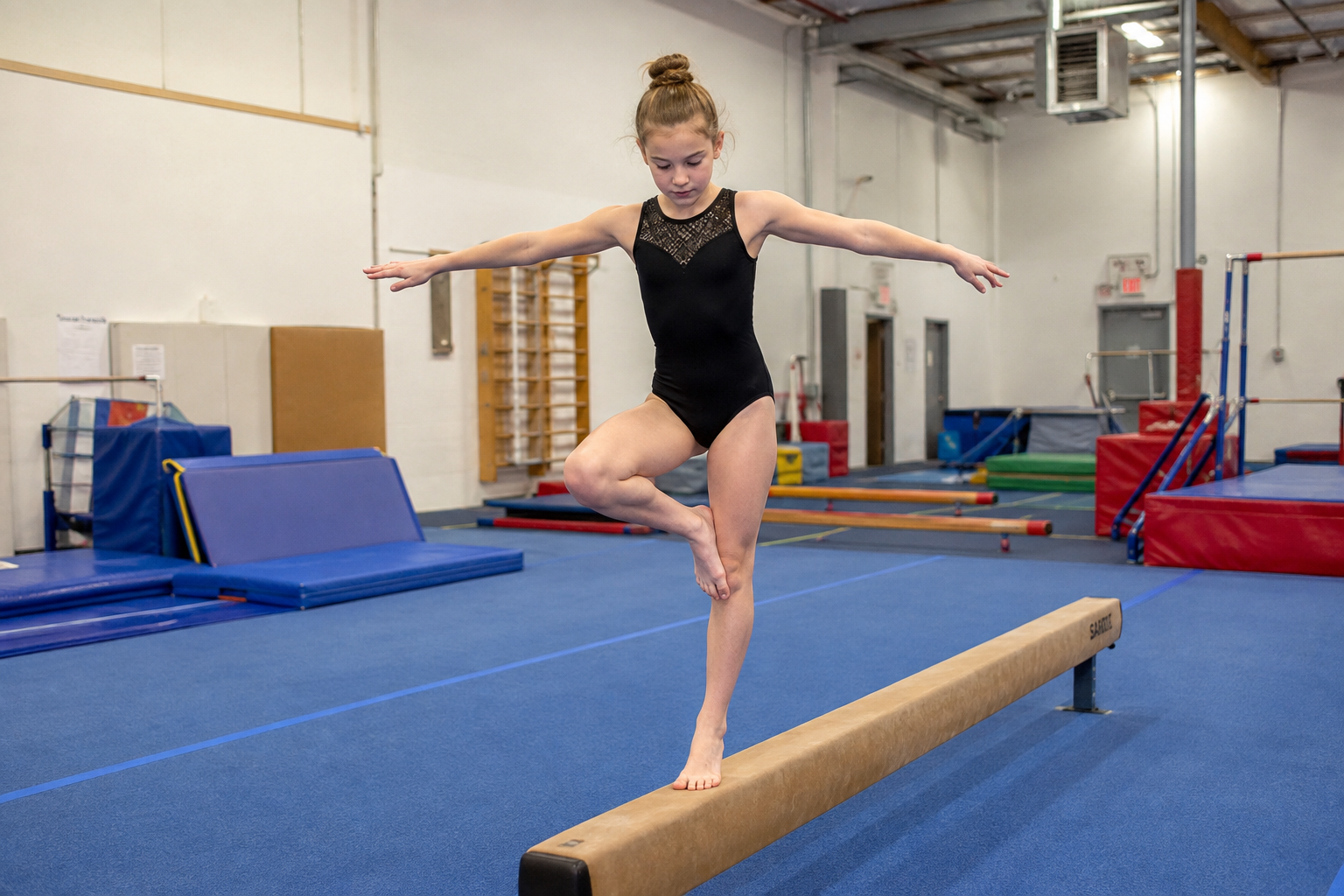
Balance is an important part of gymnastics. Simple balance exercises can help beginners improve stability and concentration.
One easy exercise is standing on one foot. Keep your body upright and hold the position for 15 to 30 seconds. Switch sides and repeat.
You can make the exercise more challenging by raising your arms, closing your eyes only when safely supervised, or using a controlled movement into another position.
11. Calf Raises
Calf raises strengthen the lower legs and can help improve jumping and landing control. They are simple enough for almost every beginner.
Stand with your feet comfortably apart. Slowly raise your heels until you are standing on your toes. Pause briefly and lower your heels back to the floor.
Perform 15 to 20 repetitions. Hold onto a stable surface if you need extra support.
12. Flexibility Exercises
Flexibility is an important part of gymnastics. Beginners should regularly stretch the major muscle groups, especially the legs, hips, shoulders, and back.
Simple stretches include seated forward stretches, butterfly stretches, shoulder stretches, and gentle lunges. Hold each comfortable stretch for around 15 to 30 seconds without bouncing.
Never force a stretch to the point of pain. Flexibility develops gradually through consistent practice.
How to Create a Beginner Gymnastics Workout
A beginner gymnastics workout does not need to be long. Start with a five to ten minute warm up that includes light movement and gentle mobility exercises.
After warming up, choose several basic strength and gymnastics exercises. For example, you could perform squats, push ups, planks, glute bridges, balance exercises, and forward rolls.
Finish with gentle stretching. Beginners can practice two or three times per week and increase training gradually as their fitness and skills improve.
Safety Tips for Beginner Gymnastics
Safety should always be a priority when learning gymnastics. Practice on a suitable surface and make sure there is enough space around you. Avoid attempting advanced skills without proper coaching and supervision.
Warm up before exercising and stop if you experience sharp pain, dizziness, or unusual discomfort. Beginners should focus on technique instead of trying to copy advanced gymnasts.
Working with a qualified gymnastics coach can also make learning much easier. A coach can correct your technique, recommend suitable progressions, and teach you how to perform skills safely.
Final Thoughts
The best gymnastics exercises for beginners are simple movements that develop strength, flexibility, balance, coordination, and body control. Exercises such as squats, push ups, planks, lunges, hollow body holds, glute bridges, balance exercises, and forward rolls can create a strong foundation for future gymnastics skills.
You do not need to master everything immediately. Gymnastics is a sport that rewards patience and consistent practice. Start with exercises that match your current ability, focus on proper technique, and gradually increase the difficulty.
With regular training and a positive attitude, beginners can build the physical skills and confidence needed to progress toward more advanced gymnastics movements.